The Ongoing Fight Against Self-Pity and Rage, through Rain and Shine

5 Oct

I was writing my blog this morning when I ran out of battery on the computer. Sadly, this is not a rare occurrence, but it’s still incredibly frustrating. Because then I have to figure out where I’m going to charge it, if I’m going to try to finish writing and post it all in the same space, if this can happen before Lucia’s nap time or not, and other such relevant questions. And then I decided I better go ahead and do some housework meanwhile, and set about washing two weeks worth of socks and underwear for the three of us (it’s too weird to get strangers to wash your underwear). I despise hand-washing clothes, and because the computer had no battery I couldn’t listen to music while washing. I was trying to feel grateful about the fact that we had water, but my passionate hatred for washing was winning out. I even got to have a long phone chat with my best friend, and still I was grumpy. And I had other house work to do, and still a blog post to finish. I was pissy that I hadn’t done my yoga video like I’d wanted to (again, because of lack of computer battery) and I really just wanted to lay around and finish reading the cheesy murder mystery I was reading. I was pretty much seething with resentment and self-pity, irritation radiating from my body like heat from the oven.

And really, you can’t write a decent blog post or have any real interaction with the universe when you’re a big ball of self-pity and simmering anger. So I decided I’d have to write a very different kind of piece. I’ve been writing down three things I’m grateful for everyday. Well, most days, while I sip my morning coffee or tea, in those glorious but brief moments of alone time before I do exercise and get ready for work. I leave my notebook out in case Conan wants to take a peek, but I never share them anywhere. I’m hoping it’ll help my mood and my attitude if I share some recent highlights. So here goes. Hopefully it won’t come off like those facebook posts from folks who are severely over-sharing (guys, I don’t need to know how many times you’ve gone to the bathroom today.). But ha! It’s my blog and I’ll write what I want to (to the tune of that horrendous Lesley Gore song I adored as a small child- “It’s my party and I’ll cry if I want to”… and yes my child is turning out just as weird as I was!)

Today I am super pleased that Conan put Lucia’s carseat in our car! I’m grateful we finally have a car in the first place, and I’m so relieved that I can quit yelling at Lucia to sit the hell down while the car is moving, that I can quit envisioning her flying through the windshield as she tries to climb from the front seat to the back, the way I know my mom did when she was a kid (which got her 3 days of unconsciousness).

I’m grateful that my mom sent me some maternity clothes, because out of the 10 shirts in the maternity section of the only department store (the only place I’ve found ANY maternity clothes), 9 of them are utterly appalling. I’ve decided that if I lose my job as an English teacher, I owe it to myself and to the women and families of Puerto Escondido to open a shop and information center focused on needs during pregnancy and for babies. Because there’s nothing here! It’s crazy the way people do without! Wearing shirts that are too small for them, wearing “batas” (think something like a muumuu). And the lack of information is just as extreme- like all the people who are sure they can only have another C-section just because they had one (often because the doctor is guessing that their baby will be “too big”). There’s so much lacking that I’m thrilled with my backup plan- Puerto Escondido’s own version of Mama’s Hip in Louisville.

I’m grateful for my creative cooking skills, and all the days when I make a dish that is precisely what I wanted to be savoring, and healthy to boot. I’m grateful that my outlandish chocolate cravings during this pregnancy are mostly controllable with a small weekly treat, although I wish Conan would commit himself to hiding a Nutella jar for me so I could have just one half hour alone with it first, without stressing about eating the whole thing. I won’t buy a jar of it until he promises. (And no, don’t give me any tricks on handling a sweet tooth because I’m not craving other sweets or sugary junk- mostly just gobs and gobs of chocolate. Which I didn’t even like as an adult until I was pregnant with Lucia. Thanks, hormones.)

I’m grateful for all the help from family near and far. My family in the north has sent big chunks of money our way for a car, and then my aunt and her best friend (my honorary extra aunt, Anita) sent money for car repairs, out of the blue. Now my dad’s planning to get us the money for a generator. And Conan’s mom is constantly helping us out with tons of bits and pieces that add up- a bag of coffee here, a pound of beans there, all the eggs from her hens, cell phone top-up minutes as she continues to include our cell phone business in her store, and much more. Plus when she comes to visit I always come home to find lots of extra cleaning has happened and more meals are cooked. She gives us a break with Lucia, too, even changing poopy diapers! If that’s not sacrifice I don’t know what is. And Conan’s aunt here in Puerto is always sending us fish freshly-caught by her husband, and not letting us pay her for it. And her three sons, Conan’s cousins, are always helping us out in different ways as well- his cousin Cheko recharging our lamps and freezing ice for our cooler, his cousin Daniel making doors and windows for us (slowly but surely) in exchange for Conan teaching English to his kids. (Yes, guys, we now have a real door on our bathroom!!) Between the two of us, I’m pretty sure we have the most helpful and generous family on Earth, which is a big something to be grateful for.

I can’t tell you how grateful I am that Lucia has started to potty-train herself, too. I say she’s training herself because all of my intents and efforts were for naught. Bribes for stickers, cajoling, convincing, promises of sweet treats got us zero progress. All the articles I read were useless. My child is a stubborn-ass who will not do anything unless she decides to do it of her own accord. I shouldn’t have been surprised, but I was a bit taken aback when suddenly she decided she wanted to pee in her little potty instead of wearing a diaper. She’s never had an accident, because she’s known for a while when she needs to go. We’d let her run around with no diaper and then she’d tell us she needed to go and we’d have to put a diaper on her. Which is what she’s still doing with #2, but at least now I know she’ll go in the potty when she decides it’s time.  (Yikes, here I am talking about potty habits! This is turning into one of those over-sharing Facebook posts! Sorry, y’all!)

I’m grateful for cheesy exercise videos. I remember making fun of my mama for working out with Richard Simmons, sweating to the oldies. I remember praying to the heavens that I never ended up that corny. Alas, here I am, with no time to go to a gym, no time for organized sports, and only a few minutes a day on my bicycle. I’m pleased as punch with the way my body feels after all the cheesy videos (no Richard Simmons, though.). I feel weak and icky after not exercising for  a few days, so I don’t want to know what my life would be like without this option that I used to think was so sad (sorry, Mama). I’m grateful I can giggle about giant shifts in perception.

I’m grateful that I don’t normally have to sit in an office for eight hours a day. Between semesters I’ve had a couple weeks of working only in my office, not teaching any classes, and it makes my want to pull my hair out by the roots, one by one. I need to be up and about, interacting with people, like I do with my normal schedule. After eight hours sitting down staring at a computer screen, my back hurts, my butt hurts, my head hurts and I’m bored out of my mind. I’m like kid who’s been trapped inside on a rainy day, ready to burst at the seams and run around in circles screaming, just to get it out of my system. So thank goodness that’s not my normal schedule, and now I’m back to the bustle and business of the classroom. I didn’t get busted running around in circles and screaming, and now my energy is safely and appropriately funneled again.

And did I mention that we had a miracle on our block the other day? The garbage truck came! To our street! And collected all of our garbage from the garage! The garbage truck’s been around, somewhere in our neighborhood, but it’s never come and collected our trash before. “It looks like God is starting to remember you guys,” my mother-in-law said. That gives you an idea how grateful I am.

I’m grateful for this month’s rain. We’re about to have another 6 months of pure sunshine (haha, you’re probably cold even as you’re reading this!), so the coolness of the frequent September rain has been lovely. Our lack of a fan in the house really gets to me at night these days, with the extra heat of this creature growing in my belly, so the cool breeze on rainy nights is heaven-sent. But I’m also grateful that there was no crazy hurricane-induced weather, since we still don’t have windows that close. The weather’s behaved perfectly. It wasn’t even too bad the day I got soaked and spent the afternoon in wet jeans and shoes at work. And I’ve lucked out on us having the car, getting rides when it’s too rainy and muddy to get to work in one piece (our street is a dirt road). It’s been all a girl could hope for from a rainy season.

There’s been lots more to be grateful for, but these are some of the highlights of late. And, as I wrote one day, “being exhausted is better than being dead”. So there’s that, too. I feel better already. Thanks for listening. Let’s do it again tomorrow, because this fight against self-pity and nasty attacks of anger is an ongoing battle. 
The Bare Necessities of Health Care

28 Sep

“It’s the last place I want to go if I’m sick, unless I want to get sicker,” was my coworker’s concise intent at putting a damper on my enthusiasm. But after several years of my adult life with no health or dental insurance, pretty much nothing could talk me out of my optimism over my new employment-based health (AND DENTAL!) insurance.

I had also very recently become pregnant, so I figured even less-than-ideal health insurance was better than forking over half my paycheck for prenatal care. So while all the non-Pollyanna types around me warned me about the disorganization and the inconvenience, while they griped about the long waits and people cutting in front of you in line, I just listened and nodded, readying myself to collect my own story about it.

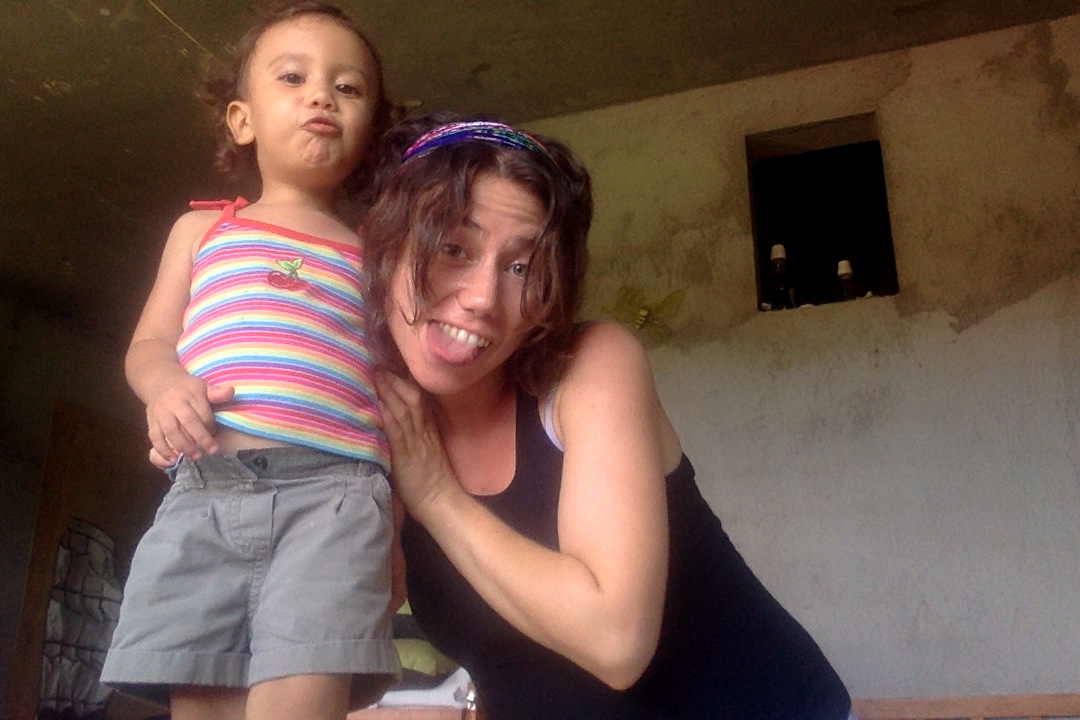
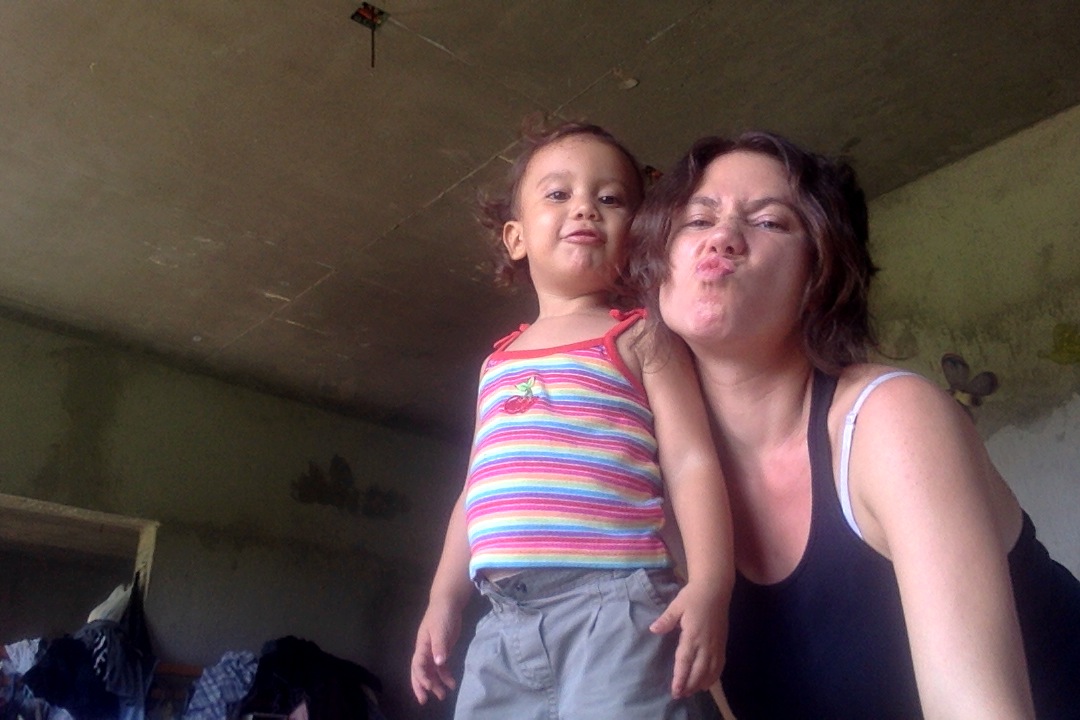
Bracing myself to fight for a morning appointment... okay, really it's a gratuitous picture of Lucia and me making funny faces.

Bracing myself to fight for a morning appointment… okay, really it’s a gratuitous picture of Lucia and me making funny faces.

On my first visit, to activate my insurance, I got there right when the office opened at 8AM, ready to fend people off to take my turn. But the other new teacher and I were the only ones in line for the getting-registered service, and it was really easy.  Then we went to wait for the introductory preventative health services, which we were also the first ones in line for. I was feeling extra-optimistic at the mere idea of a check-up. A trip to the doctor when I’m not feeling near-death! Instant triumph, in my book.

All was going well until the nurses were attempting to give me my annual gynecological exam. It was taking way too long and it was starting to make me a bit nervous. There were two nurses- surely between the two of them they could work a speculum? They started whispering between themselves- never a good sign. “Is everything ok?” I asked, barely covered, legs spread, at their mercy. “Yeah, everything’s fine,” they futilely tried to reassure me between covert eyebrow-raising and more whispering. “Have you had an operation?” they asked me. “Um, no.” I told them, much less reassured. I was about to insist that they give me the damn speculum, when finally they got it right.

Things pretty much went downhill from there. I saw blood on the slide and freaked out. I told them I was pregnant and they scolded me for not telling them sooner, telling me I shouldn’t have a pap smear while pregnant (which my gynecologist in the U.S. didn’t tell me when she gave me a pap smear while I was pregnant.) And so began my doubts about the usefulness of my health insurance, although I remained optimistic. But maybe then I was a little less like Pollyanna and a little more like Wendy in Peter Pan- really wanting to believe, but just a little too observant to hope blindly.

The nice, semi-competent but possibly misinformed nurses then sent me to my new consultorio- one of three offices in the building that’s your permanent doctor’s office. There’s no switching doctors if you don’t like one, or changing to a provider closer to you, or any of that business. You are assigned your consultorio 1, 2, or 3, and that’s where you go. Period.

I approached the nurse’s desk for consultorio 1 and told her I needed to set up an appointment because I was pregnant. There was nothing available for a month, but she insisted that I be seen before then. Which meant returning the next day before 7AM to get in line for an appointment the same day. Which meant asking off from work another morning, as well. But at least I wouldn’t lose pay over it! Life was still definitely good.

I got up at 5:30 the next morning so I could leave a little after six. Even though buses and colectivos run at that hour, it was still dark and I was scared to walk past all the mean guard dogs in the dark. So I called a cab and waited on the corner, rock in hand just in case. I figured the cost of the taxi was like a co-pay, so I couldn’t complain. I got there at 6:30 and approached the large group of folks standing outside the doors. “Do I take a number or something?” I asked a lady nearby. “What consultorio are you?” she asked. I told her, and she kindly shouted out for me, “Who’s the last person in line for consultorio #1?” Nobody said anything, so I excitedly assumed I was the first one in line. That meant I was sure to get an appointment.

The doors opened at 7 and everyone pushed and rushed their way in at once. I got to my consultorio and suddenly three other people were there claiming that they were first. “But I was the first one here! A lady asked for me!” I tried to insist. “No, no,” one older lady told me, “I was already here when you got here.” And so it went, and I ended up third in line, which I figured was good enough since it still meant I’d be seen that day. I loathed the idea of having to do it all again the next day, so I decided to be content with third place. We put our little identity/insurance card-booklet things (cartillas) in reverse order on the desk and waited for the nurse to show up. About 7:30 she arrived and gave the first five of us appointments, at 15 minute intervals starting at 8:00.

I’d brought a book, so waiting from 6:30 to 8:30 wasn’t too bad a deal. Finally I saw the doctor, who didn’t introduce herself or ask me my name, either. She looked at my cartilla and made some notes on the computer. She didn’t get up from her desk the whole time, except to briefly feel my abdomen to check uterine size. She told me to make an appointment to leave a urine sample, gave me a prescription for folic acid, and told me to come back in a week.

The only easy thing in those three tasks was getting my folic acid. There’s a pharmacy on site, and whatever they prescribe you is free. So at least there was that. Of course there were no appointments a week later, so I was told to come back for the same jockeying-with-the-other-sick-people wait as that morning. And to make an appointment for a urine sample? Lab appointments can only be made at 2 in the afternoon. You go and take a number and wait to get your appointment assigned, and then you go back yet another day for the lab appointment. On the day of your lab appointment you take yet another number to see when you’ll be able to turn in your sample. And it’s not the same day as your doctor’s appointment. And they don’t even supply you with the cup to pee in! I was starting to see why this insurance might not be all that I’d imagined it to be.

After those first few awkward, getting-the-hang-of-the-system appointments it started to get better. At least I know what I’m heading into. And as long as I don’t get sick with less than a month’s notice, I can just go to my scheduled appointment with no pushing my way through the crowd. Although after that first visit, I got better at dealing with the take-a-number-without-a-number game. So it’s something. ]

And I can handle all the inconvenience. It’s still free health insurance, and it’s still better than nothing. What does bug me, however, is the doctor’s bedside manner, and the fact that I have no other options, unless I want to pay big money for a private doctor. Conan accompanied me to my most recent appointment, and when I asked him what he thought of the doctor, he shrugged and said “She spent more time looking at the computer than at you.” Which pretty much sums it up, except it’s even worse than that because I think she hates that I ask so many questions.

For example, when she gave me the form to schedule my second ultrasound, I tried to discuss it with her. I wanted to know what it was for, for one. “So, you don’t do the 12 week ultrasound that checks for some abnormalities, then?” I asked, since she was giving me an ultrasound date where I’d be 18 weeks along. “Here at this insurance,” she explained, “you get three ultrasounds throughout your pregnancy. Every three months,” she tried to spell out for me. “So, if I only get three, can we wait on this next one until I’m 20 weeks? So they can do the whole anatomy check?” I asked. “No, no, this will be fine.” She said, trying to close the conversation. “But will they be able to check all of the anatomy and all of that?” I tried to explain what I meant, the reason they do this second-trimester ultrasound in the U.S.* “No, this will be fine.” She told me again, definitively ending the conversation. This is a good example of a typical conversation between us. I try not to antagonize her because she is my only choice. But I refuse to stop asking questions, too.

This is how Lucia and I feel about apathetic care providers.

This is how Lucia and I feel about apathetic care providers.

I am making the best of it. I have health insurance, which is way better than nothing. I appreciate the fact that I don’t lose time at work for going to the doctor. That I’m going to get some paid maternity leave (something y’all in the U.S. mostly don’t have at all!)

The Pollyanna that’s still left in me is also extremely grateful that I had a fantastic doctor for my first pregnancy. She always asked how I was doing, explained everything in detail, asked if I had any more questions even after I’d gone over all the doubts scribbled in my notebook. She gave me options, she gave me tips and tried to prep me with all the general info that I’d need between that and my next appointment. There was a phone number to call for emergency questions and doubts in the middle of the night. And, thanks to the way that insurance works in the U.S., if I decided my doctor wasn’t right for me, I could change at any time.

It seems so distant from this service I’m receiving. What I’m getting is bureaucracy. Health care that doesn’t give a damn. But I remind myself that there are lots of crappy doctors in the U.S., too, that hate questions and patients who read books. There are lots of long waits and inconveniences and probably even nurses who can’t find a cervix. It could be worse.

I think I was never meant to last long as Pollyanna. In this scenario, I’ve even given up on Wendy and wanting to believe in a free lunch. At this point, my goal is just to be a good enough person that I don’t cut in line in front of anybody else, that I don’t have to try to screw anybody else just to get mine. I just want to take care of and appreciate my individual body (and its growing individual parasite in my uterus) in the face of all the paperwork and bureaucracy. I want to push for the best and most individualized care that a bored, passionless paper-pusher of a doctor could possibly give. I want to advocate for myself without purposely antagonizing or insulting, and I will commit myself to shelling out the cash to go elsewhere when it’s called for. So maybe I’m a determined optimist after all. Maybe I’m like Baloo in the Jungle Book movie, and I can be happy with my bare necessities in health care; as long as they’re the ones I decide I need.

*I think that they don’t have the equipment to do the same kind of anatomy scan like they do in the U.S. around 20 weeks. 18 weeks is far enough along to have that check, but they did a much simpler, quicker version, and I think it’s because of their equipment. Although the ultrasound tech was really grumpy so I didn’t bother to ask him. He almost wouldn’t even do the ultrasound because I had lost the paper my doctor had given me to turn in to him. I had to go get the nurse at consultorio 1 to finagle me another copy at the last minute. Such adventures!

Amigos, It’s Not Cinco de Mayo

21 Sep

There’s something about a big group of gringos walking around with giant sombreros and big black mustaches that instantly rubbed me wrong. As the group walked by, Conan and I looked at each other, me with my nose all scrunched up, Conan with his eyebrows raised, both of us disapproving. But it took a minute to decide if I was just irritated by their ridiculousness- black bushy ‘staches clashing furiously with blonde hair, sombreros making way through the crowd like they owned the place- or if there was actually something offensive in the scenario. Are Conan and I just getting old and crotchety? I wondered.

We were at our town’s celebration of Independence Day. Yes, my amigos, Mexican independence happened in September, NOT on Cinco de Mayo.* (Skip the next couple lines if you already know about Mexican history.) Technically, what’s celebrated on September 16 is the declaration of a war for independence, called “El Grito de Dolores” (loosely translated as “the Cry of Dolores,” named after the small town of Dolores where it happened). The celebration usually begins on the evening/at night of the fifteenth, with the “grito” happening at midnight. In many towns, people go out and fire their guns into the air, I suppose in a sort of reveling-in-the-rebellion fashion. (And yes, every year people are injured by the falling bullets and other gun-related mishaps, just like every fourth of July people go to the hospital for fireworks injuries. But bless tradition for its tenacity!) Supposedly, in Puerto, nobody fires their gun at the town celebration, although some folks do in their neighborhoods. We didn’t stick around to find out, though, because the grito was happening much too far past Lucia’s (and my) bedtime (yikes, maybe I am old!). 

The celebration we attended was pretty entertaining, mustachioed gringos and all. Despite not starting till about 8pm, it was definitely a whole-family activity. There were rides- nothing wilder than those big chairs that spin in circles and the whole ride spins in another circle, and only one tame enough for my two year old. Lucia rode the merry-go-round twice since that was all there was for her, once with Mommy and once with Papi, which pleased her nicely. There was lots of food and drink- tlayudas and tacos and tostadas and atole and agua de sabor and of course beer (Corona or Victoria only, por supuesto). And there was entertainment galore! Singers and traditional dancers and bands abounded. We shared a tlayuda and hibiscus water, watched some of the events, had some roasted plantains with lechera (sweet, thick vanilla-flavored milk substance) to round out the night. It was definitely a good independence celebration. Although the best part of all was my four-day weekend, brought to me by those wondrous revolutionaries and the labor movements that came after them. (Thanks, Señor Villa and all activists after you. I finally caught up on sleep.)

Lucia on the merry go round, celebrating one of her countries' independence

Meanwhile, Conan and I discussed the situation and decided that no, we’re not just old and grumpy, and yes, the gringos walking around in that attire really were a bit offensive, despite the fact that the sombreros and fake mustaches were sold to them at the event by Mexican people. Perhaps if the sombrero thing weren’t such a raging stereotype of Mexicans to this day –nearly a century after the image’s origin- it wouldn’t be such a sore spot.

I think the problem is that the image of some short, stocky, bushy-mustached,dark-haired man wearing an oversized sombrero and slinging a rifle is still the image the U.S. has of the average, modern-day Mexican. While this is the image that was sold to the U.S. when rebel factions were asking for support during the revolution in the early 1900s, it is not even necessarily the real face of all revolutionaries at the time. And it certainly has zero to do with Mexicans today. But it’s become this big stereotype that’s remained since then, the sombrero especially, and every Mexican restaurant has one. Every beer store and bar acquires one, or at least a picture of one, for the 5th of May, although that’s not even Independence Day! The people going out drinking tequila and Corona in the U.S. mostly don’t even know what they’re celebrating, besides the drink specials (and I’m not begrudging you your drink specials; don’t get me wrong! But it’s good to know why.) Although the outstanding marketing tactics that promote “Cinco de Mayo” in the U.S. might have led you to believe that it was Mexican Independence Day, and understandably so.

Watching this mass of young gringos go by in their “I’m so Mexican” costumes was a bit like putting a sombrero on my business door for May 5th to sell an extra Corona. Maybe this group consisted of very sensitive and enlightened folks that were just dying to don mustaches, but it felt a bit like basking in ignorance. It looked a bit like making fun of the Mexican revolutionary image, which, as Conan said, is okay if you’re Mexican, but not so nice when you’re a foreigner. I don’t know how many other people actually even noticed this group, or if anyone else was offended. But since Conan doesn’t offend easily, I imagine he wasn’t the only one. And no, it’s not something horrible or totally racist. But it was probably pretty thoughtless.

It’s not like I expect people in the U.S. to know their Mexican history, when we usually only learn bits and pieces of U.S. history as it is. I don’t expect everyone to take classes in Mexican history, not even before they come for a visit. Just a little bit of consciousness, though, of stopping to think about what they were saying by participating in that way, could have gone a long way. Respect is such a little thing, that makes such a big difference, on Cinco de Mayo, Independence Day, and every other day of the year. So viva Mexico, outdated sombreros, gunshots, and all! And think about keeping your sombrero in the closet this year. 

*The fifth of May, aka “cinco de mayo” celebrates a battle in which the Mexican Army was particularly triumphant. It took place post-independence, against the French, in Puebla. It is mostly only celebrated in the U.S. and in the state of Puebla, Mexico.

An image from the War… Now the Ultimate Mexican Stereotype

La Guera con El Moreno- The Dangers of Parenting with “Mismatched” Skin

15 Sep

“Do you have identification for this child?” Five police officers were swarming around Conan, who was holding Lucia and walking with Pancho, the guy who sold us our new car. It was a Thursday afternoon and I was at work, as usual. I’m sure that it doesn’t help that fathers out with their kids- without the mother- is not all that common, like I talked about in the post about Conan’s venture in stay-at-home fatherhood. But it does happen; it’s not like it’s totally unseen. The police later told him that they were looking for a missing two year old that fit Lucia’s description- light-skin, curly hair. Hopefully they really were looking for a missing child, although it doesn’t make the situation more pleasant regardless.

“No,” replied Conan, about having her ID, “She’s two years old,” he explained. “How can you prove that this is your child?” One of the officers asked Conan. “Well, I’m holding her and she’s not protesting,” he offered. They were not at all satisfied by that, although perhaps if they had tried to talk to Lucia or (goodness forbid) tried to hold her and seen how resistant and panicked she could get, Conan’s explanation might have had more credibility. This is the child who sometimes hides her head and yells “no” when people ask what her name is, who sometimes pushes people if they try to pat her arm. My daughter is very outgoing and loves to play with and talk to strangers if they are kids, or if she’s decided to interact with them- not if they’ve decided to interact with her. So no, I didn’t really want the cops to try to hold Lucia, and Conan certainly wasn’t going to offer that, but it might have clued them in that she doesn’t take kindly to any old kidnapper.

They asked Conan for his ID and they all walked back to where the car was parked. There the cops started taking pictures of the car, its license plate, and anything else they deemed relevant, and calling in information on their radios. “What’s the child’s name?” the cops asked Pancho, but of course he didn’t know, because he’s just the guy selling us the car, not our friend. He explained this to the cops, who were still not satisfied. They asked about the location of “the child’s” mother, which Conan explained. He told them Lucia’s full name, complete with her second last name, the hard-to-pronounce foreign one (mine), and mentioned that her mother is not from here. It was a round-about way of explaining Lucia’s whiteness. Not that Lucia is “white” the way we define that and talk about it in the U.S. Due to our U.S. legacy of slavery and the ever-lasting discrimination following slavery, anyone who has a drop of not-white blood is not “caucasian.” We say that people like Lucia “pass for white,” which is a very “polite” racism-based way to say that she doesn’t look “colored” (all non-white is in the same category of tainted non-good in U.S. cultural context, although there tends to be more discrimination for people the darker their skin is).

In Mexico, there is a different legacy of oppression, and thus a different system for talking about skin color and race, a different way of discriminating against and privileging different people. In Mexico people will often tell you that there is no racism, and they believe it because they don’t have the same black/white issues and history like we do in the U.S. They believe it, maybe, because they talk about skin color in a nonchalant way. They call their darker-skinned friends and loved ones “negro” or “negra” like it were a name, with affection. For light-skinned folks, they use the term “guero” or “guera” (pronounced kind of like where-oh or where-ah, the g sound is very light- a very Mexican term and who knows where it comes from). So sometimes I suspect their ease with which they point out skin color in a way that’s neither awkward nor insulting helps to perpetuate this idea that there’s no racism down here in Mexico.

But all you need to do is check out ten minutes of Mexican soap operas (practically the only thing on the three public TV channels down here) to see very clearly that racism exists. Most people on television, and all of the “good guys” are very light-skinned, often light-eyed, sometimes blonde folks. (And before you say something about them not being Mexican, check out your own assumptions about race. Mexican people come in a wide array of skin colors.) The “bad guys” and the servants are darker-skinned.

If you don’t believe that TV imitates life, if TV isn’t enough proof that racism exists here, then all you have to do is observe the situation of many indigenous peoples down here, or listen to the way people talk about them. Listen to the insult “indio,” used as a synonym for ignorant idiot. For the most part, people don’t value indigenous culture, language, or people, outside of museums. Indigenous communities tend to be very economically poor, and have very limited opportunities. And of course the discrimination they face is partially a class issue, (I don’t think anyone in Mexico denies the existence of classism) but lots of the class and poverty issues are inherited from times of colonization and caste systems that privilege people based on how much white European blood they had. Pure indigenous folks were at the bottom of the barrel, and they still are, caste system or no. And the darker your skin is, the closer you are to indigenous, the more likely you are to be poor and discriminated against.

So back to Conan and his brown skin, carrying around his white-looking daughter. Since her birth, people down here have insinuated that she doesn’t look like him because her skin is so light, although as a baby she was pretty much the spitting image of him (except for my nose; she’s always had my nose). They’d even say stuff like “Oh, she looks just like her mom,” although at the time she looked way more like Conan, except for her skin tone. (And yes, of course stubborn Julia tried to set them straight, sometimes rudely, sometimes politely, but I doubt it did any good.)

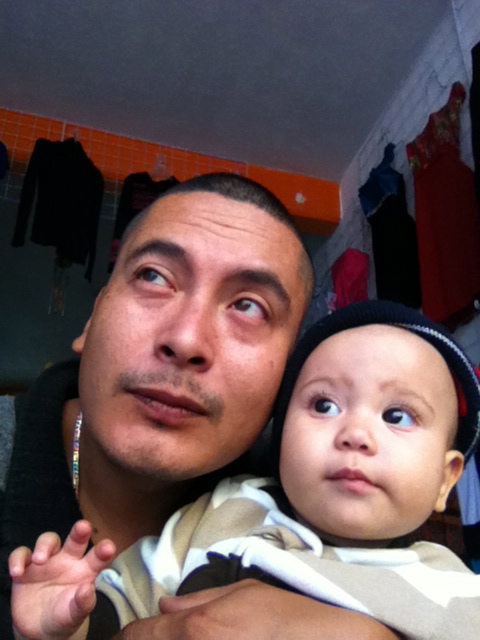
Papi and daughter: Peas in a pod

Papi and daughter: Peas in a pod

There he was, in a parent’s nightmare, with police threatening to take away his child because she doesn’t look like him in the right way. Finally he remembered that he had his iPod in the car, with its thousands of photos of Lucia and our family over the past two years of life. So he showed them the pictures, which he said they viewed for a good while, and finally they were satisfied. They didn’t take Lucia away, and Conan didn’t have a heart attack, although I think he was pretty shaken up for the rest of the day.

Before this, it hadn’t occurred to either one of us that something like that could happen here. We’ve both read parts of a book on raising multiracial/multicultural kids, and talked about dealing with people’s rude comments and things.  We’ve talked about responses when you’re the parent who “doesn’t look like” the child, and good responses when you’re the parent who does. But we hadn’t thought about or discussed this kind of danger, that some authority could actually take our child away because of “mismatched” skin colors. I imagine that if they did, it would be temporary, but can you imagine the trauma? For Lucia? For Conan? For me? It’s horrifying.

“Yeah, my friend so-and-so used to carry around a copy of his kids’ birth certificates” my mom told me when I recounted the incident to her. It made me realize that this problem is not new, and it’s not unique to us. Somehow I thought there would be less racism against Conan here in Mexico than in the U.S. That’s probably true, but by no means does racism not apply to him here. So we will deal with this, too, knowing we’re not the first generation to face this, but hoping that maybe, just maybe, we could be the last. 

The Twelve Days of Wonderland

7 Sep

I had my first successful return to “my” culture when I went back to the US in May. It was my first real visit since moving down here, because I don’t think four and 1/2 months working/living/visiting in the US counts exactly as a “visit”- it’s some other kind of gray, vague unnamed thing. So this time, for the first time ever, I knew that I couldn’t waste time in the world of culture shock, feeling bizarre and out of place and slightly appalled. It was only a 12 day visit, so I steeled myself to enjoy it all.

Lucia looking out the airplane window. She is ever ready for an adventure.

Lucia looking out the airplane window. She is ever ready for an adventure.

True, I didn’t quite succeed at enjoying the chilly weather when we first arrived (what do you guys not understand about my unfulfilled destiny to be born and raised on a tropical island?!), but I salvaged my goal of not being grumpy by enjoying the wearing of pants, by basking in Lucia’s joy at getting to wear her long-sleeved “hola” pajamas-aka Dora the Explorer- (her PJs here usually consist of a diaper- sometimes with a t-shirt). I thoroughly appreciated that Lucia didn’t wake up at 3 in the morning, sweating and asking for water.


Lucia in a hoody! Enjoying her own private slide in Paw-Paw and Gamma's yard.

Lucia in a hoody! Enjoying her own private slide in Paw-Paw and Gamma’s yard.

This time around, instead of feeling completely overwhelmed and slightly disgusted at the absurd amount of food and choices in the supermarket, I pointed and clapped my hands at the foods I wanted to eat that we don’t get down here. “Look, Lucia, butternut squash! Oooh oooh let’s get kale!” I might have even jumped up and down, excited about each selection. “Oh my goodness, please can we get organic grapes?” Lucia didn’t even know what half of those foods were, but I got her and my mom excited with my contagious giddiness. Lucia and I also invented the “happy asparagus” song and dance, which we still dance when we manage to find and afford asparagus down here.

I was pleased with organic labeling in the supermarket, too. While I’ve never been able to buy everything organic or local, I used to diligently follow the rules on buying organic for the “dirty dozen” at least- the most contaminated non-organic produce. Here, though, I don’t have that option. I can either eat spinach or not each spinach. There’s no option to buy organic or even know where it comes from, most of the time. There are foods that are organic, despite the lack of labeling. Typically if you’re buying from some señora selling on the street, it’s probably local and organic. Native foods and wild foods (which they eat way more of here than there- cool kinds of mushrooms and seeds and other “bizarre” foods, plus Mexican staples like nopales- cactus- and chepiles) you can usually count on to be chemical-free. But I don’t want to limit my vegetable intake to those. So we buy what’s available and hope it doesn’t do us too much harm (especially to my ever-growing-and-developing Lucia).

Brussel sprouts to my heart's content!

Brussel sprouts to my heart’s content!

1625721_713318435391873_5076599834580356353_n

Giant ice creams with flavors like hazelnut and pistachio also help create an enjoyable experience!

Giant ice creams with flavors like hazelnut and pistachio also help create an enjoyable experience!


So our journey of seemingly limitless options continued with choice after choice of beer and bourbon! Yes, since bourbon is made in my old Kentucky home it wasn’t exactly a surprise to find a plethora of good and affordable choices everywhere I turned, but it didn’t minimize the pleasure of it. But the beer options are pretty amazing, too! There are local microbrews, microbrews from all over the country, tons and tons of imported and national beers of all kinds- stouts and pale ales and wheat beers and oh so much more. Coming from a town where often the only choice is Corona or Victoria- two lagers that taste nearly identical, it was close to miraculous. I didn’t even drink very much in my twelve days there, but just seeing all the options and savoring a couple different kinds was its own special treat.

Lots of magical stuff happens in the U.S., too. I must’ve spent five minutes looking all over my dad’s kitchen for the matches to light the stove, before I realized you just turn the knob to the “light” part and it lights itself! Just like magic. There were microwaves and dishwashers and washers and dryers, a whole other brand of convenient magic! And coffee makers! Plus staying at my mom’s house is instant morning magic, since she gets up at the crack of dawn and thus coffee is always already-made. While we waited in the airport, Lucia and I played on the “magic stairs” (escalators) and the “magic sidewalk” (the moving sidewalk). Granted, some of these things (like microwaves and coffee makers) exist here, but not in my world, and they are certainly not the everybody-has-them items that they are in the U.S. So we accepted the magic  as such instead of fretting over our carbon footprint and the sheer triviality of it all, and a good and convenient time was had by all.

I drove a car all over town, wherever and whenever I wanted ( my almost-two-year-old allowing). When I had access to a car on my four-month living-visit, I felt stifled and stuck because there’s was nowhere to walk to and I couldn’t bike with Lucia. I had to drive everywhere, and it made me crazy. But this twelve day car adventure was fun and liberating, thanks to the novelty not wearing off. Especially since there are only paved roads, almost no giant potholes, and insanely rapid travel on these things called highways. (We do have “highways” in my neck of the woods down here, but the fastest one is a two lane affair- one lane each direction- where you might go like 40 mph.)

I’m sure I’ve mentioned before how much I appreciate the water situation there, too. Both the consumption of and subsequent relinquishing of water in the body is such a sweet set up! First of all, Louisville, Kentucky has some delicious, very safe and clean water, straight out of the tap, practically free. There’s even FREE water, if you order that to drink in a restaurant, or if you swing by one of those magical machines called water fountains. Here, the water from the tap is drinkable if you boil it (we use it for cooking and the coffee or tea we boil on the stove). Treated drinking water is bought in 8 gallon plastic jugs (approx 8 gallons). The jugs are in various states of decomposition because they are reused, left out in the sun so the passing truck will stop and sell you a new one. When you’re in a restaurant or out on the street, you’re only real option for drinking water, if you haven’t brought enough from home, is to buy plastic bottles. I despise all this plastic use, and it angers me to have to pay for water that is not even proven to be safe (who certifies the water? the company that treats it!), which probably also has nasty chemicals leaking into it thanks to all this plastic. So I was grateful as always about the water situation in Louisville. The only almost-damper on my enjoyment of it was seeing an excessive amount of people with their plastic water bottles. Why, people, why??? It’s so easy to have safe, free drinking water all the time if you just carry a reusable bottle. Okay, tirade over.

On the other side of the water situation is the free public restroom situation. If there’s anything wonderful about the USA that doesn’t really exist anywhere else on the planet, it’s the amount of and access to clean restrooms at no cost, no matter where you are. Sure, there’s no paid maternity leave. Yes, there is rampant and systemic racism, sexism, and other types of discrimination. But you can use the potty any damn where the mood takes you! Especially for folks like myself, after drinking lots of free, clean water, this is a truly fabulous situation.  

In the spaces between all these miracles and magic, there are also lots of aspects that are neither here nor there, a mix of good and bad. I ate shrimp with no heads, already peeled and everything (peeled, but worlds away from fresh). We ate square fish, totally unrecognizable as fish (but delicious on rye bread). We walked in grass. Lucia and I discussed all the different kinds of machines and trucks and big equipment that’s everywhere. We saw multiple airplanes every day. Lucia got to swing in baby swings all by herself, instead of sitting on the swing with a parent (although now she’s finally old enough to start holding on by herself on the big kid swings). It was fascinating and pleasant, and I’m so glad we went.

Lucia's big enough to hold on to the swings now; good because that's the only option here!

Lucia’s big enough to hold on to the swings now; good, because that’s the only option here!

spinach pizza! good for every day of the week? no. good for today? yes!

spinach pizza! good for every day of the week? no. good for today? yes!


This was by far the best and easiest transition between cultures I’ve ever had. Perhaps because it was so short, forcing me to go with the flow. Perhaps because I’m learning from Lucia, who switches back and forth from culture to culture, from Spanish to English, from tortillas to pasta, like nobody’s business. Perhaps because I’ve finally learned that there is no good or bad, just a series of trade-offs and advantages and disadvantages, and it’s all so temporary, so fleeting, like our lives. Perhaps I’m finally really internalizing my belief that each of us gets to decide how we react to our circumstances, every single moment. So I’m trying to keep this visit in mind. I want the next visit to be like this/ with me this open to everything, able to focus on the bright side of all of it. But more than everything, I want my everyday life to be like this. I want to believe in magic everywhere, and appreciate it all.

It’s All Fun and Games Until Someone Loses a Point (A Study in Serious College Life)

31 Aug

My students in the university are mostly polite, kind, hard-working, and fun to teach, despite the fact that I’m teaching them a required course that they most likely don’t want to take. While they often don’t do their homework, and aren’t necessarily learning lots of English, they are good students to work with. Except when it comes to playing games.

When it comes to competitions, they are suddenly different animals. I try to play games often because it’s usually a good way for students to engage and interact with the language. But at this university, my well-mannered, laid-back students suddenly turn into vicious pack animals, defending their teammates’ choices as if their lives depended on it, even when they know their teammate got it wrong.

In one recent game, the rules were that teammates could help the person up at the board, but only if they spelled the word in English, and spoke one at a time. I demonstrated the unacceptable behavior, just to be clear, shouting in Spanish as if I were several people talking hurriedly at once. “No point for that,” I said, wagging my finger like I do. But still they were only able to rein in their excitement and help in English a couple times. There were several rounds in which nobody got points. Mostly teams only got points if the person at the board was able to do it without help from their teammates, because they were incapable of following the rules about helping in English, one at a time.

One girl from my evening class, excellent at English but with a nasty little attitude when she wasn’t in a good mood, let out a banshee shriek every time her team didn’t win a point in the past-tense grammar game we were playing. Sometimes they get so riled up teachers from other classrooms come ask us to turn it down. I’ve had to raise my voice (which I dislike doing), and take away points, and even call the whole game off. I’ve had students storm out of class at the supposed injustice of it all. One of our English professors has turned all of his games into non-competitive versions of the activity because he says his classes this term are completely unable to handle the excitement in a civilized manner.

“English class is not a democracy!” I shouted at them one day, scolding their insistence that I give them points just for being close-to-correct, or because their teammates insisted that Team A wrote the answer first even though I saw Team B do it first. They declare wrongdoing at the drop of a hat, and question every whistle-blow by the referee (me).

I try not to take it personally, but it is a shame that they all talk at once when it’s about a game, and yet when I ask for questions or doubts while I’m teaching something new there is usually a great reign of silence. When I give them options about important things, trying to add in a little democracy, (“Do you all want more practice with possessive adjectives, or with question formation, or maybe jobs vocabulary?”) they tend to stare at me blankly, even when I’m asking them in Spanish, even when I give examples to make sure they know what I’m talking about.

Most of them are (tragically) shy, quiet, and reserved when it comes to their education, even though some of my quietest students pipe up suddenly in the intense moments of a game. Despite the fact that I applaud and otherwise reward students for asking questions in class, for making mistakes, for participating in general, it is a constant uphill battle. The other day we did a pre-quiz review and I asked several times in several different ways what else we needed to go over, if such-and-such made sense, etc. Yes, yes, they nodded, it’s all clear. But when I asked them at the end of class to write, anonymously, a sentence about what they learned today and a sentence about what they needed to study more, a ton of doubts and solid questions came out. Things came out that I could have helped them with in class before the quiz if they’d only spoken up. So I’m learning new tactics, reevaluating my methods. 

And I can’t help but wonder if they are not just products of their educational environment. I won’t even begin to tell you about the public education system in Oaxaca, and the dangers of a certain teachers’ union, and the shameful state of ignorance and complete lack of options. That is for a whole other blog post, one I will try to write soonish. But I will say that in general, university students around here are accustomed to a lack of choices, to being told what to do, and that’s that.

Every time I think about their lives in the university system here at this college, I am grateful that I attended college in the U.S. Sure, I had to take a few required courses (including one taught by a horribly boring biology professor, for example, and that tricky math class that took me half the semester to start to decode), but mostly I had choices. I had electives. I took some required courses within my major, and chose from a whole bunch of options for my other major-focused classes. I even got to do an independent study my senior year where I linked my two majors, writing a sociological paper in Spanish. I had lots of leeway about my schedule, only taking classes 3-4 days a week, freeing me up to work and play on the weekends. My total hours of class time never surpassed 16 per week, and were typically closer to 12 or 13. I usually didn’t choose any classes that started before 10:45 AM. It was heavenly compared to what these kids go through.

And they are all kids. There is no one who’s not in their teens or twenties. When I tell them I graduated from university with a woman in her sixties, they are so taken aback that their only comment is “really?” Then there is silence. Here college is an extension of high school, except more intense. They attend the same hours that I work: 8AM-1PM, then 4PM to 7Pm. They take seven courses a semester, each class lasting an hour a day, five days a week. There’s often not even really time for them to study, much less to have a job. Which is why people out of their twenties, once they have their own family to support, can’t really attend school. Even if they get a scholarship, which many people do, they still need someone to pay their other expenses- food and books and clothing and housing and all of that.

There is no on-campus housing, either. If students live in this town or close-by, they continue living with their parents. Or if they have another family member near-by, they stay with them. Our neighbors across the street, for example, now have a nephew living with them so he can go to school. If there are no family options then students have to rent a room- not an apartment, mind you, but a room in someone’s house. All the students come from Puerto Escondido or small towns in the region. Nobody comes down here from, say, Oaxaca City, just to study. The school is prestigious enough for the region, I think, but it’s not the kind of place someone would choose instead of a bigger university in a big city, given the option. It’s about like the small, regional university I chose to attend on that level.

I don’t think the students have many, if any, options about what classes they take within their major, either. And their classes are pretty much all related to their major, except for English. They have to choose their major before they even enter the university. There’s no “undeclared,” exploring-the-world, learning-about-different-subjects option.

I don’t know what happens if some 17 year old (as some students are when they finish high school and start college) studies, say, forestry in college and then realizes, a couple years in, that they hate it and don’t want to do anything related to forestry with their life. You’d have to have very patient and possibly wealthy parents to indulge you enough to let you start from scratch studying something else. But can you imagine having to know what you want to be when you grow up when you’re just 17 or 18? When I was 17 the only “lasting” goal in my head was to ride freight trains and backpack around other countries. But for these kids, the ones who have a chance to go to college at all in this very poor Mexican state, if they wait too long to decide they probably won’t have the chance at all- they’ll be expected to be earning money and probably raising their own family by then. Maybe in other Mexican states it’s different, but here in Oaxaca there’s no sort of “oh, you can go back to school when you’re ready, or when  you’re more mature” attitude or option. It really makes me see more reasons why the U.S. appears to be the great land of opportunity.

But because this is the norm around here, they typically don’t know enough to be outraged about it. They mostly feel lucky that they get to attend university, since so many people around here don’t even finish high school, and lots of women especially don’t finish middle school, for that matter. They have to expend so much energy attending their kajillion hours of weekly classes and trying to find time to study enough to not flunk out that I imagine they are too exhausted to protest.

It makes me wonder if games during English class are the only sort of fun they’re able to fit in most weekdays. I wonder if maybe it’s the only time they feel that they aren’t just doing what they have to be doing, following orders, continuing down their very clear, structured path. Although I wish they’d take more ownership over what they’re learning in class instead of speaking out over who buzzed in first in English jeopardy, I suppose it’s a start, that it’s at least a spark of interest and active participation. And meanwhile it’s my job to figure out how to work with their reservations, with their shyness, with their hesitation to speak up. I’m still the referee for games- I won’t be turning games into a democracy, much less the kind of chaotic anarchy the students would really delve into if I’d let them, but I’ll keep trying to find ways to sneak some autonomy and decision-making power into the rest of their English education. Whether they take me up on it or not will be up to them.

The Frontiers of Fathering (or, “Kicked Out of the Macho Club”)

24 Aug

My partner, Conan, is one of the bravest men in Mexico. He is not a firefighter, or a lifeguard on Puerto’s very dangerous beach. He’s not a soldier, or a cop, or a fighter jet pilot, or any of the things that we normally associate with male bravery. He’s gone from being a roofer for 10 years in the U.S., to helping run his mom’s store and selling cell phones, to overseeing construction on our house being built, and now this. He’s currently a full-time, stay-at-home dad, which is about the rarest and most treacherous job a man can get down here in the south of Oaxaca. 

My favorite team for the better-world revolution 

Being a stay-at-home parent is a difficult feat for any gender, in any country. Imagine trying to maintain your sanity, hour after hour of being mostly alone in the outrageous and insane world of a baby or a small child, day after day. Plus there is some expectation that you will accomplish some domestic tasks beyond keeping your head on straight. It’s no wonder that women who stay home often join parenting clubs and play groups and anything else they can, even if they’d never joined any group before in their lives and they laughed at the idea of playdates. It’s a job that requires support beyond what a co-parent can do. And it is more difficult for men. Not because they can’t do the job, but because there is no social support for them, and there is even some antagonism and social penalties for them.

I say “them” speaking of all stay at home dads, but there are not many. This is partly because it’s a relatively new and revolutionary job for fathers. I mean, many people still won’t let little boys play with dolls, because god forbid they learn how to be good caregivers. So even though tons of moms have paying jobs outside the home, and dads these days are spending more of their time caring for their children than in generations past, there are not many stay at home dads. The number of stay at home dads in the US has doubled to a whopping 3% or so (not an incredible number, I know). In Mexico, the statistics for stay at home dads don’t even exist.* There are articles in Spanish about changing gender roles and things of that ilk, but they’re mostly based on the same information circulating in the U.S., with some vague mention of Mexico changing in some unspecified way. And in this part of Mexico, I’d bet money that Conan is this only stay at home dad for miles and miles around, at least from here to Oaxaca City, and maybe not even there. 

So our family decision for me to take this university-level teaching job as our sole income for now is bizarre and unheard of, even if it makes sense on other levels. It makes sense financially because my job skills are more in-demand here than Conan’s, and there’s not as much well-paying work for his skills here as there is in the US. Furthermore, it made sense to us because we don’t have family here who has time to watch Lucia if we both work, and there’s not much of an option for affordable daycare. But all that doesn’t matter or make real sense to many people around here; it’s ridiculous and degrading for Conan, in men’s eyes at least.

Even before I went off to work full-time, his friends (in Juquila, particularly) made fun of him for not being macho enough- although really they meant machista. The fact that he changed diapers and took responsibility for his baby in other ways was laughable to folks. Taking me, his female partner, into consideration when he made plans was also absurd for people from his town. He would either check in with me about going out or (gasp!) invite me (and usually the baby, by default) to go out with him wherever. All those cool points for bringing home a gringa got lost when someone saw him hanging our cloth diapers out to dry. Granted, Juquila is more conservative and close-minded than many other places, but in general in Oaxaca I have not found many men that change diapers, ever. Now, men in the U.S. aren’t standing in line to change diapers, either (who is, really?) but I think in my generation it is more expected as a norm for Daddy to share in that kind of work, even if Mommy is working at home full-time.

So Conan was a weird one from the get-go when he got back to Mexico, but now he’s sent his woman off to work while he takes care of the kid and the house. His friends are a little shocked, a little impressed, and a little weirded out by it. Two of his friends from high school told him they were even more surprised by him toting his toddler around on their lunch date because he was the only one of them in high school always insisting he would never get married or have kids. And here he is being the most involved dad.

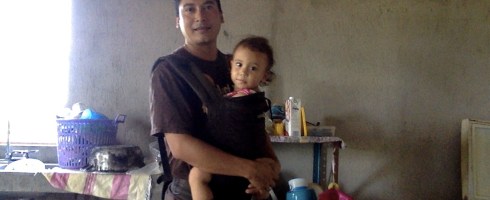
This is how Conan and Lucia roll, out on the street in Puerto Escondido


People on the street stare shamelessly. Conan says if he’s out with a male friend and toting around Lucia it’s pretty much assumed he’s gay. It is shocking and strange to the women here, too, although I believe that he gets some compliments, encouragement, and definitely some flirtation and flattery because of it, too (which I wish I could see because I love it when he blushes). When he took Lucia to the health clinic for a vaccine, arriving with Lucia strapped to his chest in the Boba backpack, all of the other parents (which are moms only) stopped and stared in silence. Women on the street are always asking to hold Lucia or to take pictures with him and his adorable daughter, supposedly because Lucia’s so cute- although I suspect it’s for the Papi-daughter cuteness combo.

Conan is a trooper, and he mostly takes it all in stride, although I know it’s got to be hard for him. “They keep trying to kick me out of the macho club” he says when I ask him what other people think. I know he mostly doesn’t let it bother him, but people’s attitudes don’t help, either. We try to make sure his friends see us interacting as equals, show them that I don’t just come home from work and boss him around because I’m the one earning money. That men can do “women’s work” and women can play the “man’s role” without either one of us having to be a jerk to the other.

Not that Conan assumes all of the “women’s work” role, anyway. He is not a particularly domestic stay-at-home dad, although he does do more than his fair share of the cleaning. He hates to cook, so he does it only for survival (mostly for Lucia) and it usually involves eggs or pasta. He certainly doesn’t try to create multi-colored, flavorful, nutritionally-balanced meals all the time like I do (although the things he does bother cooking are delicious). He can’t wash dishes or clothes at the moment, because he’s had a weird rash that prevents him from getting his skin wet for long periods of time (convenient, right? Too bad I’ve seen that it’s legitimate). Mostly he runs errands and does yard work (both of which are labor-intensive around here), and takes care of Lucia.

Caring for our two year old is his most important job, and it’s what he does best, house-husband-wise. He is wonderfully patient (more than I most certainly) and sweet and affectionate and fun with Lucia. When she is having a melt down, he is the one who can make her giggle instead. When she is trying to refuse to bathe like every single night, he is the one who picks her up and dips her in, gently and calmly. I’m the one there trying to reason with her, offer her options, bribe her, distract her while I do it, and all of that fails. Along comes Papi and suddenly she’s showered and clean, hair and all (he calls the hair washing “the funny part”; he has a lot of good tactics). He’s the one that cut her fingernails when she was a baby, because I was too scared of cutting her. He’s the one that can make her fall asleep when I just want to pull out my hair. He is a wonderful, kind, ever-improving father, and I am so proud of him for that, no matter what else he does or doesn’t do.

This has been a process for me to adapt to, as well. I got to stay home with Lucia until she was one, and still didn’t work full-time till almost her second birthday. The first two days that I went off to work a whole eight hours (split into two parts, with a two and a half hour break in between), Lucia was Mommy-crazed. Her Mommy-deprivation came out as intense neediness; it was pure “Mommy hold you” (she still hasn’t learned to say “me”) every second I was home. I ate with her on my lap. I heated tortillas with her on my hip. I had to carry her with me to the potty. It was absurd, and I prayed for it to get better fast.

But be careful what you wish for, because I got it after that. Suddenly she decided she didn’t need me anymore. It was “no, Papi get the agua” and “Papi do it”  and shrieks of “Mommy no, Mommy no” all the time. After two years of me getting up with her every morning, she finally started to cry for Papi. Only Papi can get her milk and cereal now. She won’t even get out of the bed if I go to pick her up most of the time. (Unfortunately it’s not true justice because I still have to get up earlier than both of them to get to work, but, you know, that’s how these things go.)

And sometimes I feel horrible that Lucia and I get such a small amount of good, fun, pleasant time together now. Sometimes I feel like most of my time with her is spent arguing about bath time, or me cooking or washing dishes and half-paying attention, or other things I wouldn’t exactly call “quality time.” Sometimes I’m slightly jealous of Conan getting to do more fun stuff with her than I get to. But I think that it’s just the plight of all working parents. At least for now one of us is able to be with her all the time. At least she doesn’t end up with all of her fun with daycare staff, which would feel even more unfair. And regardless, it’s what I have to do right now. I have the luxury of turning off my mommy brain for eight hours a day and getting to focus on other things, interact with other people. It’s a luxury Conan doesn’t have for now.

So kicked out of the macho club or not, Conan is doing a fabulous job, being a responsible and loving man, being a fantastic father, and being a pioneer in gender equality here in Mexico. Even if his friends never really understand, hopefully his daughter will grow up appreciating how cool and brave her Papi is, and will reap some of the benefits of his revolutionary actions.

*If you find any stats on stay at home dads in Mexico, please let me know!

The Back Roads of the Information Superhighway

17 Aug

The information superhighway, the age of the internet, and Google’s debated world domination have yet to make an impact here in my hot and humid little paradise. Sure, computers and the internet exist, although access is more limited. Very few people have home internet, for example, (What, you want statistics? Ha, good luck with that!) and even the university where I teach does not have wi-fi. But that’s not even what I mean by the information superhighway not quite reaching us. (And let me just preface this by saying that this is not so much a complaint as an observation to share; just your neighborhood sociologist reporting on her empirical evidence.)

What I mean is that the internet does not provide us with a wealth of relevant local information. In the U.S., for example, I can google “pediatricians Louisville, Kentucky” and find a list of pediatricians, complete with phone numbers, addresses, and probably reviews. Here? Keep dreaming. Want to look for a therapist? Wondering if there’s a decent gynecologist? Need a plumber or an electrician? Can’t figure out exactly who can fix your urgent drainage problem? Too bad. There is zero information at your fingertips.

Okay, maybe not zero information, but not much. There is a blog where the foreigners give opinions on the best things in Puerto- the best pizza, the best dentist, things like that. Many things are lacking from the list, though- any kind of maternity/gynecological care, and lots of kinds of professionals that are needed for taking care of houses, for example. And many of the things listed are considered the best because the professional/care provider speaks English or otherwise caters to foreigners, not necessarily because they’re the best in other regards (and they’re often very expensive for those same reasons). So I can’t say there’s nothing helpful online and local, but it’s not much that’s helpful for us.

Shopping, and even getting information about basic products, is often impossible online as well. Need a rain poncho and not sure where they sell such things? Want to know the cheapest place to buy an electric generator? Looking for safety pins? Well, be prepared to do a lot of walking and asking around. My boss wants to buy a sewing machine, and she was trying to figure out what kind of store might sell that sort of thing, which you can’t google, of course. “Just keep telling everyone you know that you’re looking for a sewing machine,” I advised her, sharing my tactic. “Eventually someone will know where to go or have one to sell you.”

My dad was trying to be helpful the other day, as so often happens with my family. He was telling me about some laptop-sized solar panels that his neighbor has that he says were pretty cheap and produce enough energy for a couple of fans. “Can’t you just get a couple of those?” he wondered. I am never sure whether to laugh or sigh in these situations. Not because of the wonderful helpfulness of my family, but rather because of the total irrelevancy of their suggestions 9 times out of 10. They forget that we live in a parallel universe where the same technology is not available, and neither are the same prices. If we want to compare prices on solar panels, we need to make a trip to the store in Huatulco (2 hours), a trip the one around here (somewhere, supposedly), and a trip the one in Oaxaca City (7 hours) that sells solar panels. I am not even 100% sure of the existence of the Puerto Escondido and the Huatulco stores because they don’t have a website that I can find. I found an email address for the Huatulco store but it doesn’t work. I found some phone numbers, but that is the most advanced information available. Going to all these different towns is not a real possibility just to compare prices. Luckily sometimes word of mouth does come through for us, though, and in this case we’ve heard it’s much cheaper to get someone to buy one for us in Mexico City and send it down. So we’ll see. The process continues.

You can’t shop online, either, except at Amazon, but then you have to see if the seller ships down here and whether or not the shipping will cost you more than the product. You also need to be prepared to wait 2-4 weeks if you decide to order it. There are a couple of online sites for big chain stores here, but you can’t necessarily get the products on the website if they are not here at the local store, so it’s really a waste of time to even look online.

Our current still-not-in-the-information-age adventure involves shopping for a car (hooray! Our life is about to get 100 times easier!). But used car shopping here is a different sort of process, of course. Our used car lot is a parking lot with about two cars per week. There are no ads in the newspaper to speak of, much less a whole advertising paper dedicated to sales. And you guessed it, there’s no online forum for car sales, or any other type of sales, for that matter. There’s not even a craigslist! There is hope for our car shopping; everyone we know in Puerto just about now knows that we are looking for a car- one that’s bueno, bonito y barato (good, pretty, and cheap), so they’re all keeping their eyes and ears open for us. Conan’s even gone to look at a couple cars now.

But it all takes time, and patience, and human connections. It is often frustrating and inconvenient, but more than anything it reinforces our interdependence as people. It reminds me that I can’t do much of anything if I try to go it my own way, which is interesting medicine for this extra-independent little gringa. I am pretty dependent on family members and friends and nice strangers to help me figure out where to go, what are the best deals, how to deal with bureaucracy, bribes, or other outrageous, everyday situations. And it’s not just because I’m a foreigner that I need all this help (although in some ways I need more than other people). It’s because life is just like that here. We need help, and the internet is almost never the answer. While I didn’t really set out to acquire this much patience, it’s a little revolutionary, too. So screw Google and bring on the neighborhood gossip mill. Like it or not, we’re traveling the back roads instead of the information superhighway, and there’s not much development in sight for the future. But in the end it’s the bigger adventure!

The Neighbors

10 Aug

Lucia, our two year old, had her first cup of coffee the other day, thanks to our new neighbors. But before you demonize them (or us) as evil child abusers, let me explain a little.

“It’s neighbors!!!!!” shouts Lucia when she hears a car on our street. We are no longer the only people living on our street; we do finally have neighbors. Sometimes the car is a visitor for us, or for the new neighbors, and occasionally we don’t know who it is- but often Lucia is right, and the car belongs to the neighbors.

We lucked out; they’re a youngish family, two teachers with three kids. Their youngest is a girl a little younger than Lucia, there’s a little boy a little older than Lucia, and a six or seven year old boy, who of course is Lucia’s favorite (she prefers to play with the big kids).

I’m about as pleased as Lucia is that we have neighbors- someone for her to play with, someone to borrow sugar from, people to complain about the kids with, to share in the struggle of bringing electricity to our block.

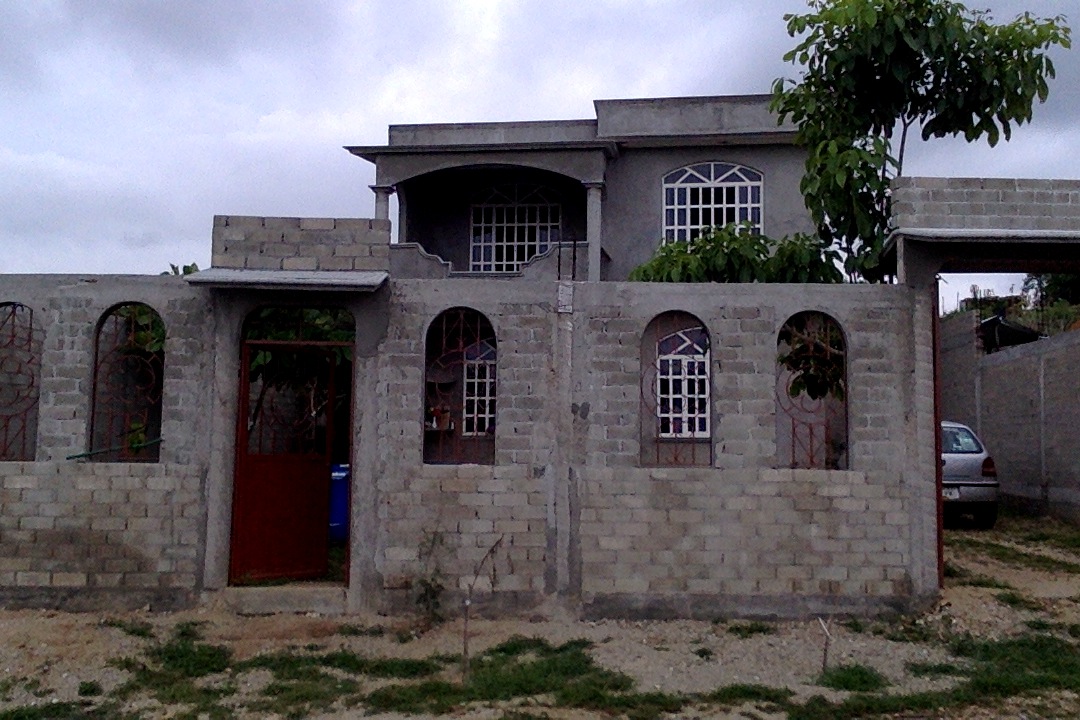
the neighbors' house

the neighbors’ house on a cloudy day


Sometimes we all stand around outside in the street and watch the kids play together. A couple of times Conan has gone inside their house with Lucia. A couple of times the little girl has come over here with her mom- which is nice, because if Lucia’s over there she mostly plays with the oldest boy. As soon as Lucia sees one of them outside she starts running up the road to their house (their house is across the street, but slightly uphill from our entrance). She’s started asking to go play with the neighbors- “It’s go see neighbors?” she asks hopefully. It’s a great situation, because we don’t have the time or the transportation for her to get out and play with other kids everyday and we don’t have visitors all the time, either.

But a few nights ago we crossed a new threshold. Lucia and I had gone outside to greet her Tia Chica and her teenaged cousin Brisa, who were swinging by running errands (including bringing us fresh tostadas- yum). Lucia spotted the neighbors outside and ran over to play. We chatted for a couple minutes outside and then I invited Chica in and sent Brisa over to get Lucia. By then Lucia had gone inside the neighbors’ house, and Brisa came back alone. “The lady said to let her stay for a while- she’s watching TV.” (The neighbors have a solar panel.)

“Well,” I thought, “at least it’s not like she’s going to be watching TV for hours on end, and she certainly doesn’t get any TV at our house.” So I didn’t worry, although we don’t really want her to watch much TV, andthus far we’ve never left her unsupervised with people that weren’t close family. But they’re our neighbors, and with three kids running around with her I figured not much bad would happen in half an hour or so. Conan and I relaxed and chatted with Chica and Brisa.

Finally Chica and Brisa left; I got in the shower and Conan went over to get Lucia. It was time for her to take a shower with me and get ready for bed. “Lucia, tell Mommy what you were drinking at the neighbors’ house,” Conan said when they came in.

“What was it?” I asked Lucia, who gingerly replied, “Coffee and pan!” (pan being sweet bread, in this case).

“Oh really?” I asked, eyebrows raised at Conan for confirmation.

“Yes, her own cup of coffee,” he confirmed.

“Do you think she’ll sleep?” I asked, still wide-eyed, but only a little worried. I already planned to convince Conan to stay up with her if she didn’t sleep, since he’s an insomniac anyway.

Now you should know that, first of all, coffee is usually made much weaker than we drink it in the U.S., brewed on the stove with sugar and often cinnamon, served with milk commonly. So it’s not like giving my kid a shot of espresso or something. Furthermore, coffee is a cultural mainstay that people usually have with sweet bread, for breakfast and again for dinner. I suspect that it comes from over-worked women who could only stand to make two large meals a day (down here it’s called almuerzo, around 10 AM and comida around 3 PM). Especially if you think about women who have to cook over a fire- go and collect their firewood, grind their corn for tortillas every meal, you can see that it’s definitely easier to light a small fire just for coffee and eat a piece of bread you dip into your coffee. So traditionally, you have some bread and coffee to tide you over in the morning until almuerzo, and you eat a big comida in the afternoon so you’re not too hungry before bed. While some people eat dinner, or maybe go out for tacos or tlayudas from time to time, dinner is not the big meal that it is in the U.S. And coffee is not something to wake you up- it’s just a warm and flavorful drink that’s a tradition.

So Lucia had her first cup of coffee, which I’m sure she loved because it was served with sweet bread, if nothing else. (Our neighbor told me Lucia made a face when she drank it, so maybe she didn’t like it as much as she let on). She did go to sleep just fine, so either the caffeine was minimal and didn’t affect her, or we should be grateful she skipped her nap that day. The neighbors told her to come back the next night for more coffee and pan, although I did not let her accept the invitation this time.

We will let her go to the neighbors’ house to play, though. I know that Lucia is going to be exposed to things like coffee and suckers and TV somewhere or the other, so it might as well be at our neighbors’ house.

I remember, as a kid, going to my neighbors’ house all the time and being delighted with all the forbidden things and laxer rules than my house. I loved how our neighbors bought chocolate flavored Pop Tarts, and white bread, and could watch TV whenever they wanted (or at least it seemed that way to me). I’m glad now that my parents did what they did; I’m glad that I really do prefer the healthier wheat bread, for example, without forcing myself to like it the way people have to if they grew up with white bread. I’m glad I didn’t get to watch TV all afternoon, even if I was grumpy about it then sometimes.

And I’m determined to provide the same kind of household values and nutrition for Lucia- not as strict rules that can never be bent or broken. I don’t want her to feel like things that other people do or eat are forbidden, I just don’t want them to be a staple of her daily life. I’m not against coffee and sweet bread as a tradition, but I don’t want that to be part of her diet every day. While I’d prefer that she not have coffee again until she’s older, if that’s the worst thing she’s exposed to at someone else’s house, I’m pretty sure she’ll be okay. And I want her to know that what other people do or eat or believe isn’t wrong or bad, but that it’s just not how we do things in our house. Sweet bread continues to be a treat, and not a daily food group. We’ll probably never buy Pop Tarts or white bread, but I’m not going to worry if she gets ahold of it elsewhere. That’s what friends and family and neighbors are for, anyway- helping us raise our kids to know how to bend the rules and be flexible, helping us corrupt our kids in all the right ways and times and places, even though it’s not exactly what we’d do in the moment. So cheers to café and pan and neighbors, and learning to be flexible parents! 


Two Years of Exile

3 Aug

 Yesterday, August 2, marks our two year anniversary of being in this country, two years of our so-called exile (so-called by your humble narrator, thank you very much). Maybe it sounds absurd- that Conan could be exiled to his own country of origin. I am sure that the politicians, the immigration officials, much of the “conservative” crowd could never fathom such a thing, but Louisville (and Southern Indiana) is Conan’s adopted home. He even has the fleur-de-lis tattoo to show for it!


Conan's Louisville love

Conan’s Louisville love

I imagine it would be tricky to not adopt a place as your own after 10 years living there. After growing up there, getting your first car, acquiring long-term intimate friendships, being around friends’ kids who know you and treat you as an uncle. After learning a language with a Kentucky accent, falling in love, seeing snow and leaves that change color for the first time, and again year after year. After putting pride into your work, being able to drive around town and point out the fruits of your labors on so many houses, having your first successful job interview in a foreign language, where you cleverly tell the interviewer he should hire you as a roofer because you “sleep great during storms” knowing the roof you did won’t leak. After partying too hard for your own good, and later learning to tone it down, taking childbirth classes with your partner, learning about rent and bills and being the kind of friend people can count on. Despite having scary experiences with racists threatening his life, despite hearing in the media every single day that he is illegal, somehow nearly sub-human, that he doesn’t belong, it still became his home. I can’t imagine creating that kind of bond with a place and its people without calling it home. I’ve lived in places for a mere matter of months and felt lost and lonely upon returning to Kentucky.

The difference is, I was born in a country of money and privilege, where I can lawfully go just about anywhere in the world if I can get the money together to do it, even though I don’t come from wealthy parents. I backpacked around Europe at 18, I studied and volunteered in South America, and now I’ve successfully (and pretty painlessly) acquired permanent residency in Mexico. People from Mexico or Central America (and most of South America, too) who are not very wealthy and/or very educated/ highly skilled are mostly not going to get a visa to the U.S.* There are some work visas available every year, but the number of work visas like that is far fewer than the number of low-wage jobs that need filling and that are often filled by immigrants, both documented and undocumented. Plus it is expensive and time-consuming for the companies who want to give out these kinds of work visas; there are not many incentives for them to work with future immigrants.

So when I decided I wanted to go to x,y or z country, I saved up and bought a plane ticket and got my passport stamped as I arrived. That was never an option for Conan. I don’t want to argue about the “right” or “wrong” of Conan breaking the law this way, since I personally break the law all the time, every time I jaywalk, every time I drank alcohol before I turned 21, and in many other ways on many other occasions. I don’t think Conan hurt anyone in his breaking of the law, and that’s the most important thing in my eyes.

That is part of the back story of our exile. Now, the U.S. just calls this type of exile deportation, or in Conan’s case, voluntary departure. But “voluntary” would give you the idea that the move was based on his free will, which was not actually the case. Of course he wanted to see his mom and the rest of his family, especially with his very first child and his partner to introduce. But was that the moment he would’ve chosen to move of his own free will? Nope. Voluntary departure is just a sugar-coated legal term for getting deported on your own dime instead of in handcuffs after weeks or months in immigration jail (which is a HUGE for-profit business all it’s own) waiting for the slow-as-molasses-in-January immigration system to get around to sending you off. Voluntary departure happens when your family or friends in the U.S. get together enough money to put down a bond (anywhere from 1-10 thousand dollars) so you can not rot in jail while you wait for your immigration court date. On your court date, if the judge decides you are indeed in need of removal from the great United States of America, they give you a certain amount of time (usually a few months) to get out and prove that you’ve left by the date assigned you.

In Conan’s case, in the law’s eyes, he had no reason to be in the U.S., end of story, never mind all the letters that employers and family and friends wrote making his case. Our fabulous lawyer then tried to ask for an extension on the voluntary departure, because I was 7 months pregnant by Conan’s court date, pleading that Conan deserved some time with his first child. The judge accused our lawyer of trying to stall the process and denied the extension. I suppose that is the back story to my semi-self-imposed exile from my country, from my sweet little hometown. Of course I could have stayed. But I didn’t want to be separated from my partner, and I refused to separate him from his seven week old daughter because of my government.


This picture pretty much sums up the reason for my exile.

This picture pretty much sums up the reason for my exile.

So no, it’s not true that having US citizen children gets you papers in the US (although having Mexican citizen children is pretty much a free ticket to your papers down here, thank goodness!). Lucia could apply for her Papi in 16 more years, when she becomes an adult, but until then it is not much help. Even if we have ten children, USCIS will take that into account but absolutely not guarantee his entry.

And yes, Conan and I are married now. We frequently have people (on both sides of the border) assume that our marriage gives him a free ticket into the U.S. This is also not the case, unfortunately. Probably once upon a time marriage to a US citizen was a pretty quick ticket to getting legal residency and later citizenship, just like once upon a time the US also accepted unaccompanied children immigrants and refugees. But immigration politics and policies are very different now. When a US citizen marries a foreigner they have to prove that their marriage is legitimate, and if the sensitive souls who work for USCIS decide that there’s not enough proof, then they turn you down. And it takes months or years for these kinds of cases to be processed. It’s also expensive- both because of immigration fees and because you really need a lawyer to deal with these guys. When you are making pesos or some other local currency that’s not dollars, it’s pretty hard to save for that sort of thing, too. And in cases like ours, where the applying spouse has already been deported or “voluntarily departed” from the country, there are even more time-consuming and expensive steps to go through, and zero guarantees of success.

And why did Conan get removed from the country? There were a couple factors going against him- some naïveté on his part, some bad luck, bad policies, racial profiling. He was taking a friend on an errand the evening before New Year’s Eve, 2011, in Southern Indiana, where there are a million cops and not much to do. At some point a couple years before that, he had been pulled over in the same area, and ticketed for not having a license. He did not get a ticket for anything else because he wasn’t actually doing anything wrong, driving-wise nor vehicle-wise. Not having a license is, of course, illegal, but is also just a tad-bit unfair since you can’t acquire a license if you are undocumented in the US.

He had gone to his court date crossing his fingers that they only dealt with the no-license situation and didn’t delve any further into his immigration situation. But his name wasn’t on the docket at all, and he foolishly, optimistically assumed they had dropped his case (he did not get a lawyer). As it turned out, he had gone to the wrong place (there’s a county court and a city court down the street from each other in Jeffersonville, IN) and thus he had a warrant for his arrest for failure to appear for court. So the officer, who said he pulled him over for not having his lights on- although both Conan and our friend say his lights were on- arrested Conan on the spot, and assured him he’d be deported as well, just out of friendliness.

Conan spent a couple days in jail waiting for his court date in Jeffersonville. There they gave him another court date for January and called in the immigration authorities to come pick him up. From there he was moved around to 4 different facilities while we got the money together and tried to post his bond (which is a story all in itself).

Once we did post bond and he was released, he was released with no money and without his ID. I had bought him a bus ticket back to Louisville, since I wasn’t able to drive to Chicago to pick him up (and he was actually somewhere in Wisconsin then, but those nice immigration folks were able to take him to Chicago). I was assured by the man who accepted my bond that he would get the message to the folks in Wisconsin that Conan had a bus ticket, and that they would pass along the confirmation number. Neither of those things happened. They dropped him off somewhere downtown in the snow and bitter wind of January in Chicago, Conan in only his hoody. He finally had some very kind strangers let him use their cell phone, and so he found out about the bus ticket, although he didn’t get the confirmation number. (He hadn’t called me because he thought I was still on vacation in Mexico.) He finally got to the bus station and couldn’t get the bus because he didn’t have ID. It was a huge mess. Finally he was able to get a bus and I picked him up at 2 in the morning, a pale, gaunt figure with huge bags under his eyes.

He got out and got back to Louisville just in time, because he had court in Jeffersonville for his driving without a license case the next morning. If he hadn’t been able to make it there he would’ve had another warrant and it would be ever more complicated and expensive to attempt to get him back in to the country some day.

As it is, despite being married to me and having a U.S. citizen child, we’re still not looking to even start the process yet. We don’t have the money, for one, and at this point we’re not even sure when we’d like to try to live there again. We’re enjoying the time with his family, trying to reconstruct our lives in this context, little by little. It’s hard that we don’t see my family much. It’s terrible that he can’t even go visit, under any circumstances. It was a bit of a shock to have to leave quickly with our tiny new baby. But these are not the worst circumstances to be in exile under. We are not fleeing any wars; our lives were not threatened. Lucia and I can visit every so often. I’ve heard much worse stories, although that didn’t make the reality any easier at first.

It’s been hard for both of us in different ways, although Conan is quick to say that it’s been “fine” for him, the same way someone politely says they’re “okay” after a loved one dies. I suspect, in part, that he doesn’t want people here to think he’s stuck-up, acting like he’s more gringo than Mexican, acting like this isn’t his home. But of course, it wasn’t his home for 10 years, and it’s a lot to adapt to upon returning, whether he wants to talk about it or not (Sorry for outing you on the internet, mi amor.).

Two years later, now with our own house in-progress, with some friends, with work, developing our life here in Mexico, I am quite a bit less bitter about our exile. I’m still angry about the system. I hate that we can’t visit our friends and family together. But finally, I am starting to claim a sunny little piece of Oaxaca as my own. And best of all, we’re sharing this life with Lucia, our little bilingual dual-citizen who loves tortillas and pasta and all of her weirdly-named grandparents. We hope that Lucia doesn’t have to know about exile, that she grows up knowing that it’s perfectly natural to have more than one home, that she can belong anywhere her little heart can learn to love, anywhere and everywhere she wants to call home.


*There are lots of people from Mexico, Central and South America who are lawfully documented to be in the U.S. Please don’t take my generalization about the process as license to discriminate/assume that everyone with brown skin that seems “latino” does not have papers.