Her Mother’s Tongue

9 May


“Más milk!” Lucia tells us first thing in the morning. “Más dump trucks!” She yells when we’ve just seen a dump truck and she wants to see more. She usually says “more kisses” as you’re walking out the door, but mostly she prefers the Spanish when it comes to more. For a while she’d get it all mixed up and say “mos” instead of “more” or “más.”
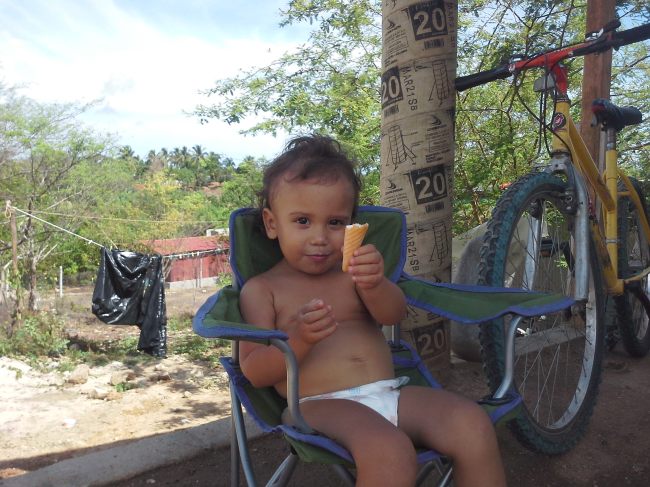
Image<“Cheers!” She says. “Ice cream!” She yells with her mouth full. Oh the joy!>

With a lot of words she tends to prefer one language or the other. For example, she always says “agua” and never “water.” She usually says “este” and rarely “this.” For a while I thought maybe she could only learn/remember one word or the other, despite the research that says babies and young children can learn multiple languages at once with no real problems.* But just when I think she doesn’t know a word in the other language, she’ll suddenly say it to somebody else. Like when she went to go get eggs with her Abuela, she said “huevo” repeatedly, although she always says “egg” to her Papi and me.

It is fun to watch language and understanding unfold in any child, but it is extra fun for me to watch her in these two languages- the way she mixes them up, when and where and how she uses them. “Esto es for poopies,” she told me yesterday, bringing me a diaper. “Ewie poopies,” she added, grinning. More and more she says both words. “Córrele” she says, like her Abuela says all the time while Lucia’s running. “It’s running,” she says as well, in case.

At almost-two years old, she’s started to learn the words to songs, too, in both languages. I love the way she says “oh my goodness!” and “aquí está!” I love that Lili taught her to say “este no sirve, este sí sirve”. I love that she asks us to sing “Sunshine” (You Are My Sunshine) and she tries to sing along. I love that she uses all of our invented words, like “feetsies” and “currito” (her Papi’s invented word- a very cute burrito, when she’s all wrapped up in her towel). I am so happy to watch her world unfold in words; it’s an exciting and never-ending adventure. 

We’ve wondered if she realizes yet that there are two distinct languages in her mind, in her world. Especially since they don’t come out so distinctly, so separately, it’s hard to imagine how conscious she could be about it. I don’t think she realizes yet that the other kids don’t understand her when she says, “It’s ball,” for example. She definitely copies what other kids do and say, so she speaks some Spanish around kids here, but there are some words she still doesn’t use (or know?) in Spanish, so it’s interesting to see the other kids navigate that. “What is she saying to me?” the older kids ask me sometimes. The younger ones, however, just go with the flow, communicate through context, don’t stress when they don’t understand a word she says. The younger kids remind me that if we’re open to learning, to communicating, we can do it despite any barriers.

While I was busy wondering if Lucia knows she speaks two languages, her Papi just told her one day, “You know you speak two languages.” They were out observing a digger truck, one of the big machines that Lucia loves. “That’s why in Spanish we say máquina, and in English we say machine,” he told her.

He didn’t tell me about their conversation, but suddenly Lucia started saying two words at a time for many things. We went to look at a digger truck down the road, and she started telling me, “maquina. machine. maquina. machine.” Her rubber ducks in the bathtub drink coffee and café now. She plays a game where she falls down, and sometimes she says “cayó” and sometimes she says “fall down”- the grammar perfect in neither language- just general learning-how-to-talk baby speak, but in two different languages.

She’s still at the age, too, where sometimes she speaks entire paragraphs in some unknown baby tongue. But it’s funny when she does it with somebody who only speaks English or only speaks Spanish. “What’d she say?” they ask, impressed with how much she presumably speaks the other language.

“Won’t she be confused?” People sometimes wonder. Luckily I know plenty of bilingual and even trilingual kids in the U.S. who do just fine. I’ve been much more concerned that perhaps she won’t have enough exposure to English. So I was really pleased when Conan decided that he would speak English to her, even though some people here might think it’s rude, like he’s just trying to show off that he speaks English. Extra kudos to Conan as well because it is difficult to speak your not-native language to your child; it is a little less comfortable, a little less natural. As a (U.S.-born) Spanish professor explained once about why her kids weren’t fluent in Spanish, it’s hard to not use all the songs and little sweet nothings and special sayings you’ve learned for babies and kids all of your life in your native tongue. Imagine, for example, your child gets a boo-boo. But you don’t call it a boo-boo and maybe you don’t even tell her you’ll kiss it to make it better because it doesn’t translate the same in the other language. Difficult, huh? So it’s a big deal that Conan decided he would speak English to her.

Because I am a professional worryer, however, I also worried briefly that she won’t learn perfect English grammar, since her Papi’s grammar isn’t always perfect. But then I remembered that my Dad’s grammar isn’t perfect either, nor is the grammar of most native speakers in the U.S. (only us crazy women on my mom’s side of the family are grammar fanatics).

Sometimes I feel silly that Conan and I speak Spanish together all the time; I feel like we’re wasting an opportunity to expose her to more English. But Spanish is the language of our relationship and our love, and language habits are hard to break. I try to remember that my Mom and my Aunt Julia managed to learn Italian even though my Nonna (my Italian grandmother) only spoke it to them some of the time. Granted, I hope Lucia’s English will be stronger than my Mom’s Italian. But my Nonna managed to teach them enough so that they could talk to older family members, get by in Italy, and inherent some of the cultural things that can only come along with the language. Probably Lucia will learn more than that, but if that’s all, it’ll be enough.

Some days it seems that maybe Spanish will take up all the room in her brain and she won’t have any space for or interest in her mother’s native tongue. But then I remember that it’s not a contest, and that favoring Spanish doesn’t mean she won’t learn English. And furthermore, me worrying about it won’t make a bit of difference in the matter, so I might just do what I can do and let go of the rest. Conan and I will keep talking to her in English. Sometimes we might even speak English to each other in front of her. We’ll keep reading books to her and singing to her in English. We’ll teach her to read and write in English, when the time is right. We’ll try to give her other opportunities and contexts in which to use English. And the rest will be up to her.

At the end of the day, her two languages are no different from the way we learn culture and habits from all the different influences in our lives. Lucia is learning language from a variety of sources and influences, like the way she loves to eat pasta and vegetables (from her Italian-American grandparents and her ex-vegetarian mama) and corn tortillas and sweet bread (thanks to her Papi and her Mexican relatives). One’s not more delicious than the other; they all just have their time and place. Her language will have it’s momentary preferences, just like in the moment maybe she wants a hug more from her Gamma (my stepmom) or a story more from her Nonna (my mama) or an outing more with her Abuela (Conan’s mom), but she doesn’t love one more than the other. They all come together to cherish and teach and nurture her in their own ways.

This year my mother’s day gift to myself is letting go of my language worries. It’s appreciating all the different language and love being shared with my baby by so many people. It’s enjoying the fact that my little girl talks up a storm, in her special Lucia native tongue. And that is just perfect.

*Here are a couple of links to some interesting research on multilingual kids, but there’s tons and tons of great info out there beyond this too:
http://www.helendoron.com/research.php
http://www.omniglot.com/language/articles/bilingualkids1.htm
And how babies learn and develop language:
http://www.human.cornell.edu/hd/outreach-extension/upload/casasola.pdf

From the Weeds Up… Building a House with Sand and Rocks and Magic

4 May
the big empty box

the big empty box

Don’t tell Conan, but I was less than thrilled with our house when I returned from my stint in the U.S. It was a big empty box- an extremely budget-busting empty box- and I was terrified that we’d never manage to fix it up and furnish it with the little bit of money we had left. Two of the rooms had dirt floors. There were lots of window slots and doorways but zero doors or windows. No separations between rooms, no water tank, no nothing. Did I mention we were already way over budget, and neither of us had a job? Nobody could tell me how long it would take before it was livable, either.

It took a month just to figure out who could work on the house within our budget and still do a good job. We hit the jackpot when Conan’s adult niece Lili agreed to come along with her partner Uriel, a master constructor (albañil). Uriel worked hard on our house for much less than what he deserved to be paid, and Lili helped with the cooking and watching Lucia to boot (especially putting her down for naps! She is our resident hammock expert). We never could’ve done this without them. On top of that, they were great company. Thank the universe for family!

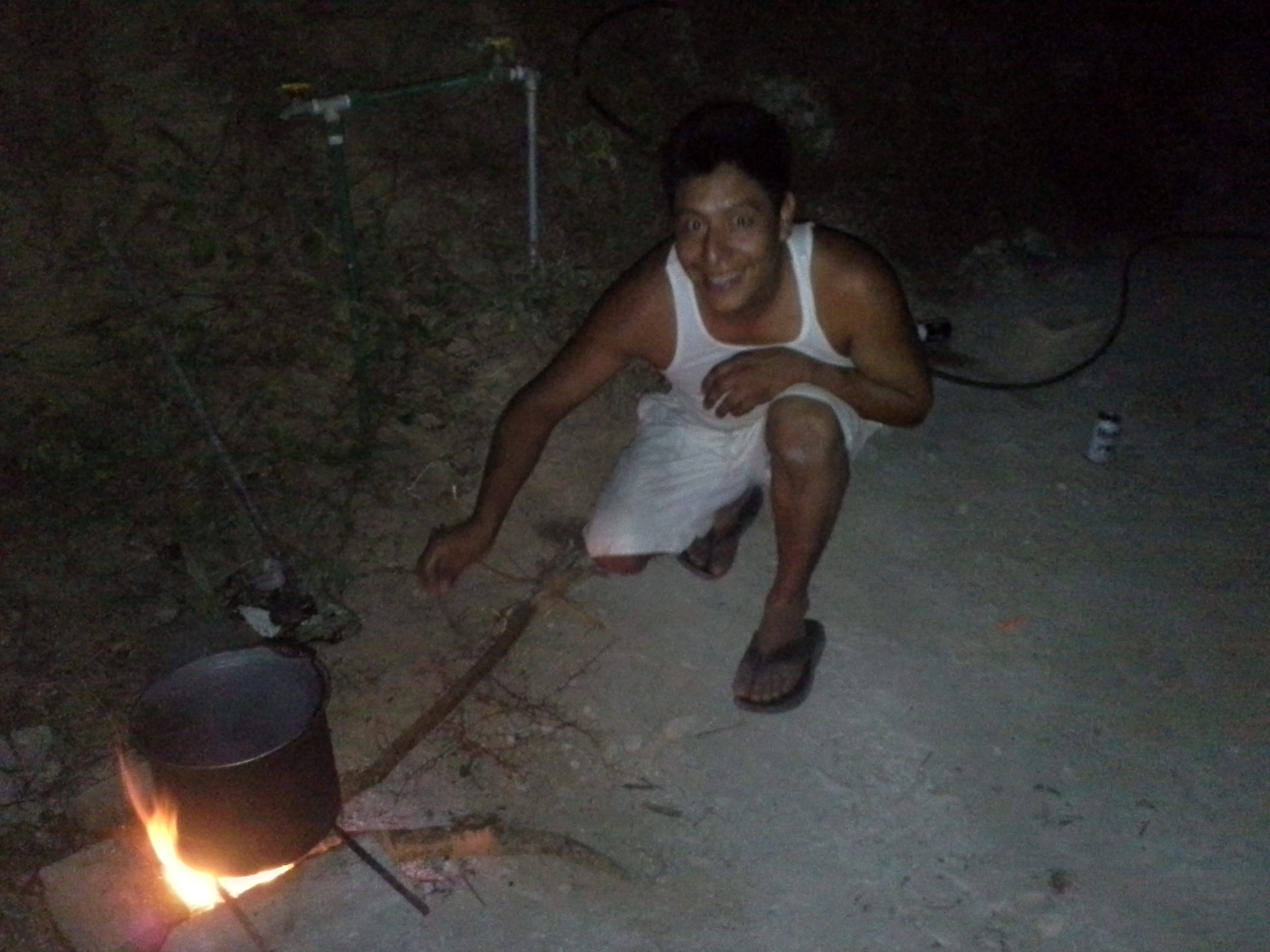
Uriel stoking the fire so our black beans cook. Our albanil, our sobrino, our friend.

Uriel stoking the fire so our black beans cook. Our albañil, our sobrino, our friend.

Lili and Uriel on our roof. Lucia adores Uriel, who she calls "OO-wa" since she can't pronounce Uriel.

Lili and Uriel on our roof. Lucia adores Uriel, who she calls “OO-wa” since she can’t pronounce Uriel.

Lili, hanging out outside while we wait for beans to cook

Lili and Nery, hanging out outside while we wait for beans to cook

Again thankful for family, we spent the first couple of weeks in Puerto at Conan’s Aunt Artemia’s house, waiting for our house to be livable. We slept in a tent on their patio, folding up the blankets and taking down the tent every morning, only to rush and put it all back up again while Lucia was in the middle of a meltdown because we didn’t get back to the house on the other side of town until it was past her bedtime already again. Plus I was doing all of this tent-arranging and meltdown-calming solo because Conan was working from sunup to sundown at least, trying to make the house livable as soon as possible.

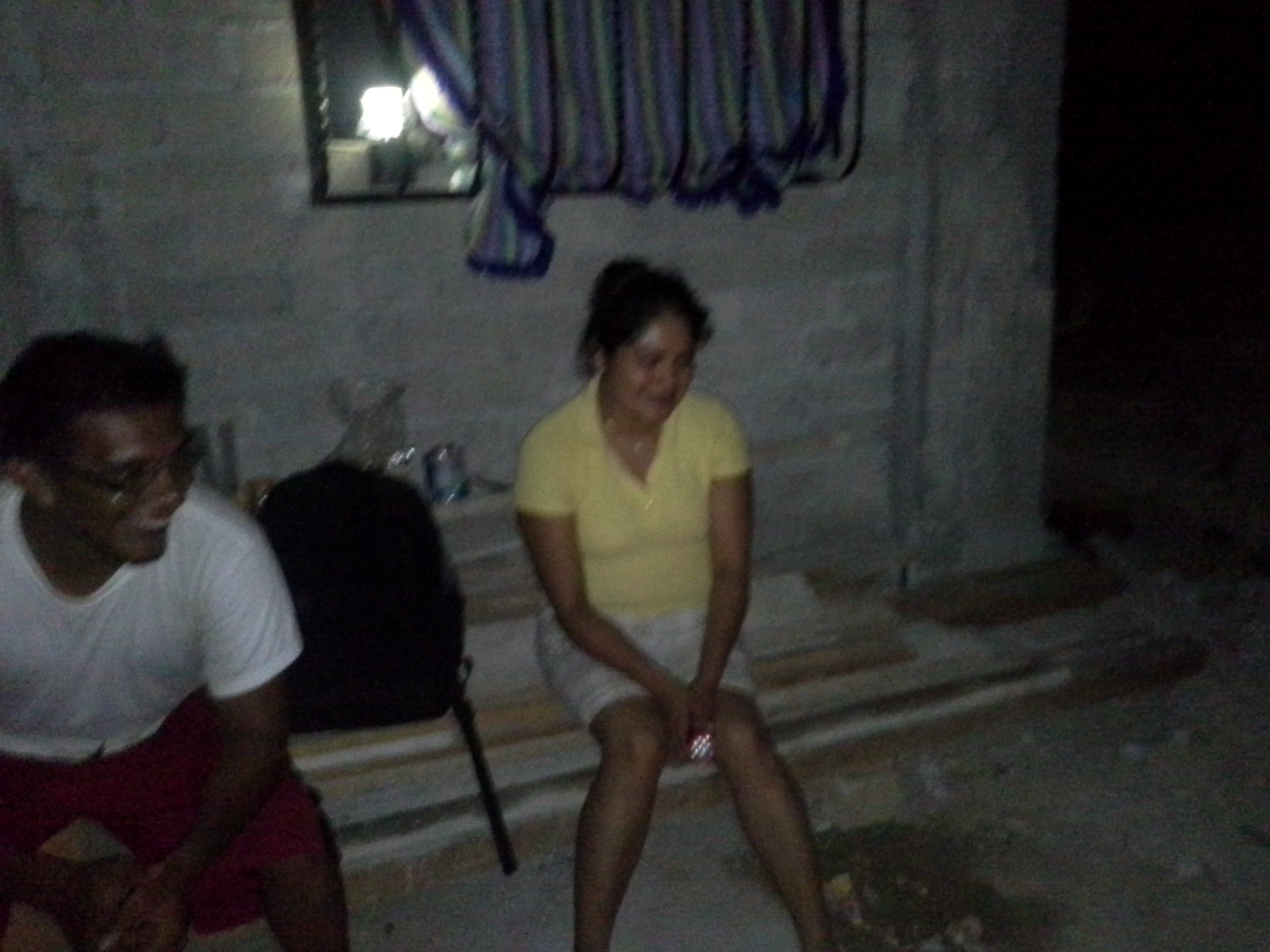
But the allure and romance of having one’s own bathroom is powerful, and “livable” can be redefined at any time. By the time we got our very own toilet, sink, shower head, and even tile floor for the bathroom, I was ready to be in our house, regardless of the rest. I was thrilled at the prospect of sleeping in a tent that I wouldn’t have to take down and put up every day. My good friend Luz, who’s also family by marriage, borrowed a tent from her sister for months on end so that Lili and Uriel had their own tent, too. Lili and Uriel left the crappy room they were renting and moved in to our construction site/future house with us. The night we all first stayed there was Christmas Eve. We ran out of gas for the stove but Lili grilled meat over a fire pit. Our friend Nery came over with beers, too; it was an appropriate and fortuitous start to living in our own place, both positive and representative of the tenacity and flexibility that would continue to be required of us.

our bathroom and bathroom floor, with the hanging shower thing that came laterP04-05-14_08.55[1] P04-05-14_08.56

When we did have gas for the stove, the kitchen consisted of some plywood on top of horses that we used as a table, and a two-burner stove. It was in the tin shed. That was the only part of the house that we could lock up, since our big box still didn’t have a door or window protections. We locked it every night and three different times I was accidentally locked out from my wake-up necessity of coffee. I can’t begin to tell you how relieved I was when, months later, we finally got to move the kitchen to inside the house and there was no chance of being separated from my morning life serum.

When we first moved in, there were two rooms with rough concrete floors and two rooms with dirt floors. There was a big hole in the floor where originally Conan had thought he might put a staircase connecting the bottom floor (the “in-law quarters” which will eventually be two more rooms) to the kitchen. The yard was all dirt, hilly and uneven, with big piles of sand and rocks being used for construction. There were tools and raw materials pretty much everywhere. All of this made it nearly impossible for Lucia to play without someone being on top of her at all times- which also made getting anything else accomplished nearly impossible. It was boring and maddening a lot of the time, and it required me to totally (temporarily) redefine success. Every day that we managed to cook our meals and do the dishes and work on the house and go out to buy tortillas and ice for the cooler and run any other necessary errands and prevent Lucia from any major accidents was a hugely successful day.

And progress was made. Suddenly the cousin that was making our window protections came over and installed them! Since we had waited for them, the fact that most of them reminded us of prison bars was easy to overlook. Like with so many other things, I learned to think, ‘we’ll fix it someday.’ Conan and Uriel painted the two nice ones that Conan had gotten a deal on, and we got those two up, too. Just in time for us to visit Juquila for New Year’s, the cousin who made our doors (without charging us any labor cost) came over and installed those. The house started to look like it was owned by someone and wasn’t just being squatted by bilingual hippies.

our jailhouse window bars

our jailhouse window bars

Big magic happened on my birthday. Conan borrowed Arturo’s truck and brought down mattresses that fit in our tents! He brought down a bunch of Lucia’s toys, a couple more chairs (we had 2 or 3 before and put more plywood on horses to make a bench), more dishes, more clothes and shoes, a dresser, the changing table for Lucia (oh what a luxury to change her somewhere besides the floor), and several other random yet important odds and ends (like the hanging thing for the shower so our soap and shampoo aren’t on the floor). He brought down a big gas tank so we wouldn’t run out of gas every two weeks. And Paulina (my mother-in-law) gave me the aloe plant I had wanted and needed so sorely in the heat (and sunburn) of Puerto. It might not sound exciting, but it was like camping for a month or so and suddenly having civilization brought to you. Lucia’s utter joy at throwing herself backward on the bed and landing on something soft was a birthday present all alone, never mind all the other benefits from the things Conan brought down from Juquila.

Slowly but surely things kept on improving. We all (except Lucia) stayed up till midnight putting down the first floor. The guys had laid the concrete during the day, with the help of an extra hired hand, dumping five gallon buckets of sand and gravel into a big machine to mix with the cement to make the concrete. Then they carried buckets of concrete from outside to the appropriate spot on the floor. Then Conan and Uriel smoothed the concrete out, which is a lot of slow and tedious work. They used a 2by4 and this thing that looks like an iron, and by sundown they were not even close to finished. Since you might recall that we don’t have electricity, and timing is of the essence in this whole concrete business, there we found ourselves, Lili and I, shining lamps on Uriel’s and Conan’s work for hours on end. Our rechargeable lamps both went dead and we shined our cellphones on the floor until they finally finished. The next day they spent the day, still hunched over, drawing lines on the floor to make it prettier and less slippery. I had never seen the perseverance needed to make something so seemingly simple as a floor. We wrote Lucia’s name in it, too, and it sunk in a little more that when you build from the weeds up, it’s really all yours.

the floor! smooth concrete with pretty lines on it (not a great picture, mind you)

the floor! smooth concrete with pretty lines on it (not a great picture, mind you)

https://www.facebook.com/photo.php?fbid=646012868789097&l=0d4540635d

<the link has a beautiful picture of Uriel and Lili working on the floor in the dark.>

The other floor, months later, was an even later late-night project. Because our entrance opens to that floor, Conan and Uriel and Nery (bless his heart for coming to help us after he got off work) did it at night so we wouldn’t need to walk on it while it was wet. But by then our good friend Epig (who you may recall from my post about his amazing burgers https://exiletomexico.wordpress.com/2012/09/05/hamburguesas-epic/) had lent us his small generator, so they worked by the light of Thomas Edison’s amazing invention. I went to bed so I could be useful the next day but Lili told me they were up till 4 in the morning finishing it. I made the coffee for them the next morning at 8 so they could start the back-breaking job of hunching over and drawing lines on it.

Once the second floor was in we moved the kitchen to inside the house. It was exciting, but still frustrating because we had to schlepp the dishes from the house to the lavadero (concrete washing tub/board) out in the yard and back up to the house. About a month later I finally got a kitchen sink! Not even my mother-in-law has an inside sink and a fancy faucet like mine! Beyond the convenience of not running dishes back and forth, beyond the convenience of a completely indoors kitchen (not super common around here), it is a bigger convenience because we don’t have to put on Lucia’s shoes and sunblock etc. so we can go outside to wash dishes. I had no idea I would someday appreciate the ability to wash dishes, but here I am.

the now finished kitchen sink!!!!

the now finished kitchen sink!!!!

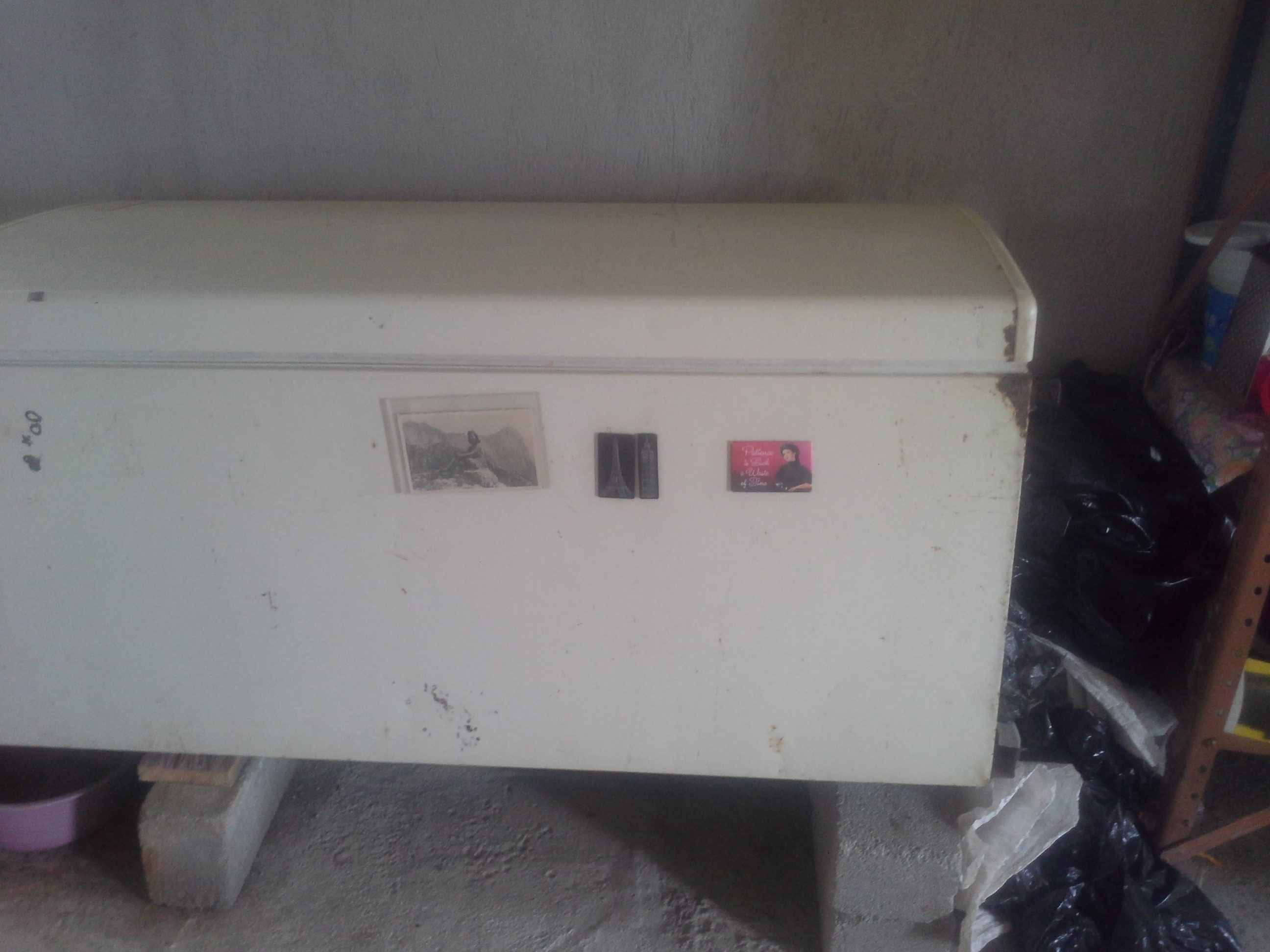
And more and more happened as the weeks passed. There were lots of boring things that had to happen, like adding a layer of concrete to the walls to make sure they don’t leak in the rainy season, smoothing out the windows so we can put in screens (we have half of the screens in now; the other half is still in the works). Things that before sounded boring became exciting, like putting up curtains. Uriel made us curtain rods and Conan’s Aunt Artemia took me out thriftstore shopping. Some of our curtains are repurposed sheets, but they do the job just fine. And thanks to Nery, we have a big, beautiful bed with mosquito netting to tuck us in at night. Lucia has her own bed, too, and some nights she even sleeps in it. Paulina paid to do the second bathroom, and Uriel put a moon and stars on the ceiling for Lucia. We’ve got mint, oregano, epazote, watermelon, tomato, cantaloupe and chiles. We’ve got more furniture. Our magnets are on the busted refrigerator we use as a giant cooler. A piece my Nonna embroidered hangs on my wall, reminding us to have a good day, everyday. Everyday, the house becomes more ours.

a key holder my Nonna gave my dad and mom long ago

a key holder my Nonna gave my dad and mom long ago

our "fridge" and magnets from my niece kayla and my mom

our “fridge” and magnets from my niece kayla and my mom

a gift from my Aunt Julia, made by my Nonna

a gift from my Aunt Julia, made by my Nonna

our bed, a wedding gift from Nery (Conan's b.f.f.)

our bed, a wedding gift from Nery (Conan’s b.f.f.)

Lucia's bed

Lucia’s bed

the moon and stars in Lucia's bathroom

the moon and stars in Lucia’s bathroom

P04-05-14_08.57[1]

the new bathroom

the new bathroom


There are still plenty of other things that we want to do in the future. The porch is still at half mast. The “in-law quarters” downstairs is going to remain an open box for the foreseeable future. Eventually we’ll replace the bathroom curtain with a real door. We can’t do it all now, but what we have now is enough. Now, I am grateful that Conan had the foresight to build us a big budget-busting box, to change our original plans for something bigger and better, for something we can grown into over time. Like the rest of life, our house is a constant work-in-progress, a labor of love.

This time last year, when we first concocted this crazy scheme to build a house, when we were about to lose our minds from living in Juquila, where I am sitting now was a big patch of overgrown weeds and trash and stray-dog poop and uneven dirt. To make this house possible, I went and worked a restaurant job in Kentucky and my parents and stepparents rearranged their lives to take us in and to watch Lucia while I worked. To make this house possible, Conan lived in the tin shack he built, day in and day out, even when it rained for two days and our land flooded, even when there was no running water, even when it was 100 degrees (most of the time), even when he was all by himself making sure the materials weren’t stolen. He had to orchestrate everything: find the albanil, the plumber, the electrician (because someday we will have electricity), buy all of the materials, oversee the work, and a million other details. It’s been anything but easy, but it’s been possible thanks to help from our families.

And all of our sacrifices are part of what makes this house our home. It is what will make this house a legacy for Lucia and any future brothers or sisters she may have. It is what will make great stories for her when she’s in the mood to complain. It is the way to learn that you can’t take kitchen sinks and flush toilets and concrete floors for granted. Most people around here who have their own house have similar stories, only many are even slower than ours. It took Paulina some 20 years to get her house into the shape it’s in now, and she still has her kitchen on the list for the future. Some people are not even able to make slow progress on their houses. Although of course, some people have bigger and better houses than we do, too. But this one is all ours. We dreamt it when you needed a machete just to walk the parameters of the land, when it seemed totally implausible. And in all the moments when it was a struggle just to wake up and put water on for coffee, it was a struggle for our very own house, for the first time ever. Even when I felt disappointed that the house we dreamt of was just a giant empty box, it was our giant empty box.

So we’ll keep on developing our house and our family, day by day, rethinking our expectations, redefining success. We’ll keep learning to appreciate what we have when we have it. We’ll try not to pine too hard for what we don’t have. And we’ll give you the best Kentucky/Mexican hospitality there is whenever you come to visit.

May your home be as marvelously, royally yours as ours is, from the weeds up.


our dirt floors (Lili and Lucia pictured)

our dirt floor before laying the concrete (Lili and Lucia pictured)

under construction... our house and the in-law quarters

under construction… our house and the in-law quarters below

Conan's house- the tin shack he lived in for months/ our kitchen for a while

Conan’s house- the tin shack he lived in for months/ our kitchen for a while

our land, getting the weeds out

our land, getting the weeds out

Machismo by any other name smells just as bad

27 Apr

“They totally admitted that machismo is wrong, but that basically it’s convenient for them, so they couldn’t be bothered to change it.” I reported back to Lili, swaggering back into the house a little too triumphantly. In the moment, it felt important. I felt special for being “let in” to the boys’ club. It seemed like their grand admission in front of the enemy (aka me, a woman) was bound to redraw the lines of the battle ground, if nothing else. Plus, they’d given me some of the tequila they’d been drinking out in the air conditioned car, which might have added to my social optimism.

Drinking and diaper changing are equal opportunity sports in our house ; )

Drinking and diaper changing are equal opportunity sports in our house ; )

Don't tell this papa that taking care of the baby is women's work!<Don’t tell this papa that taking care of the baby is women’s work>
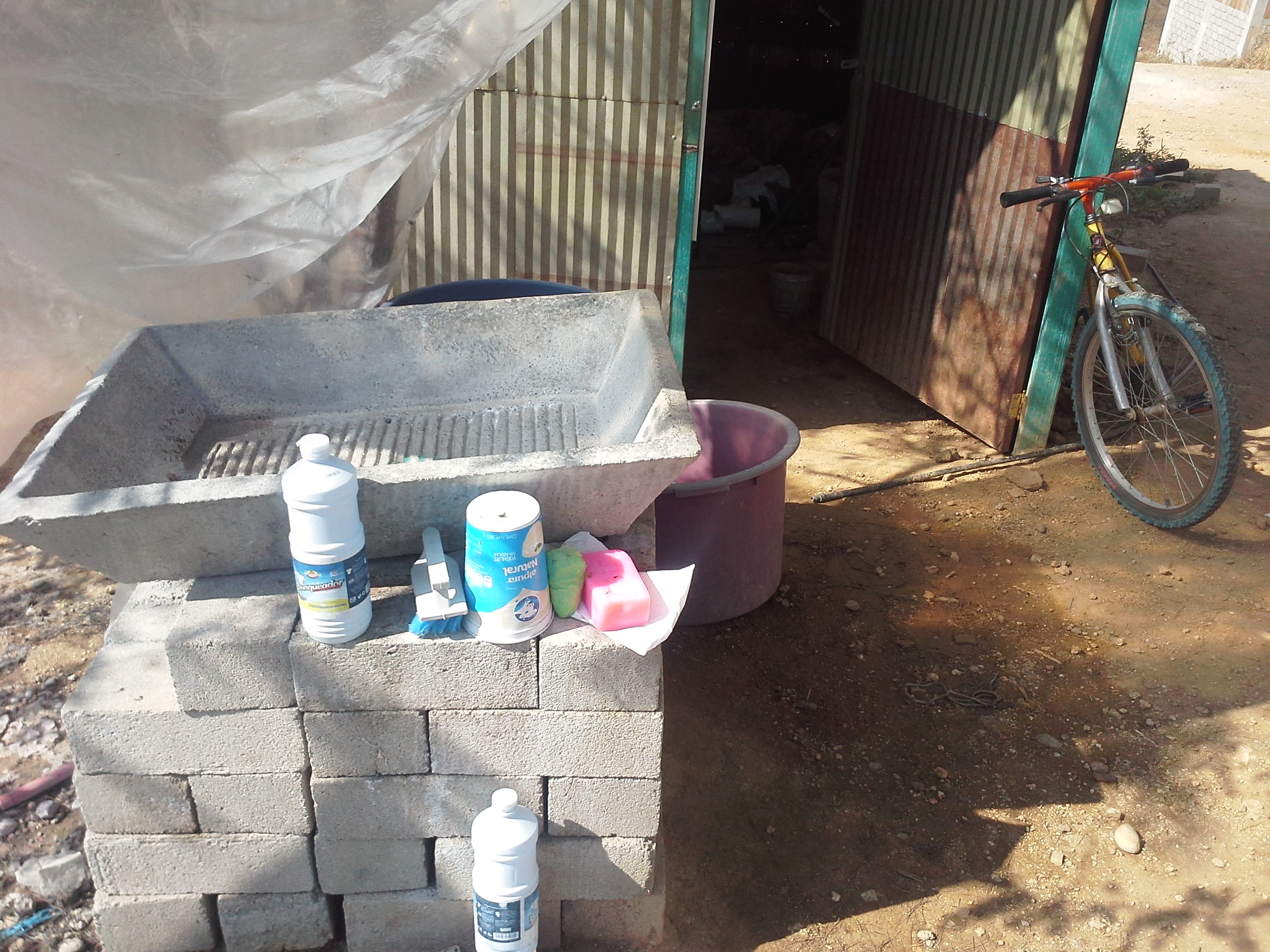
Yet the next day, nothing had changed. The other men in the area continued to be allergic to the stove, not even approaching it to serve themselves the food prepared by someone else. They continued to be appalled at the thought of touching a dish- “I’d rather cut my ear off than wash dishes,” one of Conan’s cousins shared with us once (a Van Gogh fanatic? Perhaps, but the sentiment is similar among most men around here). Women continued with all of the clothes washing, many of them washing by hand. Many women continued to ask permission to go anywhere or do anything, and many men continued to keep them under lock and key. Women still got hit by their partners, and many still thought they deserved it. In other words, I was forced to face the fact that absolutely nada had been changed by their admission that machismo is wrong.

Now don’t be confounded by this term machismo, dear reader. Before you act like you don’t have it in your country, in some form or another, to some extent or another, pause and observe for a moment. It’s not unique to Mexico; it’s not some latino thing. It’s the same old patriarchy, the same old outrageous and yet accepted idea that men are magically better than women, that what we act like and do and hope for is determined by what’s between our legs.

I hadn’t run out to the car to talk about machismo, though. I’d run out because we’d been talking in the kitchen, Conan and two friends and I, and then they said they were leaving. Instead of leaving, however, the goodbye with Conan became prolonged, and the next thing I knew I noticed they were sitting in the car sipping on tequila. Without me. I ran out, Lucia on my hip and all, and jumped into the car. “Sorry I’m late to the meeting! I’m ready for business!” I told them, giggling and boisterous, ready to forgive them for not inviting me.

And the next thing I knew we were talking about women drinking in the US, and other such cultural differences, and then Esteban was telling me, “Look, I know machismo is wrong, but that’s how it’s always been here, and that’s how it’s gotta be.”

“Just because it’s always been like that doesn’t mean that’s how it has to be,” I argued.

“Sure it does. I mean, that’s how we’re born. That’s how we’re raised. That’s how my dad taught me. He told me, ‘look, you’re gonna provide for your family, and your wife’s gonna take care of the home, the food, the kids, the ironing, the washing, all of that.’ And I have to say, with my first wife I loved the way she took care of me like that.” From his description of it, and the age he and his wife were when they got together, still teenagers, it made me think of kids playing house.

“Right, but you can decide to change.” I challenged him.

“Nooo,” Simon*, younger and less travelled, piped in, “you can’t change how society is.”

“You can’t change all of society, but that doesn’t mean that you, personally, can’t change. You can change how you act. How you treat your partner. How you raise your children. You totally have the power to change yourself and your family. And as more and more people do that, society changes.” I continued, ever the social activist.

“No, not here,” Simon insisted. “If you tried to act like that, the woman would walk all over you, and everyone would just make fun of you.”

“So everyone makes fun of me and Conan?” I asked, glancing at Conan in the seat next to me, who was patiently letting me do all the talking, and seemed, as usual, completely unperturbed about what anybody was saying about him and his gender roles.

“No, you’re from there. It’s different.” ‘Finally, being an outsider pays off,’ I thought.

“Hey, is it true,” Simon started, “that there,” and “there- allá” always means in the U.S.- el norte– “there, women go out drinking and the men stay home?”

‘Aha!’ I thought to myself, smelling the fear in the car- that fear of screw or be screwed. The fear from whence all violence comes, according to my humble suspicions. ‘If I’m not the boss of her, she’ll be the boss of me.’ Same old same old. Alas.

“Well, no.” I responded, smiling gingerly. “Women have much more liberty- if they’re childless, anyway- to go out where they want, when they want. Including going out drinking with their friends. And maybe they go out drinking with their partner. And sometimes women go out with friends and men stay home, and sometimes men go out with friends and women stay home. And some women don’t drink at all, and some men don’t drink. But it’s not like women are there keeping their boyfriends locked up in the house.” ‘Not like some men treat women here,’ I thought but didn’t mention. “The idea is equality, being side by side, not someone being above someone else.”

“No,” he told me. “Someone’s gotta be on top.” ‘Suspicions confirmed,’ I thought, and avoided sighing again.

“Listen, Julia” Esteban started again. He lived in the U.S. for several years, so he had the smiling, knowing grin like he knows exactly where I’m coming from, what I’m thinking. “It’s different for you because you’re from there. But people here are not going to accept that. If a woman acts like that here, no one will accept her. Yes, it’s different when you have a woman who’s been educated, who’s been outside of her town. Then it’s a little bit different. When she’s contributing money, too, and you ask her to make you some food, suddenly she’s like, ‘ah, you do it.’ You gotta adapt a little bit for women who’ve been educated, been outside of their little towns. But you can’t let ‘em tell you what to do, either. Like the other night, my girlfriend she says, ‘oh I wanna go out dancing at this place,’ and I was like, ‘hell, no.’ I didn’t let her go. But I go wherever I want and she better not say anything to me.”

“Really, Esteban?” I sighed, raising my eyebrows at him. “So,” I said, with a smile on my face, “basically you guys are telling me that you recognize that it doesn’t have to be this way, and that machismo isn’t right, but you don’t want to change it because it’s beneficial to you. Right?”

“Well, yeah. And because that’s the way it’s got to be. That’s the culture here.” And round and round we went until we finally changed the subject.

I had tried to tell Simon, who hasn’t lived in the US, that there it’s not some matriarchal world of female domination. I explained that we also have domestic violence, that women still earn less money than men, that women are still usually more responsible for childcare and housework, etc. etc. That we could’ve been having practically the same conversation with a lot of people in the U.S. But here, of course, the details are different. Like when I tried to explain to my best friend in the states that one of my girlfriends here was not going to be allowed to go out with us. “What do you mean, ‘they won’t give her permission’?!?!” She questioned me.

“Ummm, I mean, her husband’s gonna say she can’t go,” I said, awkwardly, racking my brain to see if there was a better way to translate “no le dan permiso.” It definitely sounded worse in translation.

“What? Are you serious?” She continued, shocked and outraged.

“Welcome to Oaxaca,” I told her.

In the U.S., I think the same thing happens, but nowadays we mostly call it abuse when someone is controlling like that. I am grateful that much of the violence that is acceptable here is at least less accepted and more likely to be prosecuted in the U.S. For example, I hear some people from here who have lived in the U.S. say things like, “Yeah, allá, you can’t even hit your wife or the law’s all over you!** You can’t even hit your kids to teach them right!” Not to say that everyone here hits their wife and children, by any means, but it is more socially accepted in general. Most people in the U.S. wouldn’t feel comfortable making that statement in front of just anyone. I’m not sure how much rates of domestic violence have dropped since we started enforcing (somewhat) laws against it***, but I do think that changing the culture around violence and sexism correlates with how people behave, to an extent. (And no, correlation is not causation.)

I think that culture and behaviors change due to many factors, and at the end of the day, this conversation about sexism was significant. It was not particularly significant because they said out loud, to me and to each other, that patriarchy is wrong. I suspect that lots of men and women (here, and everywhere) already know that. Maybe we all know already, on some level, but feel too helpless or scared or lazy or comfortable to change.

I think what was significant is that Esteban said “education makes a big difference.” Higher levels of formal education for women mean more opportunities to earn money and not depend on men, for one. That is one of the biggest differences that I think keeps many women stuck in relationships where they don’t feel they can demand more for themselves. Especially here where it is so normal for women to drop out of school and get married before they finish high school, or sometimes even before they finish middle school. But as Esteban said, if a woman has studied and has a career, when both partners are working and she might even make more money than you, it’s hard to justify why she should do all of the housework. I also think that it’s probably not a coincidence that a lot of the men I know here who have equality-based attitudes and behaviors with their partners have often had higher levels of education themselves, whether or not their partners have.

The other thing that Esteban mentioned that I find significant is that women challenge the status quo “once they’ve been outside of their small towns.” When we have the chance to see that there are other possibilities for life, if we’ve seen with our own eyes that it doesn’t have to be this way, then we can expect or even demand that things be different. And there are women doing this, here, and there, and everywhere! If that weren’t the case, I wouldn’t be here, because I wouldn’t be with Conan if he believed in patriarchy. And who knows what he would believe if he hadn’t travelled, if he hadn’t studied, and if he didn’t grow up with a mama who looked around and decided she wouldn’t continue to accept the way things were. Paulina, his mom, found ways to make it on her own, to demand more for herself, and to educate both of her sons to be feminists. And more and more women can and will and are doing the same. Slowly but surely.

So it’s all just a matter of time until someday, somebody’s kids, somebody’s grandkids will be asking, ‘So people really used to think that men were better than women? You mean some men didn’t even know how to change diapers? And it was rare for women to have jobs as things like doctors and scientists? That’s crazy, Papa!’

Until then, let’s keep educating ourselves, taking ourselves out of our little or big towns, out of our comfort zones. Let’s keep educating our kids; let’s teach them to question everything, and to demand respect and give respect in each measures. Let’s keep challenging ourselves and our loved ones, until equality is the norm and everything else is unacceptable.

Until then, pass the tequila! I’ll still be busting into your boys’ club!


*names changed to protect privacy
**domestic violence can be prosecuted but the law is rarely enforced
** Hmm I’ll have to investigate this soon! Unless any of you lovely friends of mine working in this field have this info already? I am really interested in these kinds of correlations, which, of course, don’t prove any kind of causation, but are interesting nonetheless.

A blind man and a deaf man meet… there’s a joke waiting here somewhere…

20 Apr

“What are you doing here?” we asked each other when I finally met the other gringo in my neighborhood. Not that there aren’t plenty of gringos in Puerto, both visitors and expats, but not so many in neighborhoods like ours. In neighborhoods (colonias) like ours, we’re far from the beach and even a ways from the market, kind of on the outskirts. It is not where there are shops filled with foreign goods and English-speaking manicurists and real estate agents, to say the least. So far I’ve never even seen another gringo on the bus with me, so Conan and I were really curious when we noticed a tall white guy who did not appear to be a Jehovah’s Witness in our area.

“So you´re from the hills” he said when I told him I was from Kentucky. “Ha! And you’re from Arkansas” I thought, laughing on the inside. If you’re from the U.S., you already know about the reputation that both of those states have for being backwards, uneducated, underdeveloped, poor. (It’s like someone from San Juan meeting someone from Yaite, Conan says, if you’re from Oaxaca.) And here we are, both of us, from states where folks imagine us so poor we don´t even wear shoes, living in a poor state in a “developing” country where people really are lucky if they’ve got a pair of sandals, sometimes. And we’re sizing each other up, discussing our situations, both of us thinking “that poor man/woman,” but poor in the other sense.

I looked at his one-room tin house, where he lives with his wife and nearly-grown stepson, and I compared it to our big four-room concrete house with indoor plumbing. I felt sorry for him and his small grasp of Spanish, for his adaptation process, which I figured must be rougher than mine, since he’s only been here a couple of months and he’s considerably older than I am. He told me he can’t get used to the diet, he’s lost so much weight his pants are falling off of him since he’s used to eating meat all the time. (And here I am, always fighting to keep from gaining weight from all the tortillas around here!) He’s still trying to figure out the process to get his permanent resident card, and I got mine quickly and painlessly (Oh if only immigration officials in the U.S. could come get some training on how to act like humans from my buddies in migración down here! They even say hi to me and smile when we see each other around town!) All in all, I was thinking I really had life made compared to him, and wondering if I could translate his documents for immigration or give him some Spanish lessons or something.

Meanwhile I was answering his questions about us, and when I told him we’ve got a small child and no electricity, he must’ve thought, “that poor family.” He immediately asked what he could do to help us out. He volunteered his refrigerator to make ice for us for our makeshift fridge, he let me know we could recharge our lamps at his house. I was impressed by and grateful for his instant offers to give, despite the fact that he was currently jobless and didn’t seem to have a giant nest egg hiding in his outdoor shower stall.

But is it really impressive? Nice, yes, but rare? Nah. I think that one of the things that is true for most people most of the time is that we want to be useful, contributing citizens of our universe. If you are helping someone, it reminds you that you have something to offer, even if you don’t have a whole lot else. In the U.S., particularly, we put so much importance on our paying jobs, that being jobless is practically the same as useless in society’s eyes, and so the need to feel useful is even stronger when you’re unemployed (in my personal experience).

So, back to my question: Isn’t it more like the norm than the exception for people with less material wealth to be richer in many other ways, and more generous? Research says yes. (check out this article for a nice summary of some of the research and links to more details if you’re interested:

I could cite lots of personal experiences that speak to poor people being more generous than rich people, too. For example, Paraguay is the 2nd poorest country in South America, and yet so much in their culture is based around giving and sharing. Whether they’re drinking terere (their national drink, a kind of tea) or beer, you don’t drink it alone; it’s always passed around, shared. When I stayed in Paraguay for a few weeks, I was completely adopted and taken care of by an entire neighborhood of amazing and materially poor people.

I don’t want to glorify poverty, by any means. When you are so poor you don’t have options, when you can’t feed your kids (or yourself), when you can’t send your kids to school, when you have to decide between buying gas to cook or going to the doctor- well, there are lots of really ugly things about poverty, especially in it’s more extreme levels.

But maybe being rich is nothing to aim for, either. Maybe it’s enough to live in our neighborhoods and keep on struggling and helping each other out. Even if I think he’s from the sticks and he thinks I’m from the hills, even if we each think the other has a rougher situation, at least we are reminded that we’re both here because we love and value our families more than whatever material comforts we’ve given up to be here. I am reminded that whether we’re deaf or blind or Mexican or ‘Merkin’ or from Kentucky or Arkansas, we’ve got a lot more in common than we think. And no matter what we’ve got or don’t have, we’ve still all got something to contribute.

So look out for the gringo invasion in colonia la perserverancia*!

*okay, okay, this is not really the name of our colonia; it’s a joke between Conan and Lili and Uriel and me that you’ll have to come visit to get it all… or maybe next blog piece…

Building My Own Yellow Brick Road

14 Apr

“Envy has some pretty major flaws,” I thought when folks expressed that they’d love to be in my shoes. I was pretty sure that none of my friends would kill to be in my dusty, worn-out Chucks, scrubbing their family’s clothes on a washing board with a scrub brush, constantly trying to sweep the sand and dirt and dust out of their sleeping and living area, battling the onslaught of mosquitos at dusk so intense it sounds like an oncoming freight train, spending like 3 hours just to make coffee and breakfast in the morning because only 1 burner on the crappy camping-style stove works at a time. Although if you are, indeed, dying for that authentic Mexican* experience, by all means, come on down to my house.

my lavadero (washing board)

my lavadero (washing board) – with my bike in the background!

In fairness, I think my Facebook friends and family must’ve seen one of our pictures from the beach (the few times we’ve gone to the beach) and mistaken our life here in Puerto Escondido for the life of some of the gringo bloggers I read before moving down here, the people writing (and living) stuff like it’s so great to live in Mexico because we can afford all the domestic help we want for practically nothing. Or maybe they imagine us as semi-retired snowbirds, drinking some cafe con leche by the beach in the morning, spending the suffocating afternoon hours in the pool or the air conditioned house, and then… um… what else would we be doing? Lounging around? Biding our time till we go out to dinner with the other ex-pat friends? Getting our nails done? …Have you guys met me?

But the truth about my life here lies somewhere between these lines, neither in the depths of abject poverty nor in the blissful ignorance of material wealth. I could feed you all kinds of anecdotes to wash away any twinges of jealousy, tell you all the gory details about things we’ve had to do or things we’ve had to do without in this journey of moving and building a house, but really I want to tell you about all the things that make me head-over-heels happy with my little space in the universe. Today I am gonna revel in the confidence of knowing that I am exactly where I need to be.

So lemme tell you that yes, it is sunny and hot most of the time (while you’re freezing your butts off, dear gringo compatriots), and then even after that it’s still hot and mostly sunny with a bit of rain or a couple hours of coolness. This means I can wear skirts and tank tops most any day of the year, which already practically proves I was meant for this place.

And lemme tell you that I, the walking-talking PSA for seatbelts, have discovered that it’s exhilarating to ride in the back of a pickup truck, with the wind blowing my hair everywhere (and my skirt, too, a la Marilyn Monroe if I’m not careful), seeing all the scenery up-close-and-personal, grabbing leaves off of trees in a contest with 7 year old Emmanuel. (Yes, seatbelts save lives still. They are also mostly not an option here, so you might as well enjoy it.)

Lili -pictured with Uriel- demonstrating how I feel riding in the truck

Lili -pictured with Uriel- demonstrating how I feel riding in the truck

And lemme tell you that my sense of accomplishment is off the charts when I arrive somewhere on my bicycle, without hitting any sheep or goats, or being bit by disgruntled dogs, or flipping over on any of the plethora of speed bumps that I may or may not have seen first, or having been discouraged by the sand and dirt and rocks that is my road. I feel like me when I get home from the supermarket (“Me hunter/gatherer,” I grunt at Conan), my thigh muscles pounding from the uphill first half of the ride with umpteen pounds on my back, my heart racing and my smile plastered on crooked from the downhill second half of the ride, bathed in equal parts sweat and triumph.

And lemme tell you how I smirk at the Julia of four months ago who couldn’t get to and from her own house by herself, not even by taxi, much less any other way. Because the Julia of today goes all over town by micro (bus) and colectivo (shared taxi, 3 people in back and 2 in the front seat), by bike, by foot, or haggling with taxi drivers trying to charge me the tourist price. This right-at-home-here-thank-you-very-much Julia can tenderly make fun of the anxious woman who thought Puerto was so big and complicated, when it’s really so much smaller than my small hometown city of Louisville, Kentucky.

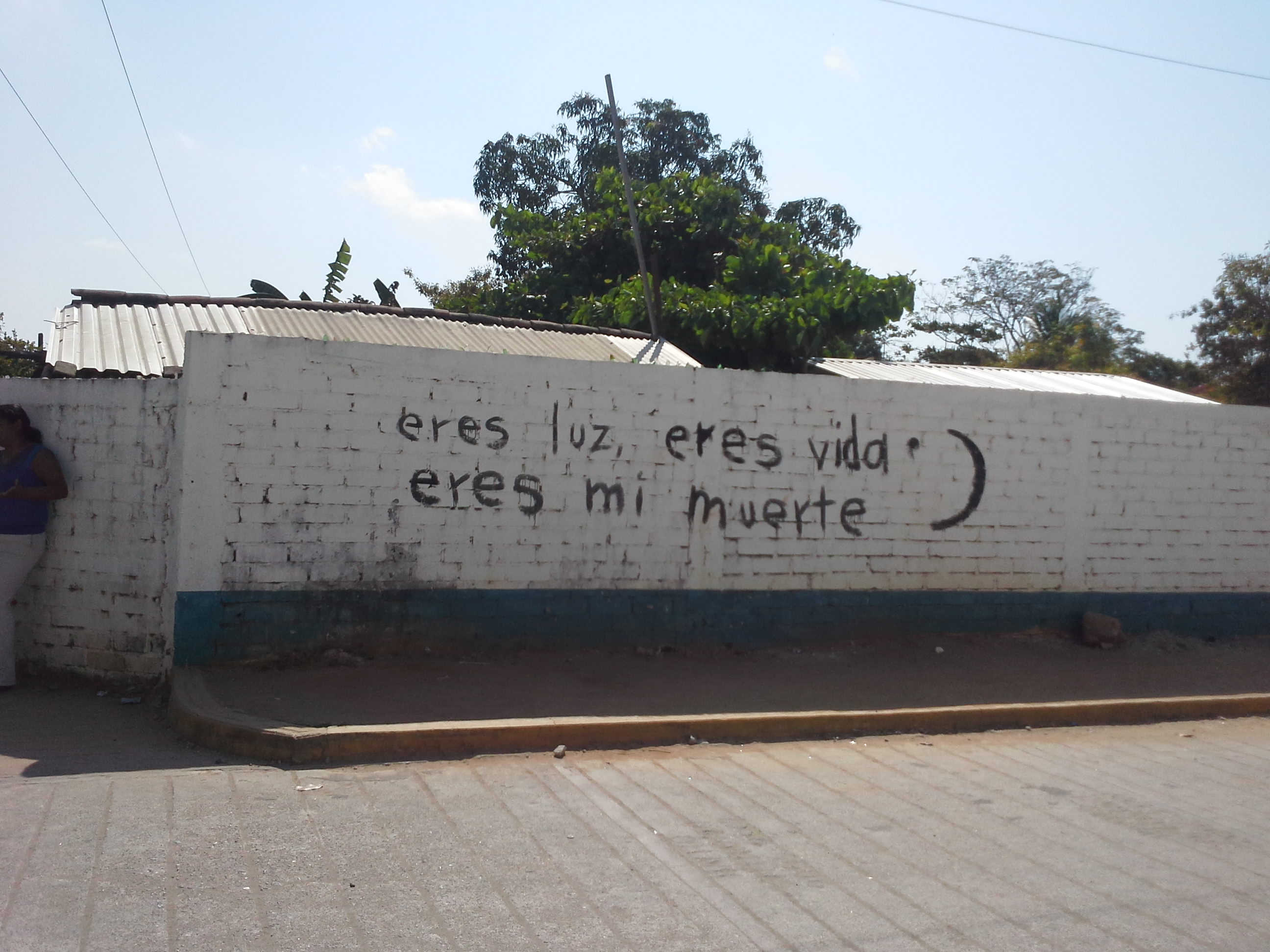
And lemme tell you how I marvel at subtle cultural things that contrast so sharply with Juquila, things someone who hasn’t lived in a town that’s like an emotional and intellectual coffin would surely take for granted. For instance, many people rest on Sundays. You have to go farther away to get tortillas because even the women that normally make and sell them give themselves a little break. Brilliant! People often walk down the street together as a family; it’s not just women and children doing their thing and men doing their own thing. Miraculous! Friends and family randomly drop in on each other for visits on a regular basis. Amazing! Strangers mostly refrain from unabashedly gawking at you and asking pertinent personal questions about you, addressing questions about you to persons whom are not you. This is madness, I tell you! Here in Puerto, there are universities and poetic graffiti and playgrounds and a million other things that add meaning and spark to life, and every time I notice all these beautiful details it adds to my sense of belonging here.

And lemme tell you how I feel tsunami sized moments of joy when I stand outside on our (still-in-the-works) porch and look at the incredible amount of stars in the universe that I can see right outside my door, when Lucia says “home” as we’re coming up the path to our house, when I can hear the giant waves from the comfort of my bed (even though we’re relatively far from the ocean), when Conan and Lucia walk around our yard calling out to all the lizards to come out and play, when I eat a hot pepper or a watermelon from our magical garden (that sprang up from spitting seeds without any work on our part), when I’ve got fresh mango or papaya or pineapple juice dripping down my chin, when I spend 100 pesos at the market and come home with an overflowing bag of vegetables, when Lucia makes a b-line for the ocean and screams giddily as she is nearly carried off by a wave, tethered to the land only by my arm. In all of these moments and many more, I feel sure and secure in our decisions to come live here, to raise our family here. (So secure, in fact, that I won’t even edit my run-on sentences! Take that, perfectionism! Ka-zam! Right in the kisser!)

the first ripe tomatoes from our magic garden

the first ripe tomatoes from our magic garden

And lemme tell you, sometimes my battle with the ants in my kitchen feels like it could devour me, sometimes the lack of electricity makes me bleak and weary inside, sometimes I miss people and past routines so much that I stumble, unsure of my path. Some days I want to turn back. But the real problem with envy, even envy over your own past, is that it distracts you from this adventure here and now, from forging ahead on your path, rugged and unpaved as it may be. And lemme tell you, some things and some days are horrendously miserable, and some moments are astoundingly fabulous, and then there’s everything in between. In the end, it’s just like your life, except it’s mine. So don’t be jealous, ‘cause my Chucks wouldn’t fit you anyway, and you’ll get your sunshine when it’s your time.

*I don’t mean this is the experience of all Mexicans in all of Mexico, by any stretch. Mexico is a vast and diverse country. I mean that it is a singular experience taking place in Mexico and that it is not like a tourist’s experience in Mexico.

an iguana visiting our house... Conan using the banana to show to-scale size of iguana, not to feed the beast ; )

an iguana visiting our house… Conan using the banana to show to-scale size of iguana, not to feed the beast ; )

beautifully  melodramatic poetry on the street

beautifully melodramatic poetry on the street

more graffiti makes me happy

more graffiti makes me happy

my chile tusta

my chile tusta from the garden

the beginnings of our porch

the beginnings of our porch

the view from a truck one day

the view from Arturo’s truck one day

holding on tight as Lucia prepares to throw herself into another wave

holding on tight as Lucia prepares to throw herself into another wave

a float from the carnaval celebration

a float from the carnival celebration- another reason Puerto’s great

Down the Drain: Cultural Contrasts via What We Waste

8 Jan

I was watching the steaming hot water swirl down the drain, over the gobs of ice cubes and plastic straws and lemon wedges. I was still in that day-dreamy state that results from the incongruence of transitioning- from facetime-ing Conan (with him in Mexico) and being in my Mama’s kitchen in Louisville with my daughter, and then to work in a corporate restaurant. I was at the 3 month mark of being in the U.S., thinking about how I was supposed to be headed back by then, when a more pressing thought invaded my head: “Paulina would be soooo pissed.”

IMG_2843

<A wonderful convenience! A baby seat in the airport restroom! I took a picture so that people in Oaxaca would believe that it exists. The U.S. is so wasteful, but so damn convenient and sometimes luxuriously useful!>

Way before I lived in Mexico, working in a restaurant disgusted me with the extreme wastefulness, and now that I’m back to it after 11 months in small-town Mexico, it’s even more horrific. When you live in the U.S., it’s optional to try to waste less- it’s something maybe you do if you’re a hippie, or maybe because you want to pay less on your electric bill, or maybe because you don’t have a car these days, etc. It’s not something that’s part of the culture, to say the least. You have to really think outside of the box to even realize how much you’re wasting just by breathing in the U.S. (okay, maybe I’m exaggerating a tiny bit on the breathing part, but the excessive use of resources is so ingrained that it might as well be breathing.)

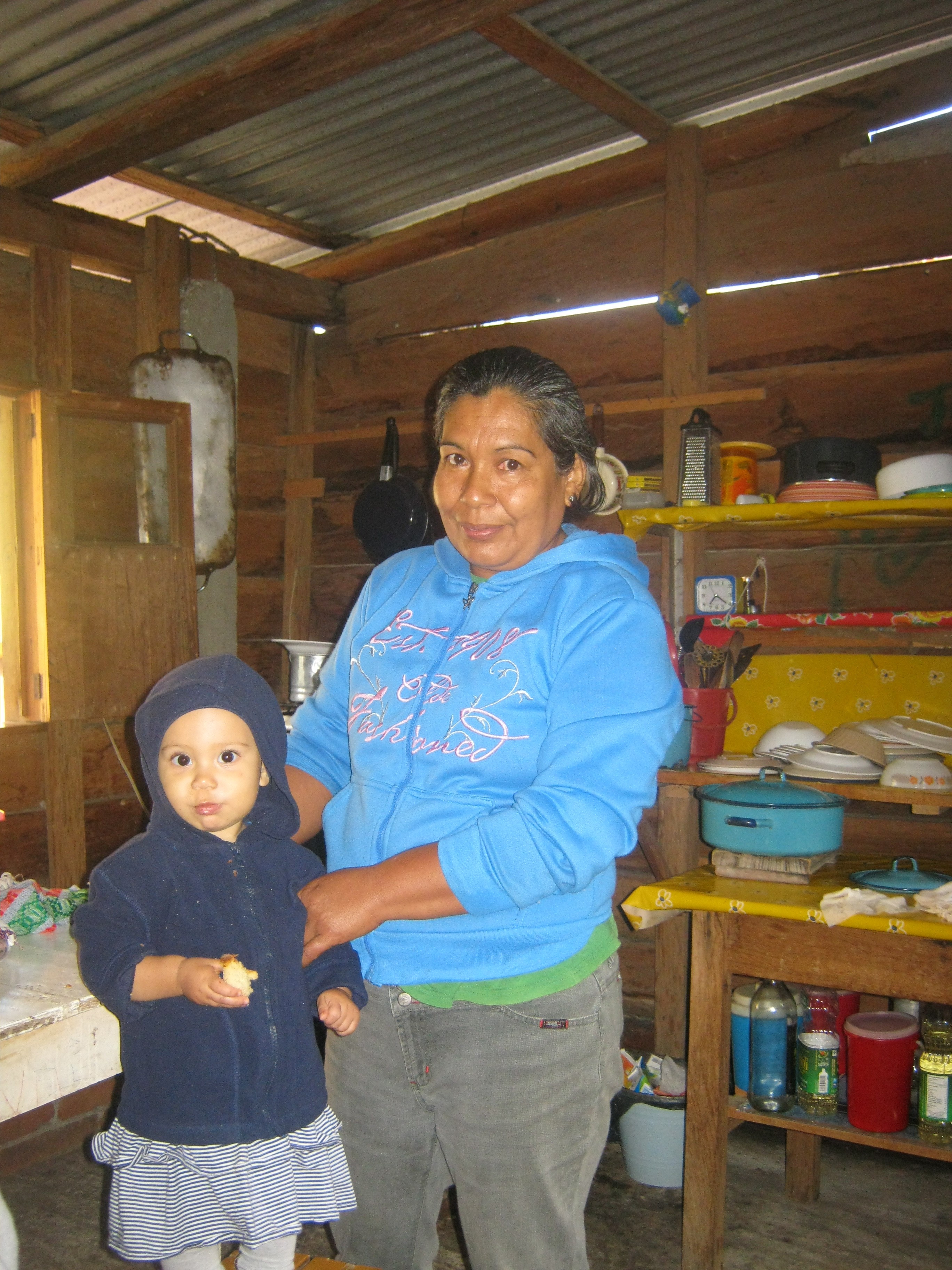
My mother-in-law, Paulina, is the queen of thrift and what my Nonna called “waste not, want not.” Paulina puts my thrifty-ness and ability to save to shame. Many people in Mexico, and especially in the money- poor state of Oaxaca, are used to the type of conservation and repurposing that comes with not having money. But Paulina would quickly get over the shock of the wastefulness and scold everyone to death about it.

IMG_2810

<Paulina and Lucia in the kitchen in Juquila>

Because in Mexico*, you conserve because there may be no water tomorrow, and you’ll just be standing there with shampoo in your hair, shit out of luck.

In Mexico you conserve because if you live in a hot place you don’t need any more heat so you don’t buy gas for hot water.

In Mexico you conserve because the garbage truck picks up different elements of the trash on different days, and they don’t even come every week, and you can earn a few pesos for a kilo of tin cans, and that organic waste can help feed the chickens anyway.

In Mexico you don’t drive everywhere because you probably don’t have a car for each person in the household, if you have one for the family at all.

In Mexico you take reusable bags on your shopping errands because the woman with fresh eggs doesn’t have a bag to give you, because even some stores don’t stock plastic bags, because carrying your errand bag is a way of life.

In Mexico you don’t turn on the light until nighttime, because “you should be ashamed of yourself” if you waste it like that during the day, and regardless you’re grateful because your friend who lives down the road can’t get any electricity because they haven’t set it up in his neighborhood yet.

In Mexico you do your part to put less waste in the landfill because maybe they don’t even sell things like baby wipes in your town.

In Mexico the food that women sell on the street is organic, although you won’t find any labels on  it, because “who can afford chemicals?”.
In Mexico people take great care of their clothes and shoes so that they last, because sometimes there’s no money to just buy more; in Mexico people often wear some form of sandals or flip-flops even to work construction or to go to fancy events, and they still consider themselves better off than the folks who go around barefoot.

In Mexico (especially among the older generation) you don’t need to buy fancy care products like deodorant because limes are cheap and plentiful and just as effective.

In Mexico if you’re a little gringa who wants weights to lift during her exercises, you (or your partner) ask your neighbor for a little bit of concrete when they’re working on their house and fill soda bottles with it.

In small-town Mexico there’s no Walmart or Target or Staples or FedEx or Kroger or a million other conveniences with their entire aisles (entire aisles! like practically a whole store in Mexico) dedicated to semi-useless extravagances like “party decorations” or “bathroom accessories”. In Mexico you have to get creative if you want to decorate, you have to be dedicated and patient and resourceful if you really want to buy something that’s not a basic necessity; you can’t just get in your car and go to the store and find your aisle. In Mexico there are no tacks to hang stuff the wall because the walls are made of concrete probably, or maybe plywood, or hopefully not tin. In Mexico you reuse and repurpose and recycle and refuse to buy stuff because it’s a way of life. Period.

And I have to say, in a lot of ways it’s a way of life I really like. Okay, so sometimes it’s extremely inconvenient, like when you have to go to the locksmith 3 days in a row to get a copy of a key because every time you go it’s closed and there are no official hours. It’s frustrating when you have to pay through the nose and/or go to a bigger town for something that is fairly basic (like, say, sealable plastic bags, which hell yes we wash and reuse.) It bums me out to leave lights off when it’s a gloomy day, even though I technically have enough light to see just fine. There are days that I pine for enough hot water for a 20 minute steaming shower, which will just never happen in Paulina’s house with the hot water heater we have (at least we have one!).

That’s not to say that Oaxaca is great for the environment, either. People often burn their toxic trash right outside their house. Many rivers are full of sewage thanks to lack of good town planning. People mostly use a ton of (albeit reusable) plastic products (mugs, plates, etc.- instead of porcelain like many folks in the US use). It’s not perfect, by any stretch. But it’s a refreshing change from the excess of the U.S.

In just a few days** I’ll be back in Juquila, our small town in the mountains. It will be a shock, I’m sure, after having internet capabilities on my cell phone, after having a washer and dryer and dishwasher all the time, after, well, all these outrageous and wonderful and excessive and time-saving conveniences. Yes, Juquila will be a slight shock this time, but I’m sure it won’t be anything like the shock that’s gonna come in a few weeks when we move to our new house. With no electricity. Which means washing diapers and clothes by hand. Which means no refrigerator (by far my biggest worry). No blender for soups and smoothies. No light at night. I can’t think too long or hard about the changes or it seems too impossible.

Meanwhile, I think about the hot running water wasting away, the Mexican dishwasher who turned it on and whether he must have felt the same outrage and disbelief I felt the first time they told him this was how to do his job. I think about all these clashes and juxtapositions that come from our modern globalization, for better or for worse. At the end of the day, I’m happy to be a witness to it all, trying to learn to take it all in stride, one little moment at a time.

*My use of “in Mexico” here really means in the two small towns in Oaxaca that I know intimately. I don’t pretend to speak to Mexican culture as a whole, since Mexico is gigantic and diverse, much like the U.S.

**When I wrote this I was packing to go back to Oaxaca. I’ve been back a while now.

YOU Are a Great Mom… And you and you and you and her and me too!

10 Jun
love love love

love love love

“You are a great mom,” I will tell myself, as a present for my daughter’s first birthday in a few days. This time last year, I was in agony. Not the physical agony of childbirth that I was hoping for (yes, honestly, I was dying for the pain that would mean a baby was going to leave my body), but rather the emotional agony due to NOT being in labor. This time last year, I was starting to believe I was going to be pregnant FOREVER. And I wasn’t sure if that would be better or worse than having to be induced, which I was sure would lead to a cascade of interventions which would end in having to have a C-section. I might have been just a wee bit anxious about the whole thing.

You'd be desperate to go into labor, too, with this belly

You’d be desperate to go into labor, too, with this belly

I also felt like a total failure. As if somehow I should be able to magically induce a spontaneous labor when my baby was not trying to be born yet. I cried for days, especially when I’d wake up in the morning and realize I had not gone into labor over night, once again. I was already doing all the things they tell you to do to help bring on labor (minus drastic tactics like castor oil), so what the hell else could I do? What was I doing wrong? Maybe I wasn’t thinking positive enough thoughts. But how could I think positive thoughts when all I wanted was to go into labor already and it wasn’t happening?
I did eventually go into labor without being induced in the hospital. My stubborn Lucia was born 2 weeks after my due date, about 2 hours before I was scheduled to be induced. My labor didn’t go exactly as planned, of course, but it was mostly good, and I was happy. I felt like a champion, with all that oxytocin and other fabulous hormones coursing through my veins, knowing that I, too, could and did PUSH A BABY OUT OF MY VAGINA (sorry for the capital letters, but it really is that amazing!). I did not feel like a failure again for several more days.

our just-born lucia

our just-born lucia

Then I tried to leave the house with my newborn for the first time. She was less than a week old, and Conan was still staying home from work with us. I fed her, I changed her, I got myself ready. I put on the baby-carrier wrap, wrapping it like my friend Holly had taught me. I double checked using you-tube videos, because this was not something I wanted to screw up. Who wants their kid to have brain damage because they fell out of the baby carrier wrap because their mama couldn’t tie it right? Not me. So I got it tied around me right and tried to put her in. it wasn’t tight enough. So I took her out, redid it, put her back in. We walked around the house for a minute to be on the safe side. Conan went to start the car air conditioner so she wouldn’t die of a heatstroke in the super heatwave we were having. All of that took so long, by the time we were ready to go, little miss Lucia was hungry again. Which meant I had to take the wrap off and start it all over again after feeding her. I cried then, too, sure, once again, that I was a total failure. This parenting thing was already too hard, and we were only a few days in. I couldn’t even get out of the house with her, even with the help of her papa! How was this going to work?!
Of course, I became a pro at leaving the house with her, eventually. It took patience. It took practice. It took talking to other moms to realize I was not a total failure for having trouble leaving the house. But still I didn’t learn my lesson. I still have too many moments when I blame myself when things are not going smoothly with Lucia. As if they were supposed to be smooth all the time. As if parenting were supposed to be easy. Or as if “good” parents don’t have problems because they do everything “right.”
I think this tendency to blame ourselves when things are less than perfect with our kids is something moms are more prone to than dads. When Conan and I were struggling with Lucia’s major sleep issues, for example, I was the only one walking around agonizing over every single aspect of Lucia’s life, trying to figure out what I was ruining and how. I was the only one stressing because I couldn’t give her lunch at exactly 12.30pm so I could put her down for her second nap at precisely 1.45pm because otherwise she would never ever sleep at night. I was the only one walking around telling myself I was failing for every single nap Lucia refused to take, for every night that once again, she woke up 50 million times.
So, why am I the only failure of a parent, I finally asked myself one day. Not that I wanted Conan to feel like a failure, too. But how could it be that when he couldn’t get her down for a nap he didn’t take it as a personal affront to his fatherhood, while it was ruining entire days and nights and weeks of my life? Maybe in that case some of it was just my sleep deprivation. But what about all my other “failures” as a mother? Where did that come from?
I imagine that all new parents are a little insecure about their new role. But I also think that, in general, as a society (Western society at least), we still see parenthood as the role and responsibility of a mother moreso than of a father. Thus, even when both parents are more or less equally involved, when something goes “wrong” (is difficult or challenging), we tend to blame the mother. Not that dads don’t have their own issues and struggles, but I’m a mom and I want to talk about moms for now.
Vice versa, when things go “right” we tend to praise the mother, even when it’s not anything she does or did or has any control over. For example, Lucia is mostly a really happy baby. She hasn’t ever cried a whole lot, which is a great stroke of luck, I’m sure. Yet I’ve gotten a ton of compliments for that, as if it were because I am obviously making her happy and quiet with my perfect mommy magic. Of course it’s nice to get told you’re doing a good job, especially when you feel like you have no idea what you’re doing. The problem is that it leads me to believe that there’s an often unspoken flipside to the coin. It means that when we see that mom over there struggling with her screaming crying baby all hours of the day and night, we’re thinking that she must be doing something wrong, or at least not doing the “right” things. So instead of offering sympathy and help to that poor mom with the colicky baby, we’re judging her. Instead of supporting each other and affirming that parenting is really hard and every family and every circumstance is different, we’re judging ourselves. That is total bullshit, in my humble opinion.
So my new motto is “You are a great mom!”, and I have promised myself that I am going to think it and say it out loud as much as possible every time I see a mom, including when I look in the mirror. “But wait!” you might think. “Every mom you see? How do you know she’s a great mom?” And I’ll tell you my psychic secret: Because she’s a mom, and she’s doing the best she can under the circumstances. Did she breast feed or bottle feed or give her 7 month old corn milk (atole) instead? I don’t really care. Did she go back to work full time after 6 weeks or after 6 years or did she work part time or did she go back to school or did she stay home with the kiddos? I don’t know, but I’m sure she did some combination of what she had to do, what she wanted to do, and what was best for her family. Did she use a wrap more or a stroller more? Did she do some kind of sleep training with her baby? Does she use time out? Does she spank her kids? Does she do what her mother taught her or what she read on the internet? Does she have full or partial custody of her kids? Did she migrate to another country and leave her kid behind in order to provide for him or her? It doesn’t matter. She is doing the best she can at this mom thing. It’s incredibly hard. Let’s give each other, and ourselves, a break, please and thank you. And maybe even a little support in place of that judgment.
I’m putting this out there because I want to be held accountable on this non-judgment thing, too. Because judging people is really easy and it can make you feel good about yourself and your own difficulties and challenges. You can say, “At least I’m not like so and so,” and then your problems and errors (aka learning moments) feel small. And it’s like giving yourself permission to make mistakes, to not be a “perfect” parent, to not have a “perfect” kid. But I propose that we start giving ourselves permission without having to put someone else down, without comparing and contrasting to people who are not us.
I ran into a lot of this mommy hate when I was looking for solutions for Lucia’s sleep problems. I found these two outrageously judgmental camps of mamas out there busy hating each other as viciously as the democrats and republicans. They were all either like, “you’ve already ruined your baby and their sleep habits for the rest of their life so you better let them cry now or they’ll probably drop dead from sleep deprivation any second now” versus “you’re doing exactly what your baby needs and if you do anything else before they’re 18 then you are a heartless bitch who doesn’t care about your baby.” And I just can’t believe either camp. Just like all politicians are more or less the same, all moms more or less want the same thing: healthy, happy kids. So why can’t we give parents (and people in general) options and information and let them decide what’s best, what they can pull off, what’s right for their family, instead of telling them what’s best. How could it possibly affect me or my kid if you breastfeed your kid or not? How could it possibly hurt me or my family if you spank your kid? Are we so excessively insecure about ourselves and our parenting decisions that we need everyone around us to do the same things in order to reinforce our beliefs? Maybe we are, and maybe it’s part of that vicious cycle of taking too much responsibility for our kids, of believing we’re “good” parents when things are smooth and that we must be “bad” parents, or failures, when we are having a rough time.
I understand. I know that patting yourself on the back for not being as “bad” as someone else is really tempting when you’re feeling like a failure. We have a neighbor who is everyone’s favorite example of a “bad” mother. She’s a single mom with four kids under 7, including a baby that’s 2 months younger than mine. People first and foremost talk badly about her for having her kids in the first place, which infuriates me. I’ve even heard people say that unmarried mothers have no business having kids. (“I’m an unmarried mom, too!” I told one person, and they told me that was somehow different. Because I’m still with the father…. But this is another blog piece…) The thing is, I believe that our neighbor, and every human being, has a right to have children, or to not have children. I also believe that it’s not her responsibility alone if they are not living in the best circumstances. Where are their fathers? I don’t hear anyone talking badly about them. So there’s that part, which automatically makes me want to go to bat for her.
But the part where it got tricky for me is that I felt like she wasn’t doing the best things for her kids. I started to judge her, too. For example, we live next door and so we could hear when the baby would cry and cry and cry and cry and cry and cry and it made my milk leak out, it made we want to rush over there and hold and hug that baby. And where was this mom? Doing chores, or out running an errand. Or I’d see her 2 year old out in the street playing with no supervision. And I caught myself almost feeling the same as those other critics, thinking horrible things about her as a mother, and why’d she even have kids, anyway? But what the hell do I know about it? I mean, first of all, she’s ignoring one kid in order to take care of other responsibilities, other kids’ needs. She’s taking the lunch to her other kid or trying to finish the dishes or whatever. Did it feel wrong and awful to me? Yes. Does that make it wrong and awful for her and her family? NO. I am not her and I don’t know anything about the decisions she has to make and the priority-juggling she has to do.
And second of all, maybe she didn’t want to have one or some or all of the kids in the first place. What do I know about her situation, her circumstances? It’s not like there’s awesome access to contraception here, and there’s certainly no access to abortion unless you’ve got a ton of money. So maybe she didn’t want to be a mother at all, and she’s doing the best she can. Or maybe she did want to be a mother, but she’s incredibly overwhelmed trying to raise four little ones by herself (who wouldn’t be overwhelmed with four little ones even with a ton of support?). The point is, she is trying. I see her trying, I see her struggling. What else can we expect, of ourselves, of others?
One day that same neighbor and I were talking about one of her kids, and about parenting in general. She was talking about how she’d had to teach the oldest to read, because his school wasn’t cutting it. Then she was telling me about something she’d learned on TV about kids. “I try to apply the things that I learn from programs on TV to the kids,” she told me earnestly. I’m ashamed to say that the snide, snobby, sarcastic part of me thought “Yeah, TV’s a great place to learn about parenting. Yikes!” But the more I thought about it, the more I realized that the point is, she is concerned about her children’s well-being, just like I am. She does try to educate herself in any way she can to take care of her kids. Who says the internet, my #1 resource, is a better place to learn than TV? Who says that the choices that I so quickly labeled as neglect are not the best choices, given some really difficult circumstances, in which no one is helping her with anything? There are choices I make with Lucia that other parents balk at, that make people worried I’m neglecting her (like not keeping a hat on her all the time when she was littler). So the neighbor’s choices mostly don’t look like mine. That doesn’t make her a “bad” parent, and it doesn’t make me a better parent by judging her. In fact, I’m going to tell her she’s a great mom, starting today. And I’m going to keep saying it, to all of you, to myself, to all of us, all of us who deserve it because we are trying, and it’s really hard. You’re not a failure. You’re a great mom!

The bond changes and grows...

The bond changes and grows…

Home is where the peanut butter is… or where the queso is…. or wherever the hell I left the apple core!

2 Jun
looking out over juquila

looking out over juquila

I read somewhere once that when you are bilingual enough, you actually become “nilingue,” an invented word meaning you don’t speak anything because you’re so back-and-forth and mixed-up between the two. That’s a little how I feel about home now- that no place is really home now, because part of me constantly is missing other parts of me. It’s like someone took an apple-slicer to my heart and it can never be made whole again. Which isn’t all bad (don’t tell me to be positive, Conan, just keep reading!), but it can be painful and confusing to say the least.
Like now. It’s official. I’m going home. Kinda sorta. I’m going to one of my homes. To my hometown, anyway. To live for a very short time, or to visit for a very long time. I’m going with my kid but not with my partner. For three months! I’m ecstatic and anxious and guilty and joyful, among other things.
I’m incredibly excited to see my family, of course. My parents will get to spend some time with their littlest grandbaby, and with me. Lucia and I will finally see family members we haven’t seen since she was a few weeks old.
I’m stoked to see my friends, especially after all these months of more or less zero social engagements. There’s lots of catching up and reconnecting to be done; for instance, my best friend has twins that I have yet to meet. I’m dreaming about riding my old bicycle. I’m even vaguely excited about driving a car again. I’m dying to see the new pedestrian bridge, to look out over my river, to show Lucia my favorite parks and places to walk. I’m pleased she’ll be using a car seat and she’ll be overjoyed to ride in a shopping cart again.
I can’t wait to peruse the dozens and dozens of cheeses in Valu Market (here there are only two kinds of cheese). I’m longing for a farmer’s market and all its “obscure” vegetables like eggplant or winter squash (here you can buy local, but with much less variety in veggies). My belly does cartwheels just thinking about the Ethiopian restaurant, or the avocado milkshake at Vietnam Kitchen, or the pesto pizza and beer cheese from Richo’s. And speaking of Richo’s and their astounding selection of beer, there are only 3 types of beer in my town, and I haven’t had a beer with my best friend in two years now, thanks to one or the other of us being pregnant or out of town. And I’m drooling over the mere idea of ginger and bourbon at The Back Door.
I mostly haven’t let myself think about these things, or lots of other things, for many months now. Even as I write about it, my excitement is tinged with bitterness and anger about leaving my partner behind. Part of me feels like I’m betraying the solidarity we established in moving to Mexico together when my country kicked him out. He doesn’t feel like that, but I do. I hate that our daughter won’t see her Papi for a quarter of a year, when she’s only been alive a year herself. I hate that I won’t see him for so long. I hate that I will have to go visit some of his friends, without him. I hate that we can’t share the joy that I’m going to feel for reconnecting with my town and my “people,” which is also his, after 10 years living there.
I’m going to miss some things about here, too. For those of you who have listened to me complain and be miserable and cry and giggle hysterically about being here, thank you for listening. But now that I’ve spent 10 months adapting and trying to appreciate everything I could possibly appreciate, I’ve gotten kind of comfortable here. I mean, Lucia and I say hi to people on our errands now. We chat with the folks at our favorite produce stand. There are many people I can smile warmly at and have pleasant small talk with. I know where to go for most things I need, even though there are no street names, even though people tell you how to get somewhere based on the name of the person who lives or has a business nearby. There are folks I play volleyball with (when it’s not raining) on the occasions I can get out of the house without Lucia. Our next door neighbor started a bar with two pool tables, so Conan and I have a quick and easy date spot. It’s gone from miserable to pleasantly comfortable, finally, finally. Now that I’m leaving for a while.
Is this town the best place on earth for me? No. I’m still dying to move to Puerto Escondido, and to visit Louisville. But finally I’m comfortable enough that I’m going to be in culture shock when I get back “home”. I’m going to miss the random horses and donkeys and chickens and (unleashed) dogs walking down the street. I’ll miss the smell of just-made handmade tortillas brought to my doorstep, the taste of café de olla with cinnamon. I’ll miss the lady that sells the best toasted pumpkin seeds. I’ll miss how every corner fruit and veggie stand has cilantro and epazote. I’ll miss the all the medicinal and edible herbs and flowers that are everywhere, in people’s makeshift potted gardens, or growing up amongst the weeds. I’ll miss being able to walk to all my errands. I’ll miss seeing all the women with baskets on their heads selling bread and other goodies. I’ll miss other, harder-to-define sights and sounds and feelings.
I’m going to be in withdrawal from the lovely folks in my family circle here, too. Conan and I have gotten closer in many ways since we moved here, seeing new sides of each other, learning how to have a decent fight with each other, having to depend more on each other. He has become an excellent father for Lucia and a perfectly imperfect partner for me. He will be the biggest part of my case of Mexico withdrawal, although luckily not the only part.
While I might not have a social life here, the good company in my household, and their support and laughter makes up for a lot. We live with several people, including his cousins Liliana and Noe. Plus Conan’s Aunt Meya stops in once or twice a day, and Arturo, Lucia’s Abuelo (grandfather) is here for a few days a month when he’s not working. All of these people adore Lucia and help a lot in taking care of her. They also make up most of my social support and fun. Even Aunt Meya’s coming by to “scold” us for something or the other on her way to run an errand has become a fun family joke. Fourteen year old Noe’s rapport with Conan, who constantly makes fun of him in a sweet, teasing way, is a guaranteed giggle for everyone pretty much daily. Liliana is a staple in my life, with her fantastically shameless pot belly (“Let your body take whatever form it wants!” is her now famous motto that we all use when we want to convince someone to eat more or to eat something “bad for you”). She’s got a knack for uncontrollable laughter that can be contagious for all of us.
And of course there’s Paulina, my baby’s Abuela (grandmother), who I think is the person who gave Lucia her love of dancing. Paulina, with her feminism that feels like a breath of fresh air in a burning jungle around here, is always nice to be around. We have a blast laughing about her extremist tactics for saving money, too. “Mejor dame el efectivo- Just give me the cash instead,” is one of her famous lines now- telling us she wants cash instead of a Christmas present, so she can save instead of us spending. Her other famous line is, “Esta guardado- it’s stored away” which is what happens when she finally does spend some money to buy something. Like when we first got here and Conan invested in some new frying pans because the ones she had were scraped-up, banged-up cancer-causing beasts. He brings home the new ones and she scolds him for buying them when she’s got 3 brand new ones. “Well where are they?” Conan asks. “They’re stored away,” she says, which is what she’ll repeat about a billion other things. She’s got clothes and shoes that people have given her that she’s had for years and never worn because she’s saving it for a special occasion. You can imagine how much we poke fun at her for all this. And all this family here pokes fun back at me, and takes care of me, and nourishes me. And I’m really going to miss them.
I am an expert at missing people, at getting attached to and nostalgic for people and places and food. I’ve lived and travelled in what seems like a boatload of places now, leaving pieces of my heart here and there, taking away what generous souls give to me- salsa recipes and Cork (southern Irish) slang and a thirst for terere, Paraguay-style yerba mate, for example, not to mention some outrageous stories. My life is much richer and more colorful thanks to some wonderful people and places, and truly it is a great privilege to miss them.
My past experience also means I’ve done this tricky readjustment thing several times now, so it’s about time I shaped up and quit being so torn up about it. Yes, this time is unique and different in some ways, but at the end of the day, no matter where I am, I am leaving behind people that I love. No matter where I am, it’s only partially “home.” This means that I have an exceptional opportunity to enjoy the best things from these multiple worlds. I hope it also means that Lucia will transition between her worlds with more grace and flexibility than what I have, that she’ll teach and inspire me to be better. So be patient with me, dear friends and family. I’ll be trying to enjoy what I’ve got and where I am while the moment lasts, to let go of the melancholy and appreciate that I am lucky enough to have multiple homes, to know so many fabulous people in multiple places. If the price for all of it is having a heart cut up into apple slices, then smear on some peanut butter and pass the queso, and I’ll enjoy it both ways.

abuelo and emmanueal, lucia's neighbor/big brother

Abuelo Arturo with Lucia and Emmanuel, a neighbor and Lucia’s adopted big brother

with abuela and aunt meya on our roof

Lucia with Abuela Paulina and her aunt Tia Meya (behind Lucia) on the roof top

new arrivals, conan and lucia with paulina

New arrivals Conan and Lucia with Paulina

paw-paw's visit to mexico

Paw-Paw’s visit to Mexico (Puerto Escondido)

leaving the US as a family


Our new family leaving the US, on the plane (Lucia’s head is all you can see of her)


Till Death Do Us Part, Never Ever

17 May
church wedding

church wedding

It’s just a tiny bit heartbreaking when your dearly beloved goes around acting as if the mere idea of getting married were like hanging upside down strung up from your thumbs for the rest of your life. Granted, it’s not like he’s said “I’ll never ever marry you;” it’s more like, “I’ll never ever get married, even to you.” Still, acting as if the whole “till death do us part” thing were a fate worse than death is not exactly endearing.

I am not a huge fan of marriage myself, so it’s not like I’ve pressured him, or even actually asked him to marry me. But we have a kid together, we want to have more kids together, we regularly confirm to each other that we’d like to stay together “forever” (I have a hard time with that word, but forever works for him), AND it would make both of our immigration situations a million times simpler (still not simple, but simpler). So, would marriage be a practical and realistic thing for us, a couple who love each other and have a long-term committment- to do? Yes. Would it be nice to get together with family and some friends and publicly, formally, maybe slightly romantically, announce that we super mega extra love each other? For me, yes. For my sweet introvert Conan, not so much.

Neither of us feels a dire need for the church or the government to put their seal of approval on our relationship. But philosophy is not even the main problem for Conan. The problem is his incredible shyness. He doesn’t want to be the center of attention for a whole day. He hates to dance, he buckles under major social pressure. He doesn’t even like parties for other people, typically.

“Plus,” he says, eyeing me suspiciously, “have you seen how they embarrass the groom?” Once, long ago, he tried to describe to me some of the horrors that befall a groom on his wedding day, but that was before I even considered marriage with him, and I only giggled hysterically at his surely exaggerated details.

And then we went to a wedding here. First of all, the bride and groom don’t really get a chance to enjoy themselves, or at least not if what they are supposed to do isn’t what they want to do. They have the mass, then they walk through town to where the party is. A large part of the time they’re just sitting at a table, and people come up and give them gifts and congratulations.

Then they do the waltz. The good side to the waltz is that most people give the newlyweds money while they’re dancing the waltz. The downside is that it is an eternal and awkward dance. The newlyweds don’t dance it together, they dance it with every family member on earth, including every distant cousin and great aunt on both sides of the family. They call them up two by two, for example: Paulina Lopez and spouse. Then the 2 people called dance for a minute or two and then they call the next couple. Even Conan had to dance in place of someone else at this one wedding, since they called out the name of the bride’s brother who’s currently in the U.S. (oops).

paulina and me dancing at a wedding

paulina and me dancing at a wedding

The bride and groom also have to dance nearly every single other dance so that the guests feel good about dancing. And they don’t get to end the party at any reasonable hour. It’s not over till the guests decide it’s over, which surely leads to a slow start to a honeymoon. In general, it’s a lot of stress, there are a lot of strict social rules, and it is exhausting, I’m sure. In many ways, I imagine weddings in the U.S. are very similar. But that’s not all Conan warned me about, wide-eyed and weary.

I have to admit, Conan had to elbow me at one point because my face was doing that thing where one eyebrow is raised and my mouth is hanging open- not a very appropriate look for a wedding. I think that was when the bride and the groom were standing on chairs about tie-length apart, and a few people stand around each of them to protect them. From what, you might ask? From a congo-line of first women, then men, who “dance” around and try to knock them- really just him- over. Inevitably the congo line of men knock the groom over and then hoist him up and take him off somewhere to dunk him in a tank of water. “Don’t they have bachelor party’s there?” you might ask, and I would agree that this sounds more like behavior for a party than for the wedding! (They do have bachelor parties and I can’t imagine what goes on there) To each culture their own, though….

The groom returned from that debacle wet and without shoes and then they borrowed somebody’s baby and a bottle. That’s for the dance where the bride and groom walk/dance around in a circle, the groom holding the baby and the bottle and the bride “hitting” him with a belt from behind. I don’t even want to know what face I was making at that point. Don’t get me wrong; I’m all for some consensual kinkiness with belts or whatever else they might be into, but maybe not so much at their wedding, and surely not with a baby in arms.

And then, the more I thought about it, it actually irritated me. The song they play for the baby/belt spectacle talks about the guy being a “mandilon”- which loosely translates to something like “(male) apron-wearer”. As I read it, the idea is that this is the day for the bride, so we’re gonna act like now she’s domesticated this man via holy matrimony, and he’ll have to cook the food, give the (future) baby a bottle, and sweep the floor or something. (There’s also a dance with the groom holding a broom for further “humiliation”). But just to be sure it’s clear that there’s no pride in that role or those activities, the bride is cast not even in a masculine role, but in an abusive, machista role, hitting him with a belt.

“I think that after going through this on the wedding day, men here spend the rest of their married lives taking their anger out on their wives” I told Conan, sort of joking, but not. And indeed, the bride looked more uncomfortable than the groom, who grinned through it all. Maybe he agrees, that he’s about to make her pay for this moment for the rest of her life. Too bad I don’t know the newlyweds well enough to inquire politely about it.

We left the wedding long before it was over. For one, Lucia has an early bedtime. For another, it was imperative to get Conan away before they made him drink more tequila. This is another facet of weddings and other parties here that I loathe. The brand of binge drinking that happens I imagine to be akin to what goes on at frat parties, minus the keg stands and such. (Although I admit I’ve never actually been to a frat party.) The social pressure to drink yourself stupid, even among some normally responsible adults, is astounding. At a birthday party once, I observed how those who tried not to accept shot after shot after shot of tequila were called rude and other ugly things, how those who tried to not finish their shot or pass it to someone else were then “punished” to drink double, how one woman got a shot poured over her head because she refused to drink more. (I escaped all this thanks to nursing Lucia, but even if I weren’t nursing I could not have gotten plastered and taken care of my kid. I haven’t come up with a socially acceptable refusal tactic for post-nursing yet, but I’m working on it.)

The behavior from that birthday party is pretty much normal drinking behavior for any celebration here in this town- not the whole country or even the whole state, mind you. And somebody Conan knew was kindly sharing his bottle of tequila (these things get handed out at parties), so that meant polite refusal was out of the question. Hence we had another reason to leave early, although I missed out on seeing the other supposed horrors that Conan promised about weddings.

As we left, I told Conan that I am almost ready to forgive him for repeatedly telling me he’ll never ever marry me. But not quite, since he should know better than to think if we did get married that he and I would do anything traditional, especially if it involves one of both of us being miserable on a day that’s supposed to be for us. At the end of the day, that’s one of the best things about our multicultural family; we get to reject all kinds of stuff and incorporate the stuff we like and make up new stuff all our own, tending and crafting and creating our own family culture. Sure, other people can reject parts of their culture as well, but we have better excuses than they do!

So maybe we’re never ever getting married, since over time Conan has offended me enough with the never ever getting married thing. Now I’m the one who looks doubtful and scathing when he mentions marriage. But if we ever convince each other, it’s sure to be a fabulously unique event. We’ll be sure to invite you, too. And don’t worry, it’ll never ever be traditional.

One and a Half Degrees of Separation

11 Mar
my mama, visiting me and her granddaughter Lucia.

my mama, visiting me and her granddaughter Lucia.

Long ago, my mom and I developed this theory/joke that while there are six degrees of separation in the world, in Louisville, Kentucky, there’s only one and a half. Despite being the 16th largest city in the U.S. (don’t ask me why Louisville thinks that’s something noteworthy), if you’ve lived in Louisville long enough, it is pretty difficult to meet somebody you are not connected to already in some way, shape, or form. Louisville is the ultimate decent-sized city with a small-town feel. Louisvillians even manage to run into each other in other cities, no matter how unlikely.

I should’ve remembered all that when the woman in the mini-van (public transportation) started speaking English to me. Unfortunately, being the movie star/circus freak/outsider that I am here in this small town has taken a bit of a toll on my friendliness, without me even realizing it until now. We were going from Puerto Escondido to Rio Grande, the first leg of the trip back to our home in Juquila, with my mom and her partner, Dee. Partway into the trip, the woman in front of me turns around and signals Lucia, asking, “Is it a boy or a girl?” in English. Usually when people speak English to me it is some token phrase, not a conversation, or else they think that I can’t speak Spanish. “It’s a girl,” I tell her, in Spanish.

I’m surprised when she continues in English, this time addressing my mom as well. “Where are you guys from?” “Kentucky” says my mom. I await the usual response- something about Kentucky Fried Chicken, if there’s any “recognition” at all. But instead she says “Oh that’s my state. Where in Kentucky? Louisville?” Her English is great, and her accent definitely passes as a U.S. accent, although she pronounces Louisville the way it’s spelled (loo-ee-vill), the way outsiders pronounce it, not the ridiculous (correct) way Louisvillians normally pronounce it (loo-uh-vul).

“Yes, we’re from Louisville.” My mom or Dee replies. “That’s where I grew up,” she says. My mouth probably would have dropped to the floor with surprise, except that I was so excessively surprised that surprise turned to disbelief. How could she possibly be from Louisville? Other Louisvillians couldn’t possibly be living close to me, couldn’t possibly be taking the minivan from Puerto Escondido to Rio Grande. She must be bluffing, or teasing, or something, I thought. But how could she make that up? I mean, who around here’s heard of Louisville, unless they really have been there?

“Really? Where in Louisville?” I ask her, part friendliness, part curiosity, part test. “Jeffersontown,” she replies. The same neighborhood as my aunt Julia. Close to where my mom and Dee live. She tells me the middle and high schools she attended, a job she had on Taylorsville Road. She absolutely positively is a Louisvillian.

Technically, she’s from El Salvador, but she got to the U.S. very young and lived there until two years ago, when she moved down here with her Mexican husband to the town where he’s from. She is like my future, I think; I’m only 6 and a half months in, while she’s had two years to adjust. I try to investigate from that angle, asking her things about her adjustment. She’s living in a much more rural town, which means it’s also a lot harder than my situation in a lot of ways. “It’s really different, but I’m getting used to it,” she tells me, all positivity. Mentally I translate that to Spanish, since that is what I hear all the time. “Te acostumbras? Se acostumbra tu mujer/tu nuera/la gringa?” Meaning, “Are you getting used to it? Is she getting used to it” (when people ask my mother-in-law or my partner about me)? I am sure that she hears the same question, and I imagine her response is similar to mine. I always tell people yes, even when it’s a boldface lie, even in my most miserable and loneliest moments.

“Do you make tortillas there? Did you have to learn how to make them” she asks later. “No,” I tell her, “we buy them usually. I kinda know how to make them; I’ve done it before. But there’s a lady that passes by everyday that makes them to sell. And there’re also plenty of tortillerias that sell them.” I think about what her day must be like. I reflect on the fact that for me, coming from Louisville, there’s nothing to do and almost no conveniences in Juquila. So for her, also coming from Louisville, there must be like a negative 10 on the scale of things to do and conveniences in her town.

“Have you made friends there?” I ask, hopeful that she has, and that maybe it took her a long time like it’s taking me. Or that most likely people are friendlier there than here in Juquila. And if not, then we can swop stories about how hard it is to not make friends, about how closed and unfriendly people are, reminisce about the friends we used to have back in Louisville. “Yeah, I’ve made some friends.”

“Oh, good!! That definitely helps. Are people friendly there, then?” I ask her. And then she kinda backtracks, saying something about how she doesn’t always remember people’s names, but she knows their faces. And I wonder how many real friends she’s been able to make so far, with even less people in her town than in mine, with even more space between them. She tells me she has three kids- five year old twins and a three year old, and I add on an extra 20 points to the isolation calculations in my head.

“What do you miss about Louisville?” I ask her. “Everything,” she says, the only hint of despair I hear in our conversation.

I ask about her husband, who is sitting in the seat next to her but hasn’t turned around to join in the conversation, or even to glance at the gringa from the same city as his wife, this whole time. My shy partner Conan, who’s sitting in a seat behind me, hasn’t jumped into the conversation, either, but I know he’s listening intently and he has said a few words. Her husband lived in the U.S. for seven years, she says- not as long as she did, but long enough for him to not be getting used to his hometown again. Interesting how it’s easier to talk about someone else not adjusting, but if you’re the one who’s not from there, it’s like admitting your weakness, or maybe even your defeat, if you can’t/don’t/won’t “get used to it,” if “no te acostumbras”. I wonder if she told me she’s getting used to it the same way I always tell people that yes, “me acostumbro” just fine, thanks. Force of habit, and maybe a (reasonable and realistic) fear that if you really started to talk about how lonely and difficult it was, how homesick and isolated and trapped you feel some days, then you’d probably break down and cry right there in the middle of the street, or the minivan, or wherever you were.

I wonder, too, about the reasons for them moving down here. Did he want to move back, to be with his family, to show the kids to their grandmother, to be in his country again after seven years as a foreigner? Or were they forced out? Was he deported, or up for deportation? Or was she? I don’t ask, because I don’t want to get into our story either, here in the minivan. Surely if we see each other again we can chat about it.

Meanwhile we talk about her family, how they’re all in Louisville, just like all my family. She answers my unspoken question when she says at one point, “At least you can go back and visit anytime you want.” Well, “anytime we have the money,” I tell her, and then shut up when I realize the implications of what she’s said. While getting together enough money for a plane ticket when your family earns pesos instead of dollars can feel ridiculously out of reach, it is, at the very least, a possibility, a glimmer of hope. And with family in the U.S. earning dollars, willing and able to help me out, it’s a fact that I will be going to visit, sooner rather than later. Not only that, but my family can come and visit me here in Mexico; there’s my mom and her partner in the minivan with us as testimony.

And what about my fellow Louisvillian? Not only will she never be going to her high school reunion, she couldn’t even go to her mother’s funeral last year. Her siblings can’t come see her. She is homesick for a place that she has no legal right to return to. Just to visit her adopted hometown she’d have to risk her safety, her liberty, her life, and probably have to leave her kids behind to boot. She is like millions of other people who went to the US as children, only to later find themselves country-less.
(In 2008, there were 1.5 million children in the US who were unauthorized immigrants, according to the Pew Hispanic Center).

I can’t really imagine how much strength she must need. As I write this, it’s been seven months since we got on a plane to move to Mexico. Becoming a mother and simultaneously moving to a very unfriendly, geographically isolated small town is thus far the hardest thing I’ve ever done in life. I think about the black raincloud of despair that drifts over me for periods of time on more days than I’d like to admit. The despair attacks me despite the fact that my family and some friends can come and visit me, despite the fact that my daughter and I can go there and visit, despite the fact that maybe, theoretically, potentially, possibly, someday, Conan and Lucia and I could all move back to the U.S. together. Despite all those glimmers of hope, and despite all of the good things I have going in Juquila, I still feel exiled and alone more often than I’d like.

So I think about this woman leading a parallel life, my fellow Louisvillian, a fellow mother, a fellow immigrant in Mexico, a fellow lover/partner/wife/whatever-you-wanna-call-it who loves her partner enough to move to another country with him…. I think about just how connected we are, just how connected we all are, and it leaves me baffled. How can we be this similar, how can we be from the same city, and be living in the same area, and not have known about each other before? What synchronicity to meet like this! But more importantly, how can she and I be in such a similar situation, and yet I have all these legal rights and privileges that she doesn’t have?

It reminds me that there’s a lot left to fight about when it comes to equality. It reminds me that as much as I love Louisville, I’m not sure I want to raise a family in a country that is so anti-family if you have the wrong color skin- a country that every year deports more and more people, no matter the circumstances, no matter their how dug in their roots and family ties are. And it reminds me that no matter how small a world it is, no matter how many or few “degrees” are separating us, as long as there are laws that value some people more than others, we’re all a lot more separated from humanity than we’d like to believe.