Before You Point Fingers, ‘Merica

23 Jul

I know you guys are terrified of a Trump presidency, as well you should be. Many of you are threatening to immigrate to Canada. Personally, I don’t think that all of the non-fascist people moving to Canada is a legitimate answer, for a number of reasons I won’t delve into here (#1 being: if Trump gets elected I need you to stay in the US and fix the situation). I understand your thoughts about self-preservation, though, if Trump does get elected; moving would certainly be easier, although Trump would affect the whole world anyway.

With that national context in mind, though, someone on the Facebook feed asked why people aren’t threatening to move to Mexico instead of Canada. Someone else replied something like, “because Mexico’s dirty and dangerous and you can’t drink the water.”

I laughed hysterically. So the problem is you can’t drink the water in Mexico, huh? Neither can the people of Flint, Michigan. Neither should a large portion of children in schools who are being poisoned with lead daily (see here http://www.myajc.com/news/news/local-education/elevated-lead-levels-found-at-half-of-atlanta-scho/nrqXh/  And http://www.usatoday.com/story/news/2016/03/11/nearly-2000-water-systems-fail-lead-tests/81220466/ )

And Mexico’s so dangerous? At least kids here can go to school without worrying about being shot. If you want to talk about dirty, let’s look at the pollution in the US. People in the US are dying more and more from illnesses related to air pollution, among other dirty problems.

Look at yourself for a minute, ‘Merica*, please, before you talk bad about another country. I’ll be the first to tell you that Mexico is full of corruption, for example. But the US is too, it’s just hidden a little better there. Here there is much more transparency about the corruption, for better or for worse. Nobody’s walking around calling Mexico the greatest country on Earth just because they’re from there and proud of it. Being proud isn’t the same as being blindly arrogant. I am proud to be from my country, and that’s exactly why I criticize the things that are wrong with it.

I didn’t get to write any of this to little buddy who posted the comment, unfortunately, because I was on Conan’s phone, scrolling and nursing my kid, too tired to sign in with my own account, so I didn’t pick a fight. (You’re welcome, Conan.) I meant to go back to the conversation from my account, but life got in the way. Now I can’t remember whose page it was on, so instead I decided to address those comments and, more importantly, that attitude, even more publicly. I hope you’re reading this, dude, and everyone else who feels this way about Mexico (I know, you’re probably not- but just in case). I’m writing this not just for that guy, but also for my whole country. It’s especially for all of my compatriots who, like this guy, are running around casting stones at other countries before they look in the mirror.

791d0d5698e02902d97d1e9461b08f2cbadc10bb1942c8d0e8749dbc9b5b364f

Let me just say, in my humble opinion, the U.S. is not better than Mexico. The U.S. does some things way better, but Mexico is better in other ways. I’m from a fairly wealthy city in one of the poorest states in the USA, and now I’ve lived for almost four years in the poorest state of Mexico. In both places, essentially, if you have a lot of money, your life will be pretty easy, and if you’re poor you’ll have to struggle every day to get by. Some things are more developed in the US, like the road systems. Other things are better here, like more mandatory paid vacation and paid maternity leave. It’s true that Mexico does not have basic infrastructure at the same level as the U.S., which lowers the quality of living to some extent. (Here are some interesting comparisons, if you want to look at statistics: http://www.indexmundi.com/factbook/compare/mexico.united-states ). But there are a lot of other quality-of-life issues that aren’t mentioned in the reports (like walking to the end of my block to buy organic, free-range eggs from my neighbor for cheap, or like kids having freer childhoods here in Mexico: http://www.bizjournals.com/chicago/news/2012/12/10/the-marketing-store-in-chicago-knows.html;  and adults being happier, too: http://www.businessinsider.com/heres-how-happy-43-countries-are-2014-10  ).

I do think that escaping to Canada from the US is probably better than escaping to Mexico, for the same reasons that Canada is probably a better place to live than the US. For example, they have wonderful social policies like free universal healthcare, and more access to education. They work fewer hours and have less of a gap between the rich and the poor. Their country’s not so into the war-mongering and world-domination-by-any-means-necessary, just to name a few other pluses. (see more here: http://www.macleans.ca/news/canada/99-reasons-why-its-better-to-be-canadian/ )

My main drama, however, isn’t really about defending Mexico. Nor is my goal to compare Mexico, Canada and the US. It’s more an issue with the blatant hypocrisy and alarming ignorance of his statement. This nationalistic ignorance is characteristic of a frighteningly substantial amount of people in my country, as evidenced by the support of Trump as a legitimate presidential candidate. It’s an ignorance that not only harms those in other countries but also harms our own citizens and residents of the US.

The “We’re the Greatest” attitude is harmful to US residents and citizens because it obscures and ignores all of our shortcomings. And really, what are we the greatest at? Capitalism? Not even that, judging by the bank bailout. Greatest at health? Nope; we develop some great treatments but people’s access to healthcare is pretty low on the global scare, and our citizens are far from healthy in general. Are we the greatest at taking care of our citizens? We don’t even take care of our veterans, nor our old folks, nor our children. Our veterans are homeless and committing suicide. Our old folks are often mistreated or neglected in their nursing homes, or unable to make ends meet at home with the measly benefits they’ve acquired. Our babies and their mothers die at the highest rates of any “developed” nation. Our children are mostly receiving substandard education, and many of them are being poisoned by lead at school to boot. Furthermore, our police are killing off people of color at outrageous, we’re-talking-genocide rates. Our “justice” system is incarcerating the people of color that they’re not killing, along with some poor white folks, mostly to turn a profit in the prison industrial complex.  None of this qualifies us as great in my book.

muhammad-ali-greatest-quotes

Muhammad Ali, a hero from my hometown, is indeed The Greatest. Let’s not get confused, guys. You can be proud to be from our country, but it ain’t the greatest at most things.


We are pretty great at making box office hits and making sure the rest of the world knows all about the capitalist aspects of our culture. We are pretty great at selling our  image of being a land of opportunity- a land where anyone can start out poor and become rich, just by working hard. We don’t talk about the systemic barriers to doing so, or the fact that pretty much no one ever has actually done it. But boy can we sell the idea to the masses.

said-the-greatest-country-in-the-world_o_5457703

We harm ourselves, our own citizens, with this kind of posturing- this idea that we’re so much better than all the other countries- because, for one, it means we’re not demanding or even hoping for anything better. It means we’re more than content- we’re proud- with this as our status quo.

america-america-never-changes_o_6238291

Don’t get me wrong. I love my home country and many of the people in it. I criticize my country BECAUSE I love it, because I believe that we can- no, that we must– do better. We must do better for our people. For ALL our people- the ones whose land was stolen from them, the ones whose ancestors were stolen and enslaved to build our country, the ones who migrated and toiled to build our country and were then imprisoned or kicked out when expedient, to ALL for real this time, not the imaginary “all” of the Pledge of Allegiance. Our country needs a lot of work so that we can make it into all the things that we bill it as- a land of freedom from repression, a place of equality and opportunity. So far in our history, it hasn’t been that for most people. Buying into the hyperbole about the US and putting down other countries is not going to make anything great for anybody. Learning from each other would get us a lot farther. Somebody send a memo to these would-be leaders of ‘Merica.

I know I’m surely preaching to the choir by posting this on my blog. Sorry, guys, but I didn’t get to say it on Facebook, and you have to pay the price now. Nobody talks bad about my adopted country when their critiques can apply as well to their country. So all you guys with more internet access than I have can do me a favor and keep calling out the hypocrisy. And please, please, please DO NOT let Trump get elected. Or I’m serious- there won’t be any moving to Canada or even Mexico. You’re gonna have to stay and make our country GREAT for everybody, for the first time ever.

the_main_difference_between_the_world_and_the_usa2


*I have a hard time calling my beloved home country “America” because it’s geographically misleading and a bit offensive politically. “America” is an entire continent, and therefore it’s more than a tad presumptuous to use the name to refer to just one of the many countries within the continent.
 

Let Me Introduce This Year’s Children

14 Jul

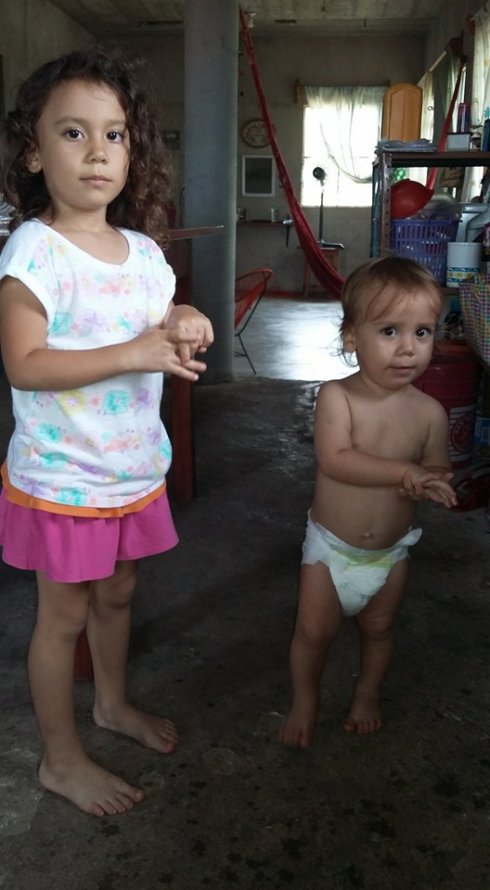
Yes, I have the same two children as last year; stores here don’t usually take returns or exchanges, after all. But it’s been a year since our last visit to my hometown, and a lot changes in a year, especially when you’re young. I thought it’d be nice to paint you a brief picture, so you don’t have quite so much catching up to do. Plus, I’ve been talking to the kids all about you guys that we’re going to see in Kentucky- about everything we’re going to do, all the fun times and the naps to be had (cross your fingers for me on nap time). It’s only fair to give you guys the same type of introduction before we get there.

And if you’re not in Louisville, Kentucky, then you can still have a little virtual introduction to my ferocious little treasures. Somehow they manage to fill my whole being with joy and gratitude, even though they’re undomesticated terrorists in their spare time.

My sweet Khalil Michael couldn’t even crawl on our last visit, and now at a year and a third (hehe), there’s no stopping him. He is running amok and imitating his sister as much as possible. He can wash his own hands, put the lid on something and take it off, go and try to find his shoes (nearly always MIA). He attempts to jump, although he can’t quite pull it off yet. His most important job in life right now, according to him, is giving the empty garafón (giant water bottle) to the water delivery man. As soon as he hears the truck honk its horn outside, he goes on alert. If you tell him, “Get the garafón,” he starts screaming in urgency, and tears across the floor to get the empty bottle. Then he races from the kitchen, across the living room, to the front door, carrying the bottle that’s almost as big as he is, making his excited yelling noises the whole time. He’s no longer satisfied with just handing over the empty one, either- he wants to help pick up the full bottle and carry it inside. He even makes the loud grunting-with-effort noise as he tries to pick it up. It’s a pretty important job, after all.


washinghandskids

washing hands together- Little Brother loves to do what Big Sister does. 

This is serious business, people. Somebody has to get the garafón out the door.

I love how when he asks a question he holds his arms out just like I do, granddaughter of a gesticulating, expressive Italian that I am. I love all of his unique invented sign language, like the way he flexes his fingers when he wants to be picked up, like his version of a “come hither” signal. I love the way he blows kisses to me when he realizes I’m about to go to work. I love his tender, prolonged hugs and even his disgusting, gooey kisses, where he opens his mouth wide and slobbers over yours. He is so affectionate when the mood strikes him. The other day, as we were leaving somewhere, he turned and twisted from my grasp to dashed back down the sidewalk to a little girl he’d played with, and he gave her a big fat hug. I also can appreciate his firm boundaries, like that he yells belligerently if I’m trying to love on him when he’s declared that it’s playtime.

I love that he doesn’t wait for story time. He picks up a book and pushes it at you, grunting and insisting until you read it to him. But he doesn’t want you to read it to him the way it says on the page. He wants to open to random pages, point at the things he’d like you to discuss, and go from there. There’s no reading just front to back- reading is multidirectional and the book is finished when he decides there’s something more interesting to explore elsewhere. And in case you didn’t want to lift him up so he can reach the books, he has now learned to push one of our plastic chairs over to the book shelf and climb up onto it by himself. (This same chair-pushing/climbing tactic also means that NOTHING is safe from his tiny hands in our house anymore, unfortunately.)

khalil1

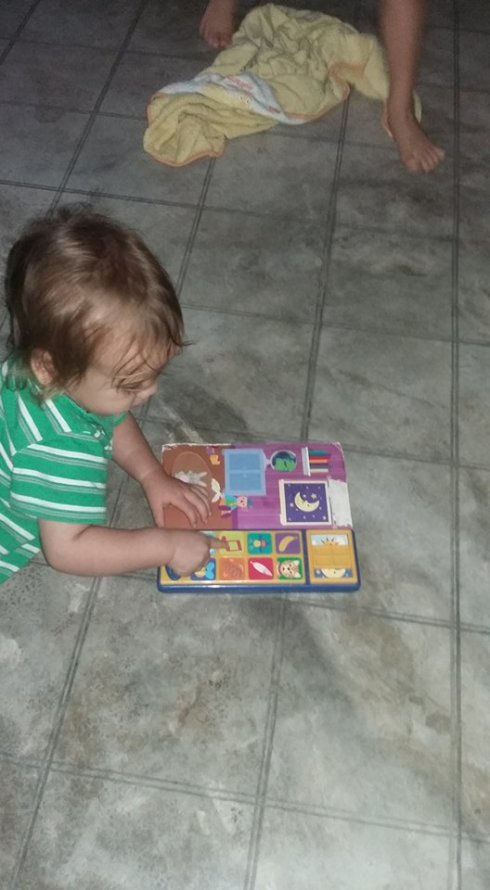
Even though this book has totally fallen apart, he loves this lone page and “reads” it constantly.

Then there’s little miss Lucia, who is now a big ole FOUR year old. And boy did she get the talking gene from her mama. She has all kinds of great four year old reasoning to entertain, cajole, and madden us. For example, she refuses to believe that she and Khalil were in my belly at different points in time, even though she witnessed my pregnancy. She’s always telling me about how she was pushing Khalil and sharing toys with him in my belly. Shrug. Life is mysterious.

Lately she’s really into figuring out the time in all kinds of funny ways. “All day” is one of her favorite expressions, although I’m not sure she can really grasp it in the same space-time continuum that I’m in. Like when I cook something and she’s displeased about it, she says, “I don’t wanna just eat that ALL DAY!” As if that were the only thing available for consumption the entire day, or week even. The other day, after I told her she needed a nap because it would make her feel better, she told me that no, she really needed to watch a video, because that was going to make her “feel better all day.”Also now she says, “What time is it?” Then you tell her and she asks, “What’s that mean?” She’s working on days of the week, too, although the only one that really counts is sábado. It’s all about ‘how many more days until Mommy stays home from work’. Yep, she’s a Mommy’s girl.

She also obviously has not been exposed to much television. Don’t get me wrong, she loves her videos- her current obsession being “Big Dora” (the teenage-ish version of Dora, where she plays guitar in a band). But she takes creative license with whatever she sees around her, and runs with it. Like she asked one of her tias (aunts) to make a princess dress for her birthday, like the “purple princess.” (I have no idea which one that is or where she saw it, but it’s cool.) She told me one day that she doesn’t want to brush her hair because she saw that princesses just wear their hair “like this,” she says, fluffing out her already curly, tangled hair even more. (Good try, kiddo.)

lucia6

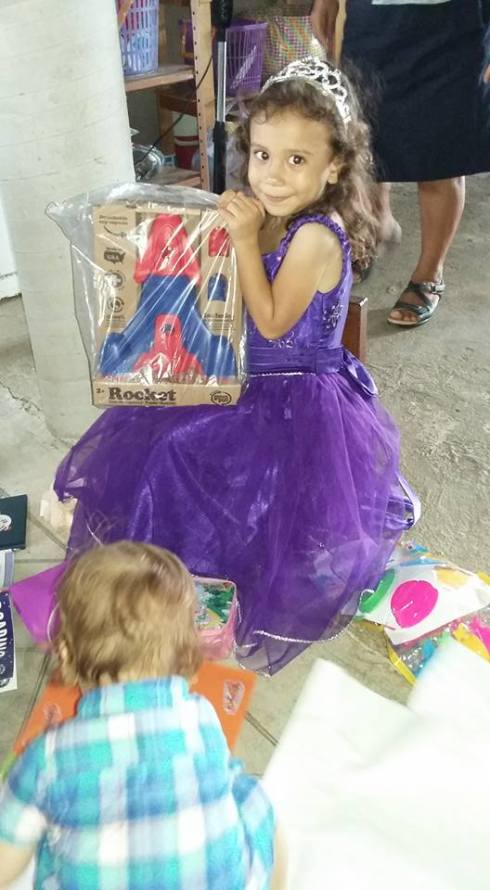
In her “Purple Princess” dress with her new rocket ship (the only thing she wanted for her birthday, besides a party)

Her conversational skills paint a pretty fascinating picture of the little kid mind at work (fascinating according to me, although I might be biased). Here’s an example conversation with Lucia from a couple months ago:

“Mommy, can I go see Dr. Seuss?” She’s impressed because I’ve just told her that Dr. Seuss wrote the words AND drew and colored all the pictures for the book. She’s noticed that most books have the person who wrote the book and a different person who drew the pictures.

“No, because he’s in heaven, like Paw Paw.” (Yeah, I know- I didn’t really plan to teach her about heaven, it’s just worked out that way.)

“Mommy, where’s heaven?” (Previously she’d asked me, “Mommy, where’s Kevin?” which brought on a ridiculous who’s-on-first kind of accidental routine)

“It’s way, way, way up in the sky, past where the airplanes can go.”

“Is Dr. Seuss dancing in heaven?”

“Maybe so, baby. I’m not sure. If he likes to dance, he’s probably dancing.”

“Can I go to heaven someday?”

“Yes. But not for a long, long, long time. When you’re older than Mommy.” (silent prayer)

“And then I can be with Dr. Seuss?”

“Yes, and Paw Paw, and all the other great people in heaven.”

Finally satisfied, we manage to read approximately 2 pages of Green Eggs and Ham before there are more questions about other important matters. Like, “Why doesn’t he bring the plate of food on the first page of the book?” We’re at that age when the word ‘why’ is constant, and when the commentaries and questions about the book are wordier than the words on the page, even in a big girl book like this. I try to remember, despite my sleepiness, that this part is more important than the words on the page, anyway.

One of my favorite things about both my kids is that they are voracious and unconventional eaters (considering the standard idea that kids don’t like anything interesting or healthy). I love the game Conan invented with Lucia for when she proclaims that she doesn’t want something on her plate. He says something like, “But you don’t want this bite? This one’s chocolate flavor.” Then she starts asking, “What about this bite? What’s this flavor?” And before you know it she’s eaten all of what she supposedly didn’t like today, and might be asking for more. The best part (for me) is that  sometimes I make up flavors that aren’t even “exciting” and we still get excited about it. I’m like, “Oh, this is hummus and carrot flavor!” and she’s like, “Mmm, hummus with carrot!” (Bwahahaha, the Mean Mommy wins again.) She told me one day that sometimes she doesn’t eat all her lunch at school because her teacher doesn’t tell her what kind of flavor her food is! I adore four year old logic, when it’s not making me tear my hair out in frustration.

Lucia, below, pretending to eat raw nopal… She is such a silly, outrageous, kind, creative, expressive little monster.


Part of the bonus of raising kids in my adopted country is getting to take these trips back to visit. I can think things like, “Oh my goodness, a year ago, Khalil hadn’t even tried food! And now he won’t eat if he can’t hold the spoon himself.”  It’s such a good chance to remember, compare, and reflect. And this has been a good excuse to write a little about these two bright, bright lights in my life.

I’ll leave the re-introduction at that for now. See you soon, Louisville folks!


From Oaxaca with Love, my favorite Seedy Salsa

8 Jul

It’s recipe time- back by popular demand! Okay, really I just got one request, but I aim to please, folks. It turns out that a chef that cooks Mexican food in Gothenburg, Sweden, got turned on to my Oaxacan mother-in-law’s refried bean recipe via my ex-roommate Jeremy from Indiana who’s currently residing in Sweden. (I love this interconnected universe!) So in honor of fabulous roommates now residing in other places, I bring you more delights from small-town Oaxaca.

I’m showcasing one of my favorite salsa this time, partly to share with you lovelies who haven’t been to Mexico an important lesson about Mexican salsa: it’s not all this tomato-jalapeño business like you get with your chips in those “authentic” Mexican restaurants in the U.S. (Shocking, I know.) It’s not even all spicy, although there are usually peppers of some kind involved. Salsa just means sauce- you know, something to add flavor to food. It is a great way to serve more or less the same food about 10 different ways; just change the salsa.

The problem with sharing many of the best Oaxacan recipes is that many of the ingredients are not exported items. You just can’t find chepiles in Kentucky. I’d bet there aren’t any guajes in Sweden, either. With that in mind, this salsa is for the lovely folks of Gothenburg, since I hope you can find these ingredients there.

chiex_2400b5901

Guajes grow on a tree and you eat the softish seeds on the inside of the pod. It’s easy to open the pods, making for convenient snackfood if you have a tree around. (You’re jealous, aren’t you? My guaje tree is better than your convenience store.) You can also make salsa from it, of course.

chepil2

Chepiles- perhaps my favorite food to eat in tamales… They cook down when heated like spinach but are so tender in their flavor. (Don’t let this picture fool you- they aren’t eaten raw.)

This salsa is made out of what we call semillas. Even though semilla is just the generic word for seed, this is the most common snack-food seed in Southern Oaxaca: the seed of calabaza. Calabaza means something like pumpkin or squash. Soft, small summery squash, though, is called calabacita (little squash). You can use the seeds of any hard gourd/squash- acorn squash, butternut squash, any squash or pumpkin with hard seeds.

These seeds are also really good for you, by the way; they’re full of iron, among other things.

Here are some examples of our calabazas (ambigious pumpkin/squash goodness):

img_0215

softer but still not very soft squash “calabaza”

calabazas-mexicanas1

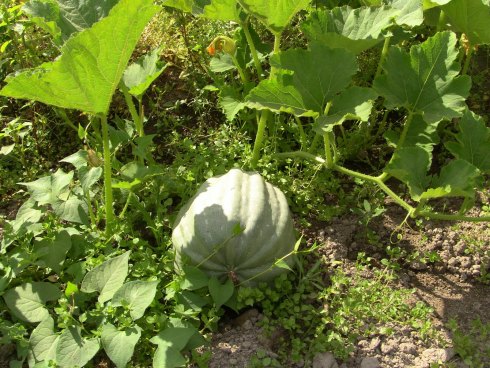
harder, winter-ish squash “calabaza”

semillas

more cheap and delicious convenience food- semillas!

Here, you can just go buy a bag of already-roasted semillas for 5 pesos (pretty cheap).If you can’t buy roasted seeds, it’s pretty easy to roast them yourself. Just separate them from the fleshy part of the squash as best you can- it doesn’t have to be completely separated because the rest will come off easily when they’re dry. Here, they get put directly on the comal (griddle), like so many foods. (Ovens aren’t commonly used unless you’re producing a bunch of bread or something.) A frying pan will do if you don’t have a griddle. Alternatively, you can roast them in the oven.

Space the seeds out a little on your griddle or oven pan so that they’re not on top of each other. Add some salt and toast them (over low heat on the griddle) or roast them in the oven (at 400 degrees Fahrenheit / 200 Celcius) until they’re browned on the outside, turning occasionally. The smaller the seed, the faster they’ll roast.

4789398-el-tradicional-comal-para-las-tortillas

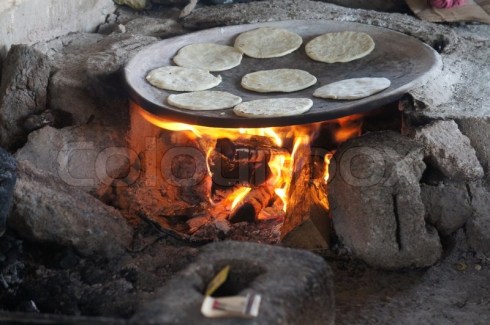
Tortillas roasting over a traditional comal

mex-grocer_1926_30440187

This is more like the comals used on an inside stove, which goes right over 2 burners on the stove. Getting a fire started is okay on a special occassion, but mostly I’m grateful I don’t have to do it every day.


If you want seeds just for snacking, you can also add a little oil and some spices before roasting. I really like mine with some cumin and cayenne pepper (my recipe from back when I used to have to roast them myself, bwahahaha). You can eat them with the shells and all; they’re delicious and nutritious. It’s good to prepare them anytime you are using a squash with edible seeds- less food waste and more healthful snacking for you.

Here’s the recipe for Salsa de Semillas (by Paulina, my badass, feminist, Oaxacan mother-in-law who shows lots of love via what she cooks for us):

mepaulina

Paulina and me on the coast during my first visit, before she was my mother in law

salsa

Paulina showed me how to make salsa in the traditional molcajete on my first visit to Mexico

It’s not meant to be spicy, so if it’s hot for you, use fewer chili peppers.

Ingredients

1 cup roasted semillas (approximately)

10 dry, red, medium-to-low-spicy-level chili peppers- chile costeño is what is used here, but it’s hard to come by outside of here. You can substitute maybe 8-9 chiles del arbol mixed with 1 chile guajillo.

1 (medium to large) or 2 (small) cloves garlic

3 leaves of Pitiona (optional) (apparently known as Bushy Matgrass in English)- If you don’t have this, don’t worry.

water

salt to taste

costeno-rojo-2

chile costeño

44404

Pitiona, a common herb used in cooking and natural remedies here (Sorry, guys, this probably doesn’t grow in your backyard, either.)

Preparation

Step 1: Roast the seeds, as described above, if you are not buying pre-roasted semillas.

Step 2: Roast the chili peppers.

Roast the chiles on a dry griddle or frying pan on low-medium heat, similar to how you roasted the seeds. It only takes a few minutes, though, and you need to move them around on the pan every minute or two. It’s okay if they get blackened a bit, but you don’t want them crispy. You also don’t want tons of smoke from them filling up your house, so keep the heat fairly low and don’t let them get too burnt (and open a window). When they are a little black on each side (more or less- you don’t have to turn them over one by one), put them into some water to soak for about 15 minutes (longer is okay, too, but not necessary- you just want to soften them up for blending).

Step 3: Combine ingredients.

Put seeds, chili peppers, garlic and (if available) pitiona in a blender or food processer. You can also use the traditional mortal and pestle if you prefer (if you are working on your arm muscles, for example). Add a little bit of water to help the blender grind it up, and then add more to make it liquidy. Be careful, though. There is no exact amount of water, but add little bits at a time to get the right consistency. You want your salsa to be thinner than a normal paste but not watery like ketchup or something. It should be somewhere in between. Add salt if needed (depending on how salty your semillas already are).

That’s all! You can enjoy your salsa on any food. We especially love it on eggs and beans (my family’s common breakfast), but it can go on all kinds of stuff: rice, cauliflower- anything that needs a bit of pizzazz.

If you try this salsa, let me know! I want to keep my mother-in-law updated on her worldwide fame in the kitchen. Take care and buen provecho.

48cb3ad33428c2802bc0ce14c82de60e

It should look more or less like this.

P.S. Sorry, y’all, but all the photos are from Google and not me, except for the plastic bag full of semillas and the pics of Paulina and me. I’ll try to do better next time. xoxox

Corruption for All: Democracy and Education in Oaxaca

1 Jul

Somewhere between six and ten people died and lots more were injured during a protest in our state, Oaxaca, on June 19. It’s impossible to know for sure how many people died, or exactly what happened, because everyone has a different account, and you can’t really believe anybody. The government, the police, the media, and the teachers’ union are all notoriously corrupt. Both the causes of the protests and the way they are being carried out is a lose-lose situation for everyone in our state, especially for all the children and youth.

The government says six people died, but nobody trusts the government. Elections here are even more rigged and fraudulent than in the U.S. Buying votes is normal. You might get killed by the competition if you are running for office, partly because if you are elected you can (and probably will) steal enough money from the people to keep you set for life- therefore it’s worth killing over. The government is full of outright, blatant lies: just Google “the missing 43 Mexican students ” (here’s some of the info:  http://www.bbc.com/news/world-latin-america-35539727) if you haven’t already heard about the biggest government and police corruption scandal during this president’s reign. In this most recent case, in Nochixtlán, Oaxaca, the original official story was that some other organization or group jumped in and shot the protesters. Originally, reports even said the police went to the protest unarmed, which isn’t the slightest bit credible. So you can see why government and police reports aren’t believable.
Unfortunately, there are reasons to doubt the utter honesty of the teachers’ union as well. I imagine that accounts from teachers and other folks on site when it happened are more realistic than accounts by police or the media. But the union here is not really the voice of the teachers. Membership in the union is obligatory and participation in protests is mandatory, although they rotate participation some so they don’t have to be protesting every day for these month-long strikes, at least. While I don’t think our public school teachers are the bad guys in this scenario at all, and I’m in favor of unions, I think this particular union is not good for our schools or the kids, and not even particularly good for the teachers. (More info about the teachers’ union, sección 22: http://www.mexicogulfreporter.com/2013/08/oaxaca-education-at-mercy-of-omnipotent.html )

Some articles act like the teachers are screwing over the system, and it certainly sounds like it when you read that teachers’ and staff compensation account for 94% of education funding (http://gppreview.com/2016/03/10/mexicos-education-reform-what-went-wrong/ ). But teachers don’t get paid excessively, I can assure you (people aren’t shy about discussing income here, so teachers I know have told me how much they make). It’s not bad pay but it’s not outstanding, either. Thus, this statistic in context speaks way more to a) other folk that get paid, for example folks who only exist on payroll and not in a classroom, including dead people (yes this really happens here- some live person is cashing in the dead person’s paycheck) and b) just how little funding there is for education. Here, there’s no funding for transportation or food, and next to nothing for anything else. This means classrooms not only don’t have enough books, sometimes they don’t even have classrooms. (Conan and other students had to help build their own high school, for example.) Parents pay so much out of pocket that for “free” public education that school is inaccessible for many people. Not only do parents pay for school materials for their children- which is already hard on many families-, but also they regularly get asked to pay extra fees for whatever the school needs. Parents also have mandatory volunteer work days at the school (because schools can’t hire other staff), and they get fined if they don’t attend.

What Are They Fighting About? The Existing Problems, the Reform, and the General Lack of Confidence in the System

Mexico has some of the worst educational outcomes in the world. It “ranked 118th out of 144 countries in quality of primary education, behind many poorer countries, including Honduras, El Salvador, Bolivia, Bangladesh and Sierra Leone.” ( http://www.reuters.com/article/us-mexico-reforms-idUSKBN0OI0AL20150602) Within Mexico, the state of Oaxaca is pretty much at the bottom of the barrel in education. The federal government passed a bill for Education Reform back in 2013, because pretty much everyone agrees that radical changes to the system are sorely needed in Mexico.

The reform sounds helpful on paper, and in general people seemed to be mostly in favor of it before. Some of its official objectives are creating more equity, and that it be free and accessible. The reform proposes lots of money for more schools, money to improve existing schools, money for food in schools in poor areas, and other such necessary funding. Who knows if it will be enough funding and where the money is coming from, but that part sounds great. It proposes transparency about where the money goes in schools. It calls for better textbooks, more parental and community involvement, and more access to teacher training. It will also require teachers to undergo evaluations and trainings, and to justify their absences if they miss more than 3 days of class. There are lots of things that it doesn’t cover that would be nice, like changing the curriculum, teaching critical thinking, things like that- but it’s a start. (this article gives a good overview in English and here’s some info in Spanish directly from the government about their plans: http://gppreview.com/2016/03/10/mexicos-education-reform-what-went-wrong/ 

http://www.nl.gob.mx/servicios/reforma-educativa

Since nobody believes the government, however, and the news can’t be relied upon for real, relevant information, either, we are also inundated with rumors and counter beliefs about the reform. The number one complaint is that they are going to use this to privatize education. The government viciously denies it, but they are working on privatizing other public things, like petroleum. The government also said the police weren’t carrying guns, among other lies; they don’t prove themselves trustworthy, to say the least. So the government repeats that the tenets of the reform are to make education free of fees, and people shrug their shoulders.

The kind of information that my students tell me they believe about the reform is that, for example, they just want to fire all the teachers. We’ve heard that they’re going to take away everyone’s retirement benefits. We’ve heard that you won’t even need teacher training to be a teacher- that anyone who can pass the exam will be a teacher (which is not a very credible claim, since so much of the reform emphasizes teacher training, but there you have it). A big concern is that if teachers don’t pass an exam they will be fired on the spot. According to the proposal, teachers with poor evaluations will receive more training and then take the exam again in a year- and have a third chance with more training if the fail the second time. Supposedly the evaluations will take many factors into consideration, including the environment and culture where teachers are, which is really important here in Oaxaca where there are many indigenous languages spoken throughout the state, and many kids growing up in a household where Spanish isn’t spoken. Of course the reform needs to take regional and cultural factors into account, and it does propose to do so- but once again, it’s easier to believe what your teacher friend down the street tells you than what the government puts out there. And the teacher may or may not believe what they’re being told about the reform, but regardless they have to protest it or there will be serious sanctions against them.

My impression before this protest was that most people do want evaluations for teachers, or at least some kind of accountability, to deal with the very real problem like teachers selling their guaranteed, lifelong position off to someone else when they retire. Some people are definitely concerned that there is ZERO oversight on teacher quality; teachers are guaranteed a position for life (and beyond, when teachers give their position to their child, for example), no matter what they do or don’t do. Parents are also sick of the strikes; Oaxacan kids have lost more than an entire school year in the past 7 years of strikes. (from this article, which was also one of the broadest and best articles I read covering the situation: http://www.nytimes.com/2016/06/27/world/americas/mexico-teachers-protests-enrique-pena-nieto.html?_r=0  ) And that’s not including the 6 or 7 months-long strike that happened in 2006, which was the 25th consecutive year of teacher strikes in Oaxaca under this teachers’ union. (https://en.wikipedia.org/wiki/2006_Oaxaca_protests  )

But ever since people got killed, the tides have changed drastically in terms of public support. Most people are vocally or actively standing with the teachers now (including a lot of international folks who don’t seem to know what is actually going on here), which also means they’re against the reform now. Also, people down here still revere teachers and, more importantly, lack trust and faith in government to a much greater degree than the cynicism and distrust they have for the teachers’ union. The union talks a good talk, and the demands during the annual strikes (yes, every year for the past 30 years or something now, according to https://en.wikipedia.org/wiki/2006_Oaxaca_protests  ) always include some demand or the other related to the wellbeing of the students.

While pretty much ALL the systems and agencies in this country are corrupt, the government is seen as the most corrupt. Certainly the federal government cares very little about Oaxaca, too. (For example, when the months-long strikes were going on in 2006, for ages the federal government washed their hands of the situation, saying it was a local issue.) So the union is robbing people, sure, but the government killing people- and getting away with it, as usual- is certainly worse.

At the very least, no matter how people down here feel about the union and the striking teachers, most people doubt that the reform will actually help Oaxacan children anyway. After all, it’s been proven over and over that people can’t rely on institutions here. It’s pretty depressing, if nothing else.

The Effects of the Protests

The protest is ongoing and the demonstrations and blockades, along with its secondary effects, are widespread throughout Oaxaca- plus there’s some similar action happening in our neighboring states of Chiapas and Guerrero. Teachers have been on strike since mid-May, first of all, although it was all pretty low-key until elections in early June. Things heated up, then calmed again, and then the killings happened.

rtx1f6lj

a shot from 2015 strikes (borrowed from ibtimes.com)

zocalo

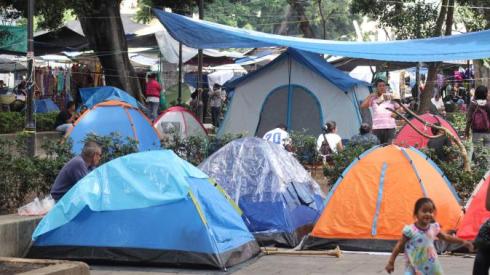
teachers camping out in the zócolo, the main square, of Oaxaca City- a common sight…. (image from nvinoticias.com)… Teachers have rotating schedules for when they have to participate in protests- thank goodness! They have families, too. 

Since then, the government and teachers’ union have had two separate dialogues, both lasting for several hours, where NOTHING has been gained nor lost on either side. Nobody is reporting any clear news on what the hell they’re saying in there for all those hours (perhaps they’re talking about their grandkids, a la Bill Clinton), but there they are. So far they haven’t set up a third meeting. (Here’s an example of the very vague reporting: https://oaxaca.quadratin.com.mx/reforma-educativa-no-se-abrogara-osorio-cnte/)

The union and the government are at an impasse. The union won’t accept the reform, and the government won’t rescind the reform, which is now written into law and already partially implemented. The union is promising to get more drastic and expand their actions to other parts of the country. More and more police are arriving. There are rumors of military involvement. The only thing to do is to wait and see. Here’s a lot of relevant information about what’s happening:

http://www.theyucatantimes.com/2016/07/supplies-airlifted-to-oaxaca-as-blockades-continue-in-several-mexican-states/  I suspect things will get crazier before they get better, despite the government’s vague promises that they will resolve this within a few days.

A big part of the protest is the numerous blockades that the teachers union and their allies have set up throughout the state. They’re mostly letting people pass (with some delays) but blocking commercial trucks. So some areas are short on food supplies, and the gas supply is short everywhere, although it’s coming through sporadically, here at least.
I can’t attest to the extent of the problems happening due to the protests, because there’s also a lot of misinformation and false information about it. For example, I just read an article saying that in Puerto Escondido (where I live) and in Huatulco, there’s gasoline but only for 12 hours a day and each car can only get 200 pesos of gas. In reality, the situation here is that gas seems to randomly arrive at one or two gas stations and everyone lines up to fill up. At times there are cars parked lining up hours before a pipe even comes in. At times people are waiting in line 3 hours to get gas. Sometimes you can get lucky and get a short wait. But it’s not how they painted it in the media.
The news is also stressing how much people are suffering from a lack of food, and it’s hard to say to what extent that’s true. Here we still have plenty of fresh fruit and vegetables at the market. The prices of the stuff that gets trucked in from Oaxaca City has gone up, but even that seems to still be plentiful enough. The two supermarkets in town have some empty shelves, but they are at least getting sporadic shipments of things or they’d be totally empty by now. I have been able to get most of the things on my grocery list every week despite the situation, for example. But I don’t know how it is in other areas. Supposedly Oaxaca City is seriously affected, but a friend of mine there said she’s not seeing that. The government just set up a schedule to airlift food to our state, but I’m not sure exactly where it’s going, or what food they’re taking. Our family in Juquila says they aren’t getting stuff like cookies and other commercial food, but nobody’s going hungry there, either, or at least not because of the strikes. It’s all a bit 1984-esque to me.

The strikes are hurting a lot of the small businesses, though, which a large portion of people rely in for their income. Less people are travelling, for example, so all the folks who have their restaurants along the (very slow, winding) “highway” are not getting as much business. Our friend in Juquila had to come down here for hamburger buns for his restaurant, as another example. It is making people late to work for transportation problems in some areas. It means my friend has extra hours added to her weekly journal to her Masters-level class in the next state over. It’s definitely inconvenient and costly for a lot of people who already have enough economic problems. I don’t think it’s as bad as it sounds on national news, but again, it’s hard to know for sure. I do know that people are a bit sick of it. “I don’t know why they can’t protest in Mexico City instead of here,” one friend said. It’s a good question.

selling gas photo

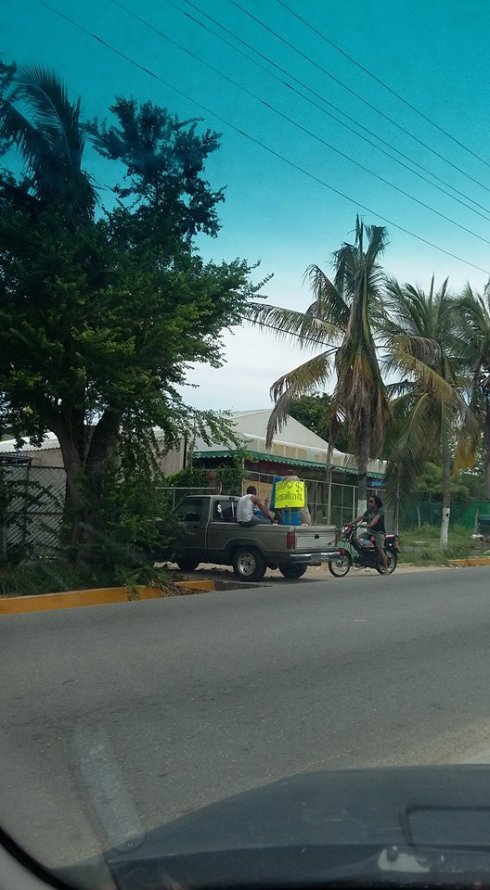
Surviving beyond the system: individuals selling gasoline at higher prices for desperate folks- here in Puerto Escondido (sorry it’s not a great pic- taken from our moving car)

Conclusions: What about the kids? What about a total revolution?

Regardless of the outcome of this battle, the kids are not winning. The children of Oaxaca, already living in the poorest state of this country, living in a country with one of the worst educational systems and outcomes in the world, are not benefitting in any way, shape, or form from any of this protest, and they might not benefit from the reform, either. I don’t know what the answer is to all this, but it would be nice if some institution did something with the best interests of the children in mind as their primary motivation. I’m sure President Peña Nieto and Local 22 Teachers Union are open to your suggestions, dear Reader. (lol)

We do desperately need reform, or, better yet, revolutionary improvements for our students here in Oaxaca. Yes, we need books, food, transportation, uniforms, and so, so much more. We need a different curriculum, dynamic teaching and learning strategies, a way to make school worthwhile, relevant, and accessible for kids so they’re not routinely dropping out at 12. We need institutions that serve the people, institutions that people can count on. We need police who don’t shoot protesters as the status quo. We need governments that don’t order, support, and cover up killings and disappearances. If corruption is always going to exist, we at least need a bit less corruption in all levels of our public institutions and agencies. We need much more than what anyone here in Oaxaca can even realistically imagine receiving at this point. And that’s the worst part of all, perhaps- that there’s so little hope, for our state, for our youth, for our future.


My Kentucky Heart, Sautéed, Not Fried

26 Jun

Kentucky Fried Chicken has ruined my state’s good name. I don’t actively despise KFC when I’m in my hometown; it’s just one of so many fast food joints, a place for mass-produced, cheap, low-quality, low-nutrition eats prepared and served to you by under-paid workers. It is not a place I typically eat (okay, pretty much never), but I understand it’s purpose and I don’t hold it against anyone who eats there. I would not, however, say it is any part of what I want people to know about my great state.

Unfortunately, outside of my state, and especially outside of my country, it’s the only damn thing anybody knows about where I’m from. In Italy, in Chile, and lots of other places in between, people bring up fried chicken like I’m supposed to be pleased and feel recognized. “Ah, como el pollo,” (Oh, like the chicken,) my students say when I tell them I’m from Kentucky. Luckily, the actual restaurant doesn’t even exist down here in Oaxaca, so people just know it as a style of cooking chicken- breaded and fried. That makes it less appalling for me, but it still wounds my Kentucky pride. We have all this amazing culture and incredible nature and wonderful people, but nobody knows about any of that. Instead they’re applauding a stupid fast food chain.

I do my part to educate the public about Kentucky. Down here I take advantage of my job as a teacher to consistently plug facts about Kentucky wherever I can fit them in the curriculum. Like when we read an article about mammoths, I told the students about Mammoth Cave (the world’s largest known cave system, for those of you who don’t know). In the unit about pirates, when we’d discuss movies about pirates, I used to always mention that Johnny Depp is from my state (although he’s officially been cut out of my Kentucky pride spiels, now that I know he’s abusive). I am determined to leave the Oaxacan people with a better impression of my culture than some breaded fried foul.

This semester I taught a particularly sweet group of computer science kids in level one who were always asking questions about me and my life. For the most part students are a bit curious because they don’t get to have conversations with foreigners on a regular basis, so all of us on the English-teaching staff are a bit exotic and exciting. (You guys should see all the girls drooling on my Scottish, red-haired, blue-eyed coworker. Talk about exotic!) This group said they really wanted to hear more about Kentucky, so of course I had to oblige them. I sat down and wrote a list of my favorite things and turned it into a power point, which you can see here. Kentucky Home presentation

Granted, I had to put some things on the list which I don’t really care about or downright dislike, just for the sake of honesty. Despite my personal opinion, my state really is famous for the Kentucky Derby, also known as “the greatest two minutes in sports.” Although I think that horse racing is exploitative to the horses and the underpaid folks who train them, it is a big part of our economy and claim to fame. I also had to mention the 30 minute fireworks show, Thunder Over Louisville, even though I think fireworks are mostly absurd noise and air pollution, not to mention terrifying for some people and animals. I’d much rather have included festivities like KenDucky Derby or that race where servers see how fast they can open a bottle of wine and run with a tray full of wine glasses. But I had to put a limit on the amount of information to inundate the students with, so, you know, some of the more mainstream events won out over my preferences.

For the most part, though, I got to talk about things that I love. That my city, Louisville, is such a close-knit, friendly place. I tried to explain about the miles and miles of beautiful park space- not just a little playground and a bench, but so much green, right inside of a big(gish) city. I got to highlight the good food, the hundreds of restaurants which do not serve fried chicken. I explained about the injera at my favorite Ethiopian restaurant (injera bread is a not so foreign concept here in the land of corn tortillas with everything). I tried not to drool when I mentioned the avocado milkshakes at Vietnam Kitchen. I didn’t even mention the Japanese/Mexican fusion food at Dragon King’s Daughter, or about 15 other of my absolute favorites.

I got to talk about the best part of my city- that it’s full of beautiful immigrants and refugees, constantly adding to our culture. When I looked up the statistics, it said that the foreign-born population accounted for less than 5% of the total, although I am pretty sure that is an underestimate. Even if it’s not, the foreign-born population of Louisville, Kentucky, take up something like 70% of my Kentucky heart, so screw the official stats on this one. In Louisville, teaching English to the grown-up immigrant and refugee community, I learned that being a teacher means constant learning- on my part. I had the grand privilege of teaching professional folks from Mexico and Taiwan; brilliant, wise, multilingual yet illiterate women from Sudan; a father of 10 from the Democratic Republic of Congo; loving and tough mamas from Guatemala; a funny, adorable couple from Cuba, and so many others from so many cultures. And that was just my professional, English-teaching life! Aside from that I worked in restaurants with cooks from Senegal and various Mexican states. In my free time I hung out with generous, smart, nice, world-changing folks from Peru, Guatemala, and so many other places. Even though there is a foreign population in Puerto, being let in to the foreign-born community in Louisville is one of the things that I miss most.

In general, what I miss most is the intimacy of my community there. I sat in my office and cried watching all the outpourings of love in my city when Muhammed Ali died. I miss my family there- the ones I was born with and the ones I’ve chosen since then. I’m coming up on 4 years of living outside of Louisville, and luckily, I find myself feeling nostalgic and homesick less and less often. Especially now that my dad’s gone, the aunt I’m named for is always off on her boating adventures, and some of my other favorite people have moved away. My mind is less and less set on Louisville, because I know that it could never be the same place it was for me before. You can never go back to the past, so even if I went back tomorrow, it would be a readjustment and adaptation process all over again, even though it’s where I was born and raised. But big pieces of my heart still reside there, so creating and sharing my little Kentucky presentation was a good moment of catharsis for my eternally-divided little heart.

And most of all, I did the world some good in showing students that bourbon, annual zombie walks, and a moonbow at Cumberland Falls are all way, way cooler than fried chicken. Take that, impersonal capitalism! My state will rise above Kentucky Friend Chicken! Click on the presentation for lots of pictures!

Fearless Mother/Fathering, in the Bedtime Battle and Beyond

20 Jun

My dad just about drove my mother crazy with his saying that he was “both mother and father” to his children. It kind of made it sound like he was a widower, a single father, taking care of his poor motherless children, which was not at all the case. But I think what he was trying to say was that he did- and was willing to do- whatever was necessary to give his girls the best life possible, the best that he could give, without concern about whether it was a Daddy role or a Mommy role. For example, he cooked dinner- often and well. He coached our girls’ sports teams. He took us shopping for our before-school shoes. He taught us photography (and was pretty successful with my sister, though not as much with me). He grew up without a father, and was therefore extra determined to do right by both of his children, totally off-script, making it up as we went along. Maybe it was a bonus that he didn’t have a role model to copy; maybe it left him freer to invent his own role, to just be the kind of dad that he might have dreamed of.

Conan is a triply fearless soul. First off, he agreed to be the stay-home parent when Lucia was two. We all know that this is a rewarding but also frustrating, usually thankless, and sometimes mind-numbing job. He gets double points because he devoted himself to this in a time and place where it’s completely unacceptable, socially, for a man to be a stay-at-home parent. I could beat around the bush and say it’s just not common or something, but that would be excessively polite, even for a Kentucky girl like me. It’s shocking and threatening to the entire patriarchy of Southern Oaxaca, and yet somehow he not only rocks it but also still has a bunch of male friends. (“He seems so laid-back,” people think, totally unsuspecting of his big ole feminist streak.) Finally, his triple crown is due to his supreme perseverance in stay-at-home parenting even when the new baby came along. He is being  both mother and father to his kids, as my dad would say- something many moms already do, too, something that gay parents and other nontraditional families are already negotiating, but that’s not quite as common among straight fathers, even in more liberal areas of the world. He’s survived and grown (and kept our kids surviving and growing) for two years now as a stay-at-home dad.

We’ve been experimenting with our roles from the get-go, and today, I want to applaud him a little more specifically. I’m ready to state, out loud, that my husband is a much better parent than I am- at some things. (For sure, absolutely, he is a fabulous papi, all comparisons aside, and I’m a damn good mama, if I do say so myself. No need to put anyone down.) Even though I’m a gloriously subversive feminist, he is good at some things that I thought would be my role, and I’ve been surprised by how much of a challenge it is for me to let go of some of my expectations for myself and encourage those traits and actions in my partner.

Bedtime is one of the things that he is a natural at, although neither of us realized it until recently. The Bedtime Battle in our household has been almost as epic as the striking teachers’ drama here in Oaxaca. Since my 4-year-old was 5 months old, I’ve been fighting the good fight to attempt to calm her excited, joyous, curious mind enough to nap and sleep every day. I’ve spent ungodly amounts of time online, searching for solutions. I’ve read books and consulted experts.  I’ve cried my little heart out, tears of desperation and frustration and anguish. I’ve thrown my own tantrums. I’ve blamed genes (Conan’s insomniac genes and my overactive-mind genes). I’ve blamed our (my) parenting and tried to instill and reinforce routine, routine, routine. I’ve done everything I could possibly do for these two bright-eyed, bushy-tailed children, and half the time I still fail at my mission of helping them sleep enough or go to sleep at a reasonable hour.

The scheduling drama due to my job certainly wasn’t helping matters. With my 8-1 then 4-7 shift, I’d spend my lunch break trying to cook, get chores done or run errands and spend some scant amount of quality time with the kids. I’d attempt to put them both down for a nap around 3 or 3.15- Lucia in the hammock, Khalil in my arms. Then I’d go back to work.

I’d get home by 7.20. I’d throw together or reheat something for dinner (cooking is not something that Conan thrives at, unfortunately.). We’d sit down and eat (often at 8pm by the time I got the table cleared, got the drinks, got hands washed, etc.) Then it would be the mad dash to try to bathe both the kids and myself at the same time, get everyone in pajamas with brushed teeth, prep my coffee to survive the next morning, and usually attempt and fail at some other needed chore like getting diapers out of the washer, hanging up clothes, etc. I spent my entire evening after work running around like a chicken with my head cut off, neither taking good care of the children nor myself, trying to do everything and thus accomplishing nothing. I was hurrying at everything to get the kids to bed at a reasonable hour when I already knew it wasn’t really possible.

Meanwhile, Lucia’s fight against her nap was becoming more and more intolerable, partly because her nap was happening too late in the day, after she was way too exhausted, because of course I wanted to see her for as long as possible before I went back to work. I couldn’t put the kids to bed until I was also ready for bed because Lucia was often able to stay up for ages, thanks to her late afternoon nap. Khalil was falling down with sleepiness by the time I could get him into bed. My showers, dearly anticipated in this heat and humidity, were not half as enjoyable as they should have been, because I was scrambling to bathe the three of us all at the same time, as quickly as possible.

I was torn, because I wanted to see my kids as much as possible, but it was getting more and more painful for everybody to work with my schedule. I was getting resentful, comparing my life against that of dads living with stay-at-home moms. Why didn’t the stay at home parent in my life cook dinner? Why didn’t the stay at home parent in our household get the kids ready for bed? Why didn’t he institute clean-up time? Why didn’t he do x, y, and z like moms on TV? If I were the stay-at-home parent, then I would (fill in the blank with whatever I was resentful about in that moment).

Some of the problem was poor communication on our parts, but in part, too, I didn’t want him to do all of that. I wanted to be the one to read the kids their bedtime story and sing them their lullaby. I wanted to do all the things that my mama had done, things that I still cherish tenderly in my memories of childhood. I wanted to be responsible for the jobs and roles that I had so anticipated in the time between when I decided that, yes, someday I wanted to be a mom, and when I actually became a mom. I had imagined that I would be a stay-at-home parent for a while when they were really little, and then work part time for a while, and then someday get a full-time job. I had it all planned out in my dreams.

Of course, though, plans are often shattered by reality, especially with children involved. I work full-time, and Conan takes care of the kids full-time. It’s not exactly what either of us had in mind, but our kids are not only surviving but thriving. Us grown-ups are constantly learning and adapting to our lack of gender roles. When you don’t have a typical gendered family structure, negotiations are required on a regular basis, so everyone knows what the hell they’re supposed to be doing and what the other person is going to take care of.

The thing is, Mommies and Papis are not exactly the same. There are a couple of differences we can attribute to physical sex, such as the ability to produce breast milk or to carry a baby around in your uterus (yep, you need a uterus for that one, although you can identify as male and have a uterus, of course). The rest of our differences, however, are all about character- how you were raised and who you are that’s not determined by your sex. The rest of our differences- between Mommies and Papis- are on a similar plane as the difference between two different dads. They’re different people; they were raised differently; they have different values; they have different ideas about their roles.

That said, it seems like there are more differences between Moms and Dads than between different moms because to some extent or another, two people raised as the same gender are likely to have been raised with very similar expectations for how to behave.

I’m a much better cook than Conan is, but it’s not because I have a uterus; it’s because I’m actually willing to cook (first and foremost) and I have a passion for healthful, sensuous indulgence. I’m pretty sure we can’t attribute that to my fallopian tubes, although people do so every day. I don’t parent our kids in exactly the same way that Conan does. We don’t give our kids exactly the same things. For example, I’m much more permissive about letting them try something for themselves even when I know they can’t do it yet. I’m much stricter about how much junk food they ingest. Mommies and Papis aren’t exactly the same, just like no two dads are the same and no two mamas are the same. It’s not about our maleness and femaleness, and it’s not just about our gender roles, either.

I’ve been saying all these things, to anyone who will listen and also to myself, but I guess I only believed them about 80%. Or maybe I believed them fully as long as they applied to everyone else, because the reality is that I did not / do not want to give up my role of Most Intimate Parent- which is typically a Mommy role in every realm of the universe. Surely I would get to witness all their firsts, first steps, first words, give them their first food, etc. I wanted to be the one to kiss most of their ouchies. I imagined I’d be coordinating their outings. I insisted on going to all their doctors appointments. And I really, really wanted to be the one to tuck them in to bed at night, to read the bedtime story, to pat the backs, to sing the songs passed down from my mama.

The harsh reality, however, is that I can’t be out of the house, during the daytime, more than 40 hours a week and still do and be all of that (and all of you who somehow do so are to be worshipped). Slowly but surely I started to let go and rely on the Papi. Even though the nurses interrogate him about the child’s shamefully absent mother, Conan takes them for their vaccines. Conan learned really fast how to warm up the milk for a crying baby and feed him. Conan has proved himself perfectly capable of taking the kids for doctor’s visits. Conan can put the baby down for naps just fine. Slowly but surely, I am giving up the hidden, patriarchal complex that I carry in me, that ideology that teaches all of us that men cannot adequately take care of their own children.

It’s that same sexist message that teaches us to say things like, “Dad is babysitting tonight,” although babysitting is taking care of children that are not your own. It’s demeaning to men to assume that they can’t be loving, responsible caregivers. No, most of them have not had nearly as much training in it as most women have, but that doesn’t by any stretch mean that they can’t or don’t want to learn. But we’re all profoundly influenced by our culture and these intense messages in our world. Even if you question everything and your heart rejects obligatory gender roles and stereotypes, those messages still seep through the cracks.

So finally, one day, there was one desperate, tearful nap time struggle that broke the camel’s back. There had been too many nightmare-ish bedtimes. Finally, I broached the subject with Conan. What if we cut out Lucias nap time and Khalils second nap? We could put them to bed earlier, I suggested, waiting for his cynicism because I’m always talking about getting them to bed early and it never worked. I wanted him to think about the possibility of getting the kids ready for bed. But I would still put them to bed! Me, me, me- dont worry, I told him. You just give them their dinner and bathe them. Ill come home and immediately read their story and whisk them off to bed. He agreed with a minimum of cynicism (extra point for Conan). So it began.

I am brilliant at bedtime, in my way. I’m an excellent story-reader, adding hand-gestures, putting emphasis on the most interesting parts, making different voices, letting Lucia ask 10 thousand questions and make 500 comments about every page. I’m not bad at teeth-brushing. I’m a terrible singer, but I know a lot of good sleepy songs. I rock at bedtime in certain ways.

But I’m not patient. I don’t feel relaxed when I’m trying to make my kids relax and go to sleep. The longer my kids take, the more tense and angry-feeling I become. Then they sense my irritation and agitation, and it surely doesn’t help them relax. Lucia always asks for a drink of water right as she’s about to fall asleep, just to fight the sandman off a little longer. Or she’ll have really, really pressing questions, like, “Why does fire burn, Mommy?” One night I successfully reminded her that it was sleepy time, and therefore we weren’t going to talk. She let it go- until bedtime the next night. “But why, Mommy?” she repeated. “Please tell me!” She urged, like it was a pressing need to be resolved in that moment. Bless her little heart. I can’t shrug off her familiar mix of anxiety and curiosity; I feel the need to answer her. She reminds me so damn much of me, which I both adore and abhor.

The reality is that I’m not the best parent to put my children to bed. Conan is, hands-down, a better choice for the job. Even with him getting them ready for bed and me coming home and attempting to get them to sleep right off the bat, they were still going to sleep at least an hour later than I wanted. It wasn’t working, but instead of him saying, “I told you so,” he took it upon himself to get them to sleep himself before I got home from work.

It worked so well that we decided he would do it like that all the time. Still, I kept checking in / questioning him. Did you remember Lucias medicine? Did you brush Khalils teeth? Did you really read them both a book? I didn’t really think about the fact that I was questioning his ability to handle the bedtime routine, and thus questioning his ability to parent them equally. I was needlessly worried about the transition. Maybe he didn’t do everything perfectly, all the time, at first- but I certainly didn’t either when I was the one putting them to bed.

Once Conan took over the responsibility for bedtime and we put their early bedtime into effect, I suddenly had happier children. Lucia doesn’t get bags under her eyes, and is much less cranky than before. Khalil is falling asleep easier. There are fewer meltdowns all around. And my life is 60 billion times better because of it. My evenings are calmer. I can prep the food I’m going to cook the next day at night, and shower in peace, alone. I don’t feel half as exhausted when I wake up in the morning, although I’m sleeping the same amount of time. My kids wake up happy and rested, and therefore I am able to spend pleasant moments with them before I go to work instead of fighting with them. I can get Lucia dressed and read a book while I brush her hair, for example. So I’m not missing out on all her reading time. I can give Khalil his first meal of the day and maybe chase him around the house for a bit, starting my morning off with giggles and delight instead of tantrums.

It’s a miraculous change for all of us. It’s something that I dreamed of, that I didn’t think could happen, because I secretly didn’t want to give up one part of my prescribed gender role. Because I didn’t think Conan would be willing to take on even more of the parenting responsibility, when he’s already the one who’s with them 24/7 most of the time. Even though he volunteered for the job of stay-at-home parent. Even though he’s a perfectly capable and loving father. It’s amazing what can happen when two people are both finally willing to let go of their gendered expectations and be the most practical, best parents they can they be.

Happy Father’s Day to all the dads out there who are giving it their very best. You’re amazing, and imperfection is part of the deal, so just roll with it. Happy Father’s Day, to my dad in the Great Beyond, who wasn’t afraid to do some Mommy jobs, who was way ahead of his time. Happy Father’s Day to my partner, Conan, who is so quietly but steadily radical in his thoughts, words and deeds. Who is doing his very best and even teaching me. Conan, you are a fabulous, fearless father, for bedtime and beyond, and my dad and yours are surely both so proud.

Bearing the Fruits of My Two Labors: Birthing in Oaxaca Part I

14 Jun

In 2014, a waiter in a restaurant in Louisville, Kentucky, kindly advised my dad that I should not give birth in the town where I live in Oaxaca, Mexico.* The waiter and my dad and stepmom had been chatting, and it turned out the waiter was from Oaxaca. One thing led to another in the conversation and suddenly the waiter knew my entire life story and my unborn child’s due date (yep, this talkative business runs in my family). So the waiter asks, “When is she coming here to have the baby?” My dad says that I’m not, and the waiter is taken aback. He tells my dad to convince me to go home and have the baby. He tells him that Oaxaca is not a good or safe place to give birth. He doesn’t go into details, but he’s very firm on the idea that it’s not going to be good for me and the baby.

Thanks to that helpful waiter, I spent weeks reassuring my protective father that no, really, I was going to be fine. The baby was going to be fine. Yes, the baby really will have dual citizenship, too. No, I don’t know where I’m going to give birth yet, but I will pick a great doctor. No, I’m really not coming home. Everything will be as fine as it can possibly be; I promise. Conan promises, too.

Fast forward to the present. I’ve now given birth twice- once in the U.S. and once in the poorest state in Mexico. They were outrageously different births, but probably not in the ways that that nice waiter imagined.

My Home Birth …. Err, My Hospital Birth in My Hometown

In my first pregnancy, in Kentucky, Conan and I took classes together about healthy pregnancy and drug-free, vaginal childbirth. We wanted to hire a midwife but went the (free, insurance-covered) hospital route instead, mostly because I found a gynecologist that I felt really comfortable with. We hired a doula, a (non-medical) labor assistant, to accompany us in the wild process of bringing new life into the world. We toured the hospital. We decorated the baby room. We agreed on all the big decisions- and if this happens, then x, and if the situations looks like this, then y, and be ready for this other thing. I felt grateful to be having a baby in my home country, where I thought I could best prepare for all the possibilities, where I was sure I would at the very least be safe and respected.

My labor and delivery in Kentucky was amazing, because, to some extent, having a baby is an awe-inspiring, life-altering event one way or the other. But almost everything that I didn’t want to happen did happen, and that wasn’t especially thrilling. Some of it was circumstantial, or due to things that I can blame on the baby (that’s right, kid- might as well start taking some responsibility around here). For example, I was stuck in purgatory (aka early stage labor) for over 24 hours. I was in labor altogether for about 48 hours. Once at the hospital, I was rewarded with an IV full of Pitocin (the drug that makes your contractions horrendously fast and strong because your body’s not giving you a hard enough time). Alas, labor is unpredictable. I knew it wouldn’t be how I’d dreamt it.

Some things, though, could have been different in a different setting. For example, it would have been nice to not be meeting new doctors while I’m starting to push a baby out. “Oh, hi, nice to meet you,” wasn’t really in my repertoire at the time. The absolute worst part, though, the way I remember it, was those Marquis de Sade-style strappy belt things they use for fetal monitoring. Making laboring women (gasp) sit still is truly cruel punishment. I realize that I was lucky it only happened once an hour (twice when it didn’t work during the first contraction) instead of constantly. Still, though, when swaying and gyrating in time with your gut-wrenching cramps is your salvation, imposed stillness is pretty rough. Thanks to Conan, to our doula, to only intermittent monitoring, and to generally being even more stubborn than my now four-year-old when she wants the triangle shaped sandwich, I did not get the make-the-pain-go-away-drugs- aka epidural. (What is the reward in this, you ask? Getting up by myself to go pee right afterwards? I must be out of my mind. But I’m entitled to be out of my mind on this!)

Not having an epidural and not having a Cesarean were pretty much the only things that coincided with my hopes and plans. When the time FINALLY came to get this creature out of me, as I might have screamed at one point, two male doctors who I’d never seen before attended to me instead of the fabulous lady gynecologist that I’d carefully selected for this purpose. These two random dudes (okay, I guess they were doctors, but how do I know?) used pretty much every intervention possible except for cutting my belly open. They made me lie down when I wanted to squat, perhaps just to make sure I knew this was going to go by their terms and conditions. I won’t go into all the gory details here of the way-too-eventful trip down the vaginal canal, but suffice it to say that neither of us two main characters were unharmed. When the baby was born, they put her under a warmer instead of on my chest. They cut the umbilical cord immediately. They let me hold her for a minute before they whisked her off for testing, even though all of these things were expressly against our wishes except in case of an emergency, and a true emergency it was not.

I’d like to say that at the end of the day, it didn’t matter, because I had a healthy baby and I was healthy, too. Except it did and does matter. I’m not complaining, and I wouldn’t even say I had an awful birthing experience. In fact, I felt like such a such a raging warrior / shaman-back-from-the-mountain that when Conan asked me a couple hours later if I wanted to do it again, I said, honestly and sincerely, “Hell, yes.” But the way that you treat people does matter, always.

My ReBirth…. Errr, Second Time’s the Charm, Abroad

The second child, of course, is not really comparable, because #1 has already paved the way, so to speak.** But my birthing experience here in Oaxaca could hardly have been more different. This time, I made my doctor sign a pact with the blood of his first-born that he would be the one to actually deliver my baby. (Okay, maybe it wasn’t real blood.) My wonderful, simpatico (all-around nice), knowledgeable, son-and-grandson-of-midwives, modern gynecologist committed to be there. So I called his cell phone a little bit after my labor started. “Okay,” he said, calm and cool as usual, “Let me know when you want to come in.”

I went in about 3 hours in to my labor. The clinic is like a mini private hospital, with big airy rooms in a lovely tree-covered yard/corridor just a little ways from the beach. My doctor checked out me and the baby and promptly sent Conan and me off to go walk on the beach while things progressed. He monitored the baby with a regular old Doppler instead of that horrendous belt thing (although that, along with all the other medical equipment in a U.S. hospital, was available). The sheer lack of the sadistic strap-down belt instantly made for a more peaceful, happier bringing-forth, compared to my hospital birth in Kentucky.

In general, he and the staff let me do my thing. I was extremely privileged to be accompanied by Conan and by a terrific doula, which is a nearly non-existent position in my neck of the woods. This birthing experience was essentially everything I’d hoped for with the first. I wouldn’t call it easy, because, you know, your little internal alien is forcing your body open, and even if you get to walk on the beach meanwhile it is not a regular walk on the beach. But I felt like I was taken into account. I felt like an active, respected participant in the birth of my baby the whole time.

Because of all these wonderfully calm and conducive circumstances, because luck was also on my side, and because it was my second kid, everything was over and done about 8 hours after my first contraction this time. In fact, the only real negative was that it went a bit faster than the doctor predicted at the end, and he almost wasn’t there for the birth. But he made it in time and guided us through the last bit beautifully and smoothly. The baby was placed right on my chest and Conan got to cut the umbilical cord several minutes later. My now beloved doctor told me I could go home that evening, but that he’d prefer that we stayed till morning just to be on the safe side. We did, since having a toddler to go take care of right after giving birth doesn’t make going home quite as enticing as it might be otherwise.

Other Differences in My Experience

What you receive, and the level of attentiveness, afterwards was very different between my two births. In Kentucky the hospital provided all my meals and all my drinks after birth, in addition to diapers, onesies, a hat, a blanket, and everything else necessary to care for me and the baby for two days. I even had a choice of items for my meals. Sure, I needed some more flavorful food shipped in, but if I hadn’t had family there I would have survived just fine. I’m sure they charge the insurance company for every last cup of ice they give me, but since I didn’t have to pay for it, it was all incredibly helpful.

For my birth here in Oaxaca, on the other hand, even at my fairly expensive private clinic, they don’t provide me with much of anything. They gave me some fruit and some juice and tea, and something for breakfast the next day, I think, but that was about it. I knew this was the norm going in, and I thought I was all prepared, but in the moment I ended up having to send people out to get things quite a bit. The baby dirtied up half of his first outfit immediately out of the womb, for example, so I needed another hat and blanket for him for after his bath. I even had to buy soap for his first bath. There was hand soap in the clinic for everyone’s hand washing needs, thank goodness- not like the typical lack of soap in public clinics and hospitals. And the room was clean and free of mosquitos, which is, of course, a big deal. That was the extent of the hospitality, but my bill was a whole lot smaller than it would have been in the U.S., too, and luckily I did have people to make sure we had everything we needed.

All in all, my supposedly scary/ dangerous/ substandard birthing experience in Mexico was far, far superior to my birthing experience in the U.S., where we have this idea that everything is the cleanest, safest, most modern standard on earth. This is absolutely not the case. The U.S. is really low on the list in the “developed” world in terms of using best practices- doing the most researched, highest recommended things in medical practice. The U.S., among other “developed” nations, has some of the highest rates of maternal and infant mortality.*** Being a rich nation does not make it a better environment for giving birth. Being a poor nation does not indicate that health care is always substandard (geez, look at Cuba if you need another example).

It’s important to note, also, that while I was able to have my “perfect” birthing experience in Mexico, money, and several other factors, played a big role in my access to that experience. My experience is not typical. For this reason, this is the first post in a series I’ll be doing on giving birth in Oaxaca. I have talked to a lot of people about their birth stories (which will only be shared anonymously and with permission). I’ve read a lot of research. I’ve talked to doctors, I’ve been through the insurance company saga. And I am all fired up to start changing the system! But every time I sit down to hammer it all out, I get overwhelmed. I cry again, and again, tears of outrage and solidarity for everyone who hasn’t had- and those who probably won’t have- a birthing experience like mine- where they felt respected, where they were treated like a valid, participating member in the event. Which is most of what it takes to have a truly “perfect” birth, and which should be a human right for all. And I won’t shut up until it is.

*Seriously! Why does everyone- and their mom- have such excessive amounts of unsolicited advice for pregnant women?? Resist the urge to say everything you think, people. Please.

**If you are the oldest in a family, you know this is true. Your siblings who come after you have it so much easier in every respect because you’ve been busily training parents in how to parent since you were born, on top of all your other difficult jobs, like throwing tantrums in the grocery store.

*** source

Colorful Catholicism for Goddess-Lovers, and for Those in Need of a Lover

5 Jun

Mexican Catholicism is a gloriously pagan affair. If I were Catholic, this would absolutely be my style. It’s Goddess-centered (ahem, I mean Virgin Mary-centered), and way more elaborately ritualistic than a typical Catholic mass in the U.S.

I already liked Catholicism for all its saint-loving, saints being like special lesser deities just to help you out with random parts of your life. But in Mexico the interpretation of saints’ jobs is even better. For example, when I mention a Saint Anthony, who I know as the Patron Saint of Lost Things (this is who I always call on for lost documents, lost keys, etc., although I’m not a practicing Catholic), everyone laughs at me, assuming I’m talking about the saint you call on to find yourself a boyfriend or husband. You have to turn an image of him upside down if you are a single lady looking for a man (I haven’t seen any specifications on whether or not it can help single ladies find a girlfriend, but it’s very specific that he’s a saint for solteras, so I guess he won’t help attached women find an extra lover, nor men looking for a partner.)

Don’t worry, though, fellas, because there’s also a local recourse if you are having trouble finding a woman partner. Halfway up the mountain, between Rio Grande and Juquila, lies the small town of San Marcos Zacatepec. Right there off the main road you can make your pilgrimage to the Piedra Mujer (Stone Woman). Go in, say a prayer (some put it in writing as well), light a candle, and you’re golden. Once you have your partner, you go back and give thanks with an offering (money to maintain the sanctuary, and a thank-you note if you want.) All in a day’s work in the world of Mexican Catholicism.

13348655_10153564721557344_1578419360_n

a close-up of the “Stone Woman”- if this ain’t a tribute to the Goddess then I don’t know what it is

13393006_10153564721522344_1746092067_n

The sanctuary of the Piedra Mujer

And it doesn’t end with the saints. I love that nobody’s walking around with those WWJD bracelets, because for the most part, people aren’t all that into Jesus. The majority of the love, prayers, tokens of adoration, and clothing accessories are for Mary. People have images and invocations of the Virgin Mary all over the place, all the time. I’ve seen a whole group with painted t-shirts of grafitti-style Virgin Mary. Cars sometimes have lettering on the windshield reading “Gift from the Virgin.” There are Virgin Mary bracelets, necklaces, rearview mirror ornaments, dashboard ornaments, car hood ornaments, wallet-size cards, statues for the home, dolls, and tattoos. There’s more tourism that goes to visit the Virgin Mary who supposedly appeared in Juquila than there is tourism to the beach here in Puerto. The devotion is impressive.

juquilita

one common image of the Virgin of Juquila

Juquila isn’t the only spot where the Virgin Mary has been sighted in Mexico. Nor is it just a spot to pray. No, it’s way more pagan-style than that; you perform a whole ritual when you go to ask for something. You make a clay figure that represents what you are asking for from the Virgin (for example, a car if you are hoping to save up to buy a car). You make a promise to the Virgin. You spread some dirt on your face. Some people bathe in the water near the cave where she was spotted. People fill up their plastic bottles with that same holy water. It’s a very serious affair. People don’t ask for stuff without expecting to work for it, but it’s a way to get extra help, an extra blessing when you’re trying to do or acquire something big. There are folks who wouldn’t dream of starting some big undertaking without a visit to the Virgin first. Often it involves a promise to the Virgin; making the pilgrimage by foot or on your knees next year, or cutting off your beautiful braid, or some other kind of sacrifice.

Rituals in general are of great cultural importance. When you die here, people aren’t worrying about who’s going to give the moving speech at the funeral. Instead everyone comes together to cook food for the people who will come every night in a nine-day long ritual of prayer and incense. It culminates in the ninth evening being an all-night prayer vigil, followed by everyone going to the cemetery in the morning to leave the cross and say some more prayers.

There are other religions here, but Catholicism is the big majority rule, and it’s totally ingrained into the culture whether you’re a practitioner or not. Mexico is technically secular, but for all intents and purposes it’s still an officially Catholic country. For example, I just went to the grand opening of a new (completely secular) business, and half of it centered around a blessing by a priest. And the Church has some serious, major power that I sadly don’t see them using for justice around here. They’re typically more concerned with whether you’re married via the Catholic Church and whether men should have earrings or not than all the malnourished people in this rampantly corrupt state. (According to folks I know who go to mass and listen to these exciting sermons and otherwise participate- I don’t have first-hand experience with mass here, sorry. I do know that Conan and I can’t be anyone’s official Godparents here because we’re only legally, civilly married, not religiously.)

Catholic Church aside, though, I adore Mexican Catholicism for the way it honors and continues to revere it’s pre-Colombian roots, without even acknowledging that this could possibly not be Pope-approved, all this assembling clay figures, for example. Here, this is what Catholicism is, period- pagan symbols, goddess figures and all. If I could just get over the whole institution of it, all the priests that act like they‘re God, and even this radical Pope still telling women not to protect themselves with condoms and birth control- if I could just get past that part, I would have found a religious home in this fabulously expressive, colorful Mexican Catholicism. I might still get one of those graffiti-style lettered shirts, anyway, if I could get one of the Piedra Mujer instead of the Virgin Mary. I’m going to look into it.

Peace and respect, folks, to all the religious in whatever religion and the non-religious, too. Until next time.


Castles Made of Tin

23 May

Like driver’s tests and many other formalities, zoning laws don’t seem to exist here. This means that you are S.O.L. if your next door neighbor decides to put a karaoke bar on the third floor of his house (true story, folks- it happened to my mother-in-law). It means you have no recourse if your neighbor is sawing through aluminum all day long. It has all kinds of potential consequences that are really, really ugly.

As with everything in life, though, there’s a bright side, too. What I love about it is that you can build whatever kind of house you damn well please. Okay, well, whatever house you can afford, but nobody’s trying to regulate it. You pay a fee to build on your land, but basically you tell them if you’re building a small house or a big house and pay accordingly. That’s it. Building a house here is the three little pigs in real life, except the materials that each person picks aren’t due to work ethic but rather to economic situation. Thus, we have neighbors with a house made of wooden boards hammered together. We have a neighbor with a mammoth house; it’s three stories, all concrete, fenced-in with concrete, including garage. We have neighbors who seem to have multiple concrete structures and yet still can’t manage (or don’t use?) an inside bathroom. I only know because I sometimes bike past the matriarch in all her nude glory bathing herself in the yard.

I got stoked to write this post because I was watching some neighbors building the other day. It only took about two or three days to get her house livable, not like the months it took us. She put up a tin house with a slanted roof (which is not common at all here- they’re almost all flat roofs). It was so fun to watch her little sisters and other random family members, all over there hammering away at some pieces of aluminum. And that’s that- for now. It’s awesome that you can throw something together pretty quickly when you need somewhere to be. Conan built a quick aluminum structure to have a place to be while our house was being built, and it was a cheap and needed home (that we continued to use as a kitchen for a good while afterwards, too). It’s sweet to see how within-reach something like shelter can be, when in the U.S. building a home is a distant, complicated, super-regulated, long-term affair. But watching this family all help to build this quick structure made it seem as if I could almost build a home for myself, too- not only Conan and all the builders, but little ole me! That feels outrageously cool to me.

house 2

our “garage”- the house Conan lived in while ours was being built

house neighbor1

Different bits of tin pieced together make for a quick home when you need it

The downside of this kind of housing is that any passing hurricane or serious earthquake will likely destroy it completely. That, and the lack of bathroom regulation, which is a health problem for all of us, are the major rain on my parade. Granted, most people have some kind of decent bathroom situation, which is enough. Maybe it’s an outdoor commode that you have to pour a bucket of water down to make it flush, but it probably goes to a septic tank. The shower might be a curtained-off area outside where you pour water on yourself in lieu of a shower, but it works just dandy in this heat. (Why can’t my neighbor get a curtain at least? Geez!) Those situations are fine, but when there’s not even a septic tank, it’s a problem- for the person living there and for the rest of us and our gardens. Oh, well, at least there’s disinfectant for fruits and vegetables.

Whatever you can get together is home, and if it’s just a temporary throw-together, at least no mortgage shark is out to take it from you. Instead of paying mortgages their whole lives, people work on improving the home that they’ve got. As Conan pointed out the other day, “Rich people are the people who finish building their houses before they need to live in them.” For everyone else, home is a work-in-progress. It’s common to see, for example, one story of a house made of concrete and a second story put together with wood or tin.

Our house continues to be a work-in-progress, too. We have two indoor bathrooms but only two out of eight of our house’s window frames have windows that you could close. (Don’t worry- the others have mosquito netting and bars.) We still need another layer of concrete and a paint job on the outside before the rain can stop seeping in when it’s windy. But our house is big, and made of concrete, and it’s ours, ours, ours. It’s a work in progress that belongs to us, and I love it!

And I love that if you have the money for paint and want to paint your house a vomiting-cosmo-cocktails pink, nobody will say a word about it. Everyone will mind their own business and let your home be your castle, no matter what it’s made of, no matter how it looks. Just like it should be.

Excess of Vitamin D (Ode to my Adopted Coast of Oaxaca)

15 May

It’s that time of year again, folks! Spring time on la costa, when I wake up at 3AM with my sheets soaked in sweat and pull myself out of bed just to go take a shower so maybe I can sleep some more. (Granted, this happens less often now that we have electricity.) My hair is a frizzy frazzled mess, thanks to the 85% humidity. The water in my shower is tepid even though we don’t have a hot water source. The baby is battling some sort of fungal diaper rash. I don’t ever actually dry off because I’m soaked in sweat again as soon as I turn off the water. But I love it! I love it! I adore my hot, sweaty, beloved, adopted costa!

I appear to be suffering from GLEE(VD) Syndrome, the opposite of SAD (Seasonal Affective Disorder). My current disorder stands for Gringas Loving Everything due to Excess of Vitamin D. One of the side effects is inventing cheesy acronyms, so beware, folks, if you plan to travel to a tropical climate for an extended amount of time. You, too, might find yourself making up stupid names for things because you’re giddy with the realization that you are living the dream of eternal summertime.

Photo on 5-15-16 at 1.54 PM

Frizzy, sweaty, and smiling! Yipee!

My mama always said you can only complain about one season. If you’re gonna gripe about the snow, don’t talk bad about the sunshine. If you’re gonna moan about raking the leaves, don’t whine about the raging April showers and storms. Pick one season to complain about, and that’s it. You don’t get to hate everything all year long.

It’s a good policy, and it’s serving me well. When I walk back into my office in the most outrageous heat of the day at 4pm, and I’m dripping sweat and running out the door to go teach, I try to keep myself from bitching by saying something like, “I’m so glad it’s not cold out!” or “Thank goodness for this sunshine!” One of my coworkers has declared that, “This is much better than negative 40 degrees,” and I’ll be adding that to my list of things to say in the 4pm heat. Because if I only get one season to complain about, it’s winter. I loathe and despise the cold. I abhor the way cold weather and lack of sunshine seeps into my bones, all the way into my soul, sucking the joy right out of my very existence. Seriously. Winter is my arch nemesis.

Not that winter exists here in Puerto Escondido. Despite being on the coast, however, there are seasons. They’re just way more subtle than the drastic seasons in Kentucky. Sure, there are the official two seasons- rainy season and dry season. Rainy season is from May to early November, and dry season the other half of the year.

But there’s more to it than that. Like right now, we’re in the April to June ungodly humid season, the Satan-himself-is lightheaded-from-sweat-induced-water-loss season. Granted, it may rain some starting about the first of May, but it won’t actually cool anything down for more than 3 minutes. But I’m not complaining! No, siree. Sweat is good for getting those toxins out of your body, according to the internet. Some people complain they aren’t motivated to exercise when it’s this aggressively stifling in the air, but I figure you might as well exercise because even if you’re just sitting there you’re going to be sweating. It’s a lot like summer in Kentucky, which is my favorite season. This is not Kentucky, though, where I had to carry around a hoody in July because the air conditioning everywhere would nearly freeze me to death. There’s practically no A/C anywhere because it’s too expensive. One less thing to worry about!

After this, from July through the end of September, we reach the more-likely-to-rain-or-have-a-closeby-hurricane season. At that time of year, if there’s a hurricane off in the distance bringing some of its effects in, it’s liable to be cool enough for a cup of hot chocolate. (Yum!) This is when you have the Puerto equivalent of snow days. Classes might be cancelled, and even if they’re not officially cancelled, most parents won’t send their kids because the roads flood, making it too hard to get them there. (I still have to work on “snow days,” unfortunately.) Granted, roads flood temporarily pretty much anytime it rains hard, but they’re extra flooded when it rains for days on end. You try to stay home as much as possible, watching movies, making popcorn and hot chocolate. (What? Did I mention that already?) In the rainy season, it usually just gives us a shower or a storm around the time that I get off work, or a little later, and then it’s over. It’s nice and sunny again the next day- nothing like the days and weeks of gray that can happen in my city.

October and November are pretty uneventful. It’s hot and sunny (yipee) and a bit humid, with some ever-so-slight coolness from time to time. It’s nothing to write home about, but it is nice to not have to think about possible hurricanes once we’re out of the rainy season. March is another transition month, just your average hot and sunny time.

December through February is our pathetic imitation of winter. Except that that makes it sound sad and negative when really it’s f#~!ing fabulous! It reminds me of parties I had, as both a child and an adult, where we’d crank up the heat as high as it could go and wear shorts and tank tops, drinking icy drinks out of fancy straws with little umbrellas, imagining ourselves laying out on the beach. Except now I don’t have to imagine. It’s real! It’s hot and sunny on my birthday, even though I was born in sub-freezing temps. Bwahahaha!

In Puerto, my trusty hoody and some pants are as prepped as I need to be for the cold. On those days I’m stoked because I get to pull out some pair or another of awesome boots, which is the absolute only thing I appreciate about the cold (or slight chilliness, as the case may be.) Lucia is stoked to wear those pajamas that have footies and long sleeves during this season. Khalil is thrilled to not lose half his body weight in sweat every day and night. Conan’s tickled pink at being able to put a sheet over us at night (some nights). I heat up water on the stove for the kids and me to take warm showers, and there are often appropriate moments for more hot chocolate! (Seriously, guys, I’ll bring you some good Oaxacan chocolate if you’re nice to me.) And I’m thrilled that it’s- you guessed it- hot and sunny everyday, even though it’s chilly at night.

13250373_10153522632227344_1100129110_n

Showing off her monkey footy pajamas, which she would totally wear no matter how hot it is if we let her.

What I love most of all, though, is that I’m living the Janis Joplin song: “Summertime… and the livin’s easy…” ALL YEAR ROUND. (If you don’t know this song, you have to listen to understand just how blissful summertime listen)

I mean, year round hot and sunny means, for example, no hoarding every kind of clothing and accessories. No bibs for the baby, because we just take his clothes off to eat. We let him run around nearly nude most of the time. I don’t have to fight with Lucia to get her shoes on if she doesn’t want to- I just throw her sandals in the backpack. I don’t have to constantly be wearing layers and changing my kids’ clothes 3 times a day based on the changes in temperature within every day in Juquila. I don’t have to put on a bunch of clothing just to be able to get up to go make coffee. I don’t have to put 5 layers on a baby just to get up and make coffee. My skin doesn’t dry out from the scalding hot showers my body requires when it’s cold. I don’t feel stuck in the house, because it’s almost always a good time to go out. Besides which, my house doesn’t even have windows that close (though we do have mosquito nets on our windows), so it’s almost like I’m outside all the time anyway. I’m not constantly shoveling food into my mouth to try to store up body fat. No covering the windows in plastic.The constant sun gives me plenty of vitamin D (excess? perhaps) and prevents a lot of my grown-up acne. I ride my bike to and from work most days of the year. I can ride a bike or exercise without feeling like my lung is caving in from the cold biting wind. I can wear skirts and tank tops all the time, even to work. We don’t need a clothes dryer. I don’t live 4 months a year hunched over, scrunched up, shriveled up, trying to somehow magically make more body heat.

I could go on for days and days like this, extolling all the benefits of what others deem infernal life on the coast. Partly because, yes, truly, I love hot and sunny weather. But I also stole another of my mama’s philosophies: if you’re going to be happy, you might as well do it right now. I quit telling myself I’ll be happy once x, y, or z happens. It’s like a dear niece of Conan’s, who when she lived with us never wanted to go out because she was always waiting for the heat to lessen up. She’d say, “I’ll go just as soon as it cools down some,” even though that might be in another 6 hours, or maybe not at all. I cannot wait for the heat to lessen up to be happy, or for anything else to change in my life, or I could just be waiting the rest of my life. So thank goodness for this unrelenting sunshine! And if you really want to hear me complain, just send me back to Juquila’s perpetually cold gray mountain weather.