Tag Archives: mexico

From Oaxaca with Love, my favorite Seedy Salsa

8 Jul

It’s recipe time- back by popular demand! Okay, really I just got one request, but I aim to please, folks. It turns out that a chef that cooks Mexican food in Gothenburg, Sweden, got turned on to my Oaxacan mother-in-law’s refried bean recipe via my ex-roommate Jeremy from Indiana who’s currently residing in Sweden. (I love this interconnected universe!) So in honor of fabulous roommates now residing in other places, I bring you more delights from small-town Oaxaca.

I’m showcasing one of my favorite salsa this time, partly to share with you lovelies who haven’t been to Mexico an important lesson about Mexican salsa: it’s not all this tomato-jalapeño business like you get with your chips in those “authentic” Mexican restaurants in the U.S. (Shocking, I know.) It’s not even all spicy, although there are usually peppers of some kind involved. Salsa just means sauce- you know, something to add flavor to food. It is a great way to serve more or less the same food about 10 different ways; just change the salsa.

The problem with sharing many of the best Oaxacan recipes is that many of the ingredients are not exported items. You just can’t find chepiles in Kentucky. I’d bet there aren’t any guajes in Sweden, either. With that in mind, this salsa is for the lovely folks of Gothenburg, since I hope you can find these ingredients there.

chiex_2400b5901

Guajes grow on a tree and you eat the softish seeds on the inside of the pod. It’s easy to open the pods, making for convenient snackfood if you have a tree around. (You’re jealous, aren’t you? My guaje tree is better than your convenience store.) You can also make salsa from it, of course.

chepil2

Chepiles- perhaps my favorite food to eat in tamales… They cook down when heated like spinach but are so tender in their flavor. (Don’t let this picture fool you- they aren’t eaten raw.)

This salsa is made out of what we call semillas. Even though semilla is just the generic word for seed, this is the most common snack-food seed in Southern Oaxaca: the seed of calabaza. Calabaza means something like pumpkin or squash. Soft, small summery squash, though, is called calabacita (little squash). You can use the seeds of any hard gourd/squash- acorn squash, butternut squash, any squash or pumpkin with hard seeds.

These seeds are also really good for you, by the way; they’re full of iron, among other things.

Here are some examples of our calabazas (ambigious pumpkin/squash goodness):

img_0215

softer but still not very soft squash “calabaza”

calabazas-mexicanas1

harder, winter-ish squash “calabaza”

semillas

more cheap and delicious convenience food- semillas!

Here, you can just go buy a bag of already-roasted semillas for 5 pesos (pretty cheap).If you can’t buy roasted seeds, it’s pretty easy to roast them yourself. Just separate them from the fleshy part of the squash as best you can- it doesn’t have to be completely separated because the rest will come off easily when they’re dry. Here, they get put directly on the comal (griddle), like so many foods. (Ovens aren’t commonly used unless you’re producing a bunch of bread or something.) A frying pan will do if you don’t have a griddle. Alternatively, you can roast them in the oven.

Space the seeds out a little on your griddle or oven pan so that they’re not on top of each other. Add some salt and toast them (over low heat on the griddle) or roast them in the oven (at 400 degrees Fahrenheit / 200 Celcius) until they’re browned on the outside, turning occasionally. The smaller the seed, the faster they’ll roast.

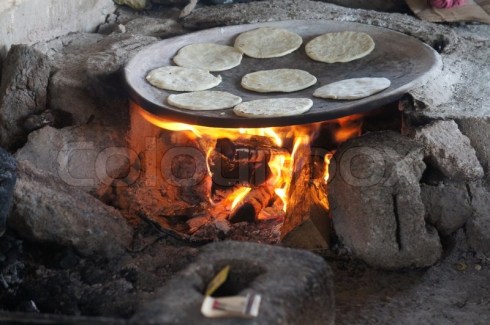
4789398-el-tradicional-comal-para-las-tortillas

Tortillas roasting over a traditional comal

mex-grocer_1926_30440187

This is more like the comals used on an inside stove, which goes right over 2 burners on the stove. Getting a fire started is okay on a special occassion, but mostly I’m grateful I don’t have to do it every day.


If you want seeds just for snacking, you can also add a little oil and some spices before roasting. I really like mine with some cumin and cayenne pepper (my recipe from back when I used to have to roast them myself, bwahahaha). You can eat them with the shells and all; they’re delicious and nutritious. It’s good to prepare them anytime you are using a squash with edible seeds- less food waste and more healthful snacking for you.

Here’s the recipe for Salsa de Semillas (by Paulina, my badass, feminist, Oaxacan mother-in-law who shows lots of love via what she cooks for us):

mepaulina

Paulina and me on the coast during my first visit, before she was my mother in law

salsa

Paulina showed me how to make salsa in the traditional molcajete on my first visit to Mexico

It’s not meant to be spicy, so if it’s hot for you, use fewer chili peppers.

Ingredients

1 cup roasted semillas (approximately)

10 dry, red, medium-to-low-spicy-level chili peppers- chile costeño is what is used here, but it’s hard to come by outside of here. You can substitute maybe 8-9 chiles del arbol mixed with 1 chile guajillo.

1 (medium to large) or 2 (small) cloves garlic

3 leaves of Pitiona (optional) (apparently known as Bushy Matgrass in English)- If you don’t have this, don’t worry.

water

salt to taste

costeno-rojo-2

chile costeño

44404

Pitiona, a common herb used in cooking and natural remedies here (Sorry, guys, this probably doesn’t grow in your backyard, either.)

Preparation

Step 1: Roast the seeds, as described above, if you are not buying pre-roasted semillas.

Step 2: Roast the chili peppers.

Roast the chiles on a dry griddle or frying pan on low-medium heat, similar to how you roasted the seeds. It only takes a few minutes, though, and you need to move them around on the pan every minute or two. It’s okay if they get blackened a bit, but you don’t want them crispy. You also don’t want tons of smoke from them filling up your house, so keep the heat fairly low and don’t let them get too burnt (and open a window). When they are a little black on each side (more or less- you don’t have to turn them over one by one), put them into some water to soak for about 15 minutes (longer is okay, too, but not necessary- you just want to soften them up for blending).

Step 3: Combine ingredients.

Put seeds, chili peppers, garlic and (if available) pitiona in a blender or food processer. You can also use the traditional mortal and pestle if you prefer (if you are working on your arm muscles, for example). Add a little bit of water to help the blender grind it up, and then add more to make it liquidy. Be careful, though. There is no exact amount of water, but add little bits at a time to get the right consistency. You want your salsa to be thinner than a normal paste but not watery like ketchup or something. It should be somewhere in between. Add salt if needed (depending on how salty your semillas already are).

That’s all! You can enjoy your salsa on any food. We especially love it on eggs and beans (my family’s common breakfast), but it can go on all kinds of stuff: rice, cauliflower- anything that needs a bit of pizzazz.

If you try this salsa, let me know! I want to keep my mother-in-law updated on her worldwide fame in the kitchen. Take care and buen provecho.

48cb3ad33428c2802bc0ce14c82de60e

It should look more or less like this.

P.S. Sorry, y’all, but all the photos are from Google and not me, except for the plastic bag full of semillas and the pics of Paulina and me. I’ll try to do better next time. xoxox

Corruption for All: Democracy and Education in Oaxaca

1 Jul

Somewhere between six and ten people died and lots more were injured during a protest in our state, Oaxaca, on June 19. It’s impossible to know for sure how many people died, or exactly what happened, because everyone has a different account, and you can’t really believe anybody. The government, the police, the media, and the teachers’ union are all notoriously corrupt. Both the causes of the protests and the way they are being carried out is a lose-lose situation for everyone in our state, especially for all the children and youth.

The government says six people died, but nobody trusts the government. Elections here are even more rigged and fraudulent than in the U.S. Buying votes is normal. You might get killed by the competition if you are running for office, partly because if you are elected you can (and probably will) steal enough money from the people to keep you set for life- therefore it’s worth killing over. The government is full of outright, blatant lies: just Google “the missing 43 Mexican students ” (here’s some of the info:  http://www.bbc.com/news/world-latin-america-35539727) if you haven’t already heard about the biggest government and police corruption scandal during this president’s reign. In this most recent case, in Nochixtlán, Oaxaca, the original official story was that some other organization or group jumped in and shot the protesters. Originally, reports even said the police went to the protest unarmed, which isn’t the slightest bit credible. So you can see why government and police reports aren’t believable.

Unfortunately, there are reasons to doubt the utter honesty of the teachers’ union as well. I imagine that accounts from teachers and other folks on site when it happened are more realistic than accounts by police or the media. But the union here is not really the voice of the teachers. Membership in the union is obligatory and participation in protests is mandatory, although they rotate participation some so they don’t have to be protesting every day for these month-long strikes, at least. While I don’t think our public school teachers are the bad guys in this scenario at all, and I’m in favor of unions, I think this particular union is not good for our schools or the kids, and not even particularly good for the teachers. (More info about the teachers’ union, sección 22: http://www.mexicogulfreporter.com/2013/08/oaxaca-education-at-mercy-of-omnipotent.html )

Some articles act like the teachers are screwing over the system, and it certainly sounds like it when you read that teachers’ and staff compensation account for 94% of education funding (http://gppreview.com/2016/03/10/mexicos-education-reform-what-went-wrong/ ). But teachers don’t get paid excessively, I can assure you (people aren’t shy about discussing income here, so teachers I know have told me how much they make). It’s not bad pay but it’s not outstanding, either. Thus, this statistic in context speaks way more to a) other folk that get paid, for example folks who only exist on payroll and not in a classroom, including dead people (yes this really happens here- some live person is cashing in the dead person’s paycheck) and b) just how little funding there is for education. Here, there’s no funding for transportation or food, and next to nothing for anything else. This means classrooms not only don’t have enough books, sometimes they don’t even have classrooms. (Conan and other students had to help build their own high school, for example.) Parents pay so much out of pocket that for “free” public education that school is inaccessible for many people. Not only do parents pay for school materials for their children- which is already hard on many families-, but also they regularly get asked to pay extra fees for whatever the school needs. Parents also have mandatory volunteer work days at the school (because schools can’t hire other staff), and they get fined if they don’t attend.

What Are They Fighting About? The Existing Problems, the Reform, and the General Lack of Confidence in the System

Mexico has some of the worst educational outcomes in the world. It “ranked 118th out of 144 countries in quality of primary education, behind many poorer countries, including Honduras, El Salvador, Bolivia, Bangladesh and Sierra Leone.” ( http://www.reuters.com/article/us-mexico-reforms-idUSKBN0OI0AL20150602) Within Mexico, the state of Oaxaca is pretty much at the bottom of the barrel in education. The federal government passed a bill for Education Reform back in 2013, because pretty much everyone agrees that radical changes to the system are sorely needed in Mexico.

The reform sounds helpful on paper, and in general people seemed to be mostly in favor of it before. Some of its official objectives are creating more equity, and that it be free and accessible. The reform proposes lots of money for more schools, money to improve existing schools, money for food in schools in poor areas, and other such necessary funding. Who knows if it will be enough funding and where the money is coming from, but that part sounds great. It proposes transparency about where the money goes in schools. It calls for better textbooks, more parental and community involvement, and more access to teacher training. It will also require teachers to undergo evaluations and trainings, and to justify their absences if they miss more than 3 days of class. There are lots of things that it doesn’t cover that would be nice, like changing the curriculum, teaching critical thinking, things like that- but it’s a start. (this article gives a good overview in English and here’s some info in Spanish directly from the government about their plans: http://gppreview.com/2016/03/10/mexicos-education-reform-what-went-wrong/ 

http://www.nl.gob.mx/servicios/reforma-educativa

Since nobody believes the government, however, and the news can’t be relied upon for real, relevant information, either, we are also inundated with rumors and counter beliefs about the reform. The number one complaint is that they are going to use this to privatize education. The government viciously denies it, but they are working on privatizing other public things, like petroleum. The government also said the police weren’t carrying guns, among other lies; they don’t prove themselves trustworthy, to say the least. So the government repeats that the tenets of the reform are to make education free of fees, and people shrug their shoulders.

The kind of information that my students tell me they believe about the reform is that, for example, they just want to fire all the teachers. We’ve heard that they’re going to take away everyone’s retirement benefits. We’ve heard that you won’t even need teacher training to be a teacher- that anyone who can pass the exam will be a teacher (which is not a very credible claim, since so much of the reform emphasizes teacher training, but there you have it). A big concern is that if teachers don’t pass an exam they will be fired on the spot. According to the proposal, teachers with poor evaluations will receive more training and then take the exam again in a year- and have a third chance with more training if the fail the second time. Supposedly the evaluations will take many factors into consideration, including the environment and culture where teachers are, which is really important here in Oaxaca where there are many indigenous languages spoken throughout the state, and many kids growing up in a household where Spanish isn’t spoken. Of course the reform needs to take regional and cultural factors into account, and it does propose to do so- but once again, it’s easier to believe what your teacher friend down the street tells you than what the government puts out there. And the teacher may or may not believe what they’re being told about the reform, but regardless they have to protest it or there will be serious sanctions against them.

My impression before this protest was that most people do want evaluations for teachers, or at least some kind of accountability, to deal with the very real problem like teachers selling their guaranteed, lifelong position off to someone else when they retire. Some people are definitely concerned that there is ZERO oversight on teacher quality; teachers are guaranteed a position for life (and beyond, when teachers give their position to their child, for example), no matter what they do or don’t do. Parents are also sick of the strikes; Oaxacan kids have lost more than an entire school year in the past 7 years of strikes. (from this article, which was also one of the broadest and best articles I read covering the situation: http://www.nytimes.com/2016/06/27/world/americas/mexico-teachers-protests-enrique-pena-nieto.html?_r=0  ) And that’s not including the 6 or 7 months-long strike that happened in 2006, which was the 25th consecutive year of teacher strikes in Oaxaca under this teachers’ union. (https://en.wikipedia.org/wiki/2006_Oaxaca_protests  )

But ever since people got killed, the tides have changed drastically in terms of public support. Most people are vocally or actively standing with the teachers now (including a lot of international folks who don’t seem to know what is actually going on here), which also means they’re against the reform now. Also, people down here still revere teachers and, more importantly, lack trust and faith in government to a much greater degree than the cynicism and distrust they have for the teachers’ union. The union talks a good talk, and the demands during the annual strikes (yes, every year for the past 30 years or something now, according to https://en.wikipedia.org/wiki/2006_Oaxaca_protests  ) always include some demand or the other related to the wellbeing of the students.

While pretty much ALL the systems and agencies in this country are corrupt, the government is seen as the most corrupt. Certainly the federal government cares very little about Oaxaca, too. (For example, when the months-long strikes were going on in 2006, for ages the federal government washed their hands of the situation, saying it was a local issue.) So the union is robbing people, sure, but the government killing people- and getting away with it, as usual- is certainly worse.

At the very least, no matter how people down here feel about the union and the striking teachers, most people doubt that the reform will actually help Oaxacan children anyway. After all, it’s been proven over and over that people can’t rely on institutions here. It’s pretty depressing, if nothing else.

The Effects of the Protests

The protest is ongoing and the demonstrations and blockades, along with its secondary effects, are widespread throughout Oaxaca- plus there’s some similar action happening in our neighboring states of Chiapas and Guerrero. Teachers have been on strike since mid-May, first of all, although it was all pretty low-key until elections in early June. Things heated up, then calmed again, and then the killings happened.

rtx1f6lj

a shot from 2015 strikes (borrowed from ibtimes.com)
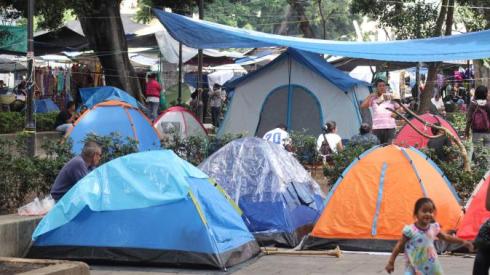
zocalo

teachers camping out in the zócolo, the main square, of Oaxaca City- a common sight…. (image from nvinoticias.com)… Teachers have rotating schedules for when they have to participate in protests- thank goodness! They have families, too. 

Since then, the government and teachers’ union have had two separate dialogues, both lasting for several hours, where NOTHING has been gained nor lost on either side. Nobody is reporting any clear news on what the hell they’re saying in there for all those hours (perhaps they’re talking about their grandkids, a la Bill Clinton), but there they are. So far they haven’t set up a third meeting. (Here’s an example of the very vague reporting: https://oaxaca.quadratin.com.mx/reforma-educativa-no-se-abrogara-osorio-cnte/)

The union and the government are at an impasse. The union won’t accept the reform, and the government won’t rescind the reform, which is now written into law and already partially implemented. The union is promising to get more drastic and expand their actions to other parts of the country. More and more police are arriving. There are rumors of military involvement. The only thing to do is to wait and see. Here’s a lot of relevant information about what’s happening:

http://www.theyucatantimes.com/2016/07/supplies-airlifted-to-oaxaca-as-blockades-continue-in-several-mexican-states/  I suspect things will get crazier before they get better, despite the government’s vague promises that they will resolve this within a few days.

A big part of the protest is the numerous blockades that the teachers union and their allies have set up throughout the state. They’re mostly letting people pass (with some delays) but blocking commercial trucks. So some areas are short on food supplies, and the gas supply is short everywhere, although it’s coming through sporadically, here at least.

I can’t attest to the extent of the problems happening due to the protests, because there’s also a lot of misinformation and false information about it. For example, I just read an article saying that in Puerto Escondido (where I live) and in Huatulco, there’s gasoline but only for 12 hours a day and each car can only get 200 pesos of gas. In reality, the situation here is that gas seems to randomly arrive at one or two gas stations and everyone lines up to fill up. At times there are cars parked lining up hours before a pipe even comes in. At times people are waiting in line 3 hours to get gas. Sometimes you can get lucky and get a short wait. But it’s not how they painted it in the media.

The news is also stressing how much people are suffering from a lack of food, and it’s hard to say to what extent that’s true. Here we still have plenty of fresh fruit and vegetables at the market. The prices of the stuff that gets trucked in from Oaxaca City has gone up, but even that seems to still be plentiful enough. The two supermarkets in town have some empty shelves, but they are at least getting sporadic shipments of things or they’d be totally empty by now. I have been able to get most of the things on my grocery list every week despite the situation, for example. But I don’t know how it is in other areas. Supposedly Oaxaca City is seriously affected, but a friend of mine there said she’s not seeing that. The government just set up a schedule to airlift food to our state, but I’m not sure exactly where it’s going, or what food they’re taking. Our family in Juquila says they aren’t getting stuff like cookies and other commercial food, but nobody’s going hungry there, either, or at least not because of the strikes. It’s all a bit 1984-esque to me.

The strikes are hurting a lot of the small businesses, though, which a large portion of people rely in for their income. Less people are travelling, for example, so all the folks who have their restaurants along the (very slow, winding) “highway” are not getting as much business. Our friend in Juquila had to come down here for hamburger buns for his restaurant, as another example. It is making people late to work for transportation problems in some areas. It means my friend has extra hours added to her weekly journal to her Masters-level class in the next state over. It’s definitely inconvenient and costly for a lot of people who already have enough economic problems. I don’t think it’s as bad as it sounds on national news, but again, it’s hard to know for sure. I do know that people are a bit sick of it. “I don’t know why they can’t protest in Mexico City instead of here,” one friend said. It’s a good question.
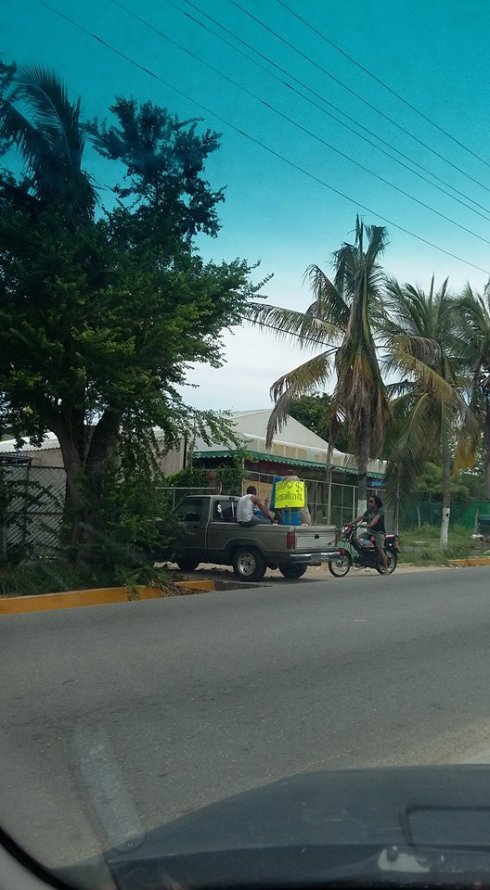
selling gas photo

Surviving beyond the system: individuals selling gasoline at higher prices for desperate folks- here in Puerto Escondido (sorry it’s not a great pic- taken from our moving car)

Conclusions: What about the kids? What about a total revolution?

Regardless of the outcome of this battle, the kids are not winning. The children of Oaxaca, already living in the poorest state of this country, living in a country with one of the worst educational systems and outcomes in the world, are not benefitting in any way, shape, or form from any of this protest, and they might not benefit from the reform, either. I don’t know what the answer is to all this, but it would be nice if some institution did something with the best interests of the children in mind as their primary motivation. I’m sure President Peña Nieto and Local 22 Teachers Union are open to your suggestions, dear Reader. (lol)

We do desperately need reform, or, better yet, revolutionary improvements for our students here in Oaxaca. Yes, we need books, food, transportation, uniforms, and so, so much more. We need a different curriculum, dynamic teaching and learning strategies, a way to make school worthwhile, relevant, and accessible for kids so they’re not routinely dropping out at 12. We need institutions that serve the people, institutions that people can count on. We need police who don’t shoot protesters as the status quo. We need governments that don’t order, support, and cover up killings and disappearances. If corruption is always going to exist, we at least need a bit less corruption in all levels of our public institutions and agencies. We need much more than what anyone here in Oaxaca can even realistically imagine receiving at this point. And that’s the worst part of all, perhaps- that there’s so little hope, for our state, for our youth, for our future.


Colorful Catholicism for Goddess-Lovers, and for Those in Need of a Lover

5 Jun

Mexican Catholicism is a gloriously pagan affair. If I were Catholic, this would absolutely be my style. It’s Goddess-centered (ahem, I mean Virgin Mary-centered), and way more elaborately ritualistic than a typical Catholic mass in the U.S.

I already liked Catholicism for all its saint-loving, saints being like special lesser deities just to help you out with random parts of your life. But in Mexico the interpretation of saints’ jobs is even better. For example, when I mention a Saint Anthony, who I know as the Patron Saint of Lost Things (this is who I always call on for lost documents, lost keys, etc., although I’m not a practicing Catholic), everyone laughs at me, assuming I’m talking about the saint you call on to find yourself a boyfriend or husband. You have to turn an image of him upside down if you are a single lady looking for a man (I haven’t seen any specifications on whether or not it can help single ladies find a girlfriend, but it’s very specific that he’s a saint for solteras, so I guess he won’t help attached women find an extra lover, nor men looking for a partner.)

Don’t worry, though, fellas, because there’s also a local recourse if you are having trouble finding a woman partner. Halfway up the mountain, between Rio Grande and Juquila, lies the small town of San Marcos Zacatepec. Right there off the main road you can make your pilgrimage to the Piedra Mujer (Stone Woman). Go in, say a prayer (some put it in writing as well), light a candle, and you’re golden. Once you have your partner, you go back and give thanks with an offering (money to maintain the sanctuary, and a thank-you note if you want.) All in a day’s work in the world of Mexican Catholicism.

13348655_10153564721557344_1578419360_n

a close-up of the “Stone Woman”- if this ain’t a tribute to the Goddess then I don’t know what it is

13393006_10153564721522344_1746092067_n

The sanctuary of the Piedra Mujer

And it doesn’t end with the saints. I love that nobody’s walking around with those WWJD bracelets, because for the most part, people aren’t all that into Jesus. The majority of the love, prayers, tokens of adoration, and clothing accessories are for Mary. People have images and invocations of the Virgin Mary all over the place, all the time. I’ve seen a whole group with painted t-shirts of grafitti-style Virgin Mary. Cars sometimes have lettering on the windshield reading “Gift from the Virgin.” There are Virgin Mary bracelets, necklaces, rearview mirror ornaments, dashboard ornaments, car hood ornaments, wallet-size cards, statues for the home, dolls, and tattoos. There’s more tourism that goes to visit the Virgin Mary who supposedly appeared in Juquila than there is tourism to the beach here in Puerto. The devotion is impressive.

juquilita

one common image of the Virgin of Juquila

Juquila isn’t the only spot where the Virgin Mary has been sighted in Mexico. Nor is it just a spot to pray. No, it’s way more pagan-style than that; you perform a whole ritual when you go to ask for something. You make a clay figure that represents what you are asking for from the Virgin (for example, a car if you are hoping to save up to buy a car). You make a promise to the Virgin. You spread some dirt on your face. Some people bathe in the water near the cave where she was spotted. People fill up their plastic bottles with that same holy water. It’s a very serious affair. People don’t ask for stuff without expecting to work for it, but it’s a way to get extra help, an extra blessing when you’re trying to do or acquire something big. There are folks who wouldn’t dream of starting some big undertaking without a visit to the Virgin first. Often it involves a promise to the Virgin; making the pilgrimage by foot or on your knees next year, or cutting off your beautiful braid, or some other kind of sacrifice.

Rituals in general are of great cultural importance. When you die here, people aren’t worrying about who’s going to give the moving speech at the funeral. Instead everyone comes together to cook food for the people who will come every night in a nine-day long ritual of prayer and incense. It culminates in the ninth evening being an all-night prayer vigil, followed by everyone going to the cemetery in the morning to leave the cross and say some more prayers.

There are other religions here, but Catholicism is the big majority rule, and it’s totally ingrained into the culture whether you’re a practitioner or not. Mexico is technically secular, but for all intents and purposes it’s still an officially Catholic country. For example, I just went to the grand opening of a new (completely secular) business, and half of it centered around a blessing by a priest. And the Church has some serious, major power that I sadly don’t see them using for justice around here. They’re typically more concerned with whether you’re married via the Catholic Church and whether men should have earrings or not than all the malnourished people in this rampantly corrupt state. (According to folks I know who go to mass and listen to these exciting sermons and otherwise participate- I don’t have first-hand experience with mass here, sorry. I do know that Conan and I can’t be anyone’s official Godparents here because we’re only legally, civilly married, not religiously.)

Catholic Church aside, though, I adore Mexican Catholicism for the way it honors and continues to revere it’s pre-Colombian roots, without even acknowledging that this could possibly not be Pope-approved, all this assembling clay figures, for example. Here, this is what Catholicism is, period- pagan symbols, goddess figures and all. If I could just get over the whole institution of it, all the priests that act like they‘re God, and even this radical Pope still telling women not to protect themselves with condoms and birth control- if I could just get past that part, I would have found a religious home in this fabulously expressive, colorful Mexican Catholicism. I might still get one of those graffiti-style lettered shirts, anyway, if I could get one of the Piedra Mujer instead of the Virgin Mary. I’m going to look into it.

Peace and respect, folks, to all the religious in whatever religion and the non-religious, too. Until next time.


What Not To Do When You Move to Small Town Southern Mexico

9 Apr

My dad always said that opinions are like assholes; everybody’s got one. So true, and yet we all still think that ours is truly valid, that we can really help someone out with our hard-earned wisdom. So I’m here today, ladies and gentlemen, to share my opinions, my own stellar advice for all of you pondering a moving to the marvelous state of Oaxaca. For those of you already in Oaxaca, this is still superb advice, but you might already know it. You guys can go ahead and laugh with me, please and thank you.

This is advice that I would have appreciated, theoretically. I mean, okay, sometimes I love to jump headfirst into things, blindfolded and grinning. But often I would prefer to research things to make the most informed decision possible. Usually that means I seek as much advice and information as possible and then jump briskly off cliff number one anyway. Sigh.

So here you go- I present you the fruits of my experience, aka some advice that you can read, reject and ignore. (I’m practicing for the kids’ adolescence.)

The first tidbit of guidance I have for you is second-hand, but it is first-rate advice nonetheless.

Don’t change your country of residence immediately after having your first child.

“Don’t plan any major life changes for a while. Transitioning to parenthood is hard enough.” Our lovely doula, the birth assistant we hired for Lucia’s birth, tried to warn us. Truer words were never spoken. But, alas, the U.S. government did not appreciate this wisdom. And you know, there’s gotta be some benefit to starting your kid off really, really early with the globe-trotting.

But it’s not a great plan for adjusting to parenthood sanely. Abandoning your entire support system and general way of life while learning how to parent is a special kind of madness. I mean, leave the country, yes! I am so glad that we live here- now. If we could have waited a year, though, it would have saved us lots and lots of heartache. So while I don’t recommend jet-setting first thing postpartum, if you find yourself doing it, you’re a special kind of badass, and I want to be your friend.

Don’t buy an automatic car that needs work.

Contrary to popular belief down here in the land of stick shifts, automatics are not bad cars. In the U.S. I owned several over the years, and a couple of them were fabulous cars. They go up hills just fine, thank you very much, when they work. The problem here is, unless your automatic is more or less new (or at least in such condition that it never needs to be worked on by a mechanic), you are screwed, because nobody knows how to fix it properly.

This advice is spawned by my current frustration- the impetus for this blog post- which is a recurring soap opera. Every time our car breaks down (which is about bimonthly) it either takes a week (or longer) to fix it, or in the process of fixing it they cause some other problem. This month both things happened.

At first I thought this phenomenon was due to having bought a lemon of a car. Then I thought it was because the mechanic we often took it to (the cheapest option, a friend of a friend) was just a slow and inexperienced mechanic. But at one point we had a problem that required about ten different mechanics. Ten! They didn’t know if it was mechanical or electrical, so we took it to all the types of mechanics. They didn’t have a clue. They took apart our car, broke other things. It was absurd. And it just keeps happening!

It was nice to use an automatic to transition into learning to drive on these bumpy dirt roads with lots of drivers who don’t follow any rules. But now I have my teacher lined up to teach me how to drive a manual car, and I’ll hook you up, too. Just say no to automatics that might need mechanics. Buy yourself a nice little Tsuru, just like the taxis and half of the rest of the population own. That’s what we’ll be doing next, if I manage to follow my own advice. (Don’t hold your breath.)
Don’t build a house to live in when there is not yet electricity in the neighborhood.

“It’s just an overgrown lot right now, there’s no electricity or water,” my in-laws warned me when we came to visit the plot of land in Puerto that Conan owned. “Right, but we can get that stuff installed, right?” I asked, thinking it was just a matter of getting things hooked up, signing a contract, paying the bill. Little did I know….

We got water hooked up just fine during the building process, thanks to some help from a family member. But with electricity, there was no “hooking up” because there was nothing to hook up to on our block. The electric company won’t set it up someplace new unless they’re paid to by the folks living in the neighborhood and/or government (and we’re talking thousands of dollars). So it was a lot of waiting and fighting and hoping and hopelessness. Perhaps someone tried to tell me beforehand, but I was too blinded by my desperation to get out of Juquila to really let it sink in. And really, if I had it to do over again? I suppose I would think about us renting a place while we waited for electricity. But would I stay in Juquila till the lights came on here? Hell, no. Hell, no. (Seriously. Double or triple hell, no.)

We got lucky that we only spent a year and a half (two years for Conan) living without electricity. I know people who spent years and years living “off the grid” by accident. So you just don’t know when you’ll get it. Don’t plan to live there unless you’re one of those amish-style hippy types who wants to go charge your iphone at someone else’s house and live without fans because your body odor just isn’t at its best in the A/C. And if that’s the case, bless your little heart, you’re made of sterner stuff than I.

Don’t start a business that you know nothing about.

When we lived in Juquila, we couldn’t find decent jobs. Everyone and their mother wanted me to teach their kid English, but nobody actually wanted to commit to regular classes, or pay more than 20 pesos an hour (less than 2 US dollars). Conan’s construction skills were not in demand, either, since everything they construct here is very different. He got a job at one point, but he was working about 12 hours a day, 6 days a week for next to nothing.

So we decided to sell cell phones, accessories, and recargas (prepaid minutes) out of his mom’s storefront in the front of the house. That’s right- we sold cell phones. Imagine me selling cell phones. Me- who refused to have a cell phone until I lived in Chile in 2007. Me- who then held on to the same flip phone for like 6 years. Me- who still had cassettes until I moved down here, just to give you an idea of how resistant I am to new technology. It was totally my dream job to sell cell phones- Not! (Haha, look how backwards I am! Still using kid quotes from the early 90s- that’s me.)

In fairness, Conan knew much more about cell phones and accessories than I did (and do; I’m still clueless). But neither of us had any idea what the people of Juquila would buy, really. It was a pretty uninformed business venture, which seems to be kind of the M.O. in Juquila. There are no corporations; it’s all small business. You don’t take any classes or write up a business plan. You either have experience because your family owns something or you just scrape together some money for a small investment and get started with your tiny business that you hope will do well so you can expand. It’s a respectable way to do things in the circumstances, but it did not make us a living. Now if we had invested in statues of saints instead….

It wasn’t a total waste of money. We sold most of it over time. We used some of the phones and accessories ourselves. We earned some money, slowly. It was certainly an interesting experience. And I certainly admire the tenacity of the neighborly small business owners who just open up the front room of their house and stock some snacks and sodas along with the most common of vegetables. I mean, why not? Who says you have to have a stupid business plan? Granted, bigger small businesses down here do still have a plan, I’m sure. And maybe a small business could still work for us someday. But not in Juquila. And not cell phones. This lesson was learned, for now.

Don’t let your small child sleep in the same bed with you “just for the transition.”

Don’t do this unless you want to sleep with them forever. There is no “just for the transition.” Once they worm their way in, you will never get him or her out of your bed again. The transition just keeps on keeping on. Just say no to bed-sharing, for the health of your grown-up relationship and the sake of your ribs, which will remain bruised throughout the duration from all that kicking and thrashing these mini-monsters do. ‘Nuff said.

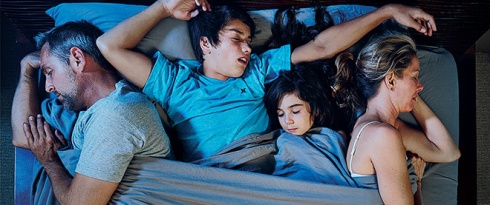
mac32_cosleeping04

this is our near future…

The Moral of this story is…..

Well, nothing, really. As you can see, I don’t have any real advice. I don’t have a clue what you should do, but I have a wealth of savvy on what not to do. Not that you should listen to me. Counsel such as this probably would have saved me lots of heartache, but that doesn’t mean I would have taken it. My dad was always futilely trying to save me from making the same mistakes that he made, but heartache is ours to find, one way or another.

Furthermore, if I had known then what I know now, would I have done things differently? In general, probably not. For one, I love rollercoasters, and I am constantly learning to appreciate this roller coaster that is my life, no matter what. Also, I’m working on not judging myself harshly, and both Conan and I have done the best we could with what we were working with, and that just has to be good enough. Not to mention that I always figure these brilliant “mistakes” are good for my character. And I’m pretty damn cool on a good day. So if you find yourself by happenstance moving to small town Oaxaca, look me up and I’ll impart more thrilling opinions. Worthwhile? Well, that and a few cents will get you a stick of gum, as my dad would say. So on second thought, come on down and I’ll give you a cup of coffee instead.

To Serve or to Self-Serve, That is the Question

20 Mar

This is not an urban legends, guys, but a true story. In Kentucky, back when we lived there, there was this one lovely lady’s husband who insisted on an extreme version of being served by his wife. We’re talking about being served everything ingestible; if his wife’s hand hadn’t passed it to him it was not yet worthy of his mouth. He’d be sitting next to the pitcher of water and he’d call his wife in from the other room to come pour it into his cup. Unable to get his own silverware from the drawer. He didn’t have any sorts of abilities lacking to cause such behavior- just a big ole case of over entitlement.

That couple was from somewhere in Mexico, but I’d never have called that behavior a cultural phenomenon. My male friends from Mexico weren’t like that. My partner from Mexico was nothing like that. I chalked it up to a case of extremist patriarchy, which is tragically common worldwide (and yet none of these anti-terrorist organizations are doing anything to stop it).

Fast forward to us living in small town southern Mexico. I’m planning kid #2’s first birthday party and decide I want it to be different from the norm. I don’t want to serve typical party food (here that means tamales, pozole, barbacoa). I thought it would be fun to have finger food in honor of my birthday boy who eats everything with his hands. So I made sandwiches of varying types and cut them into cute triangles like I do for Lucia’s lunch, so people could mix and match with different kinds. I made cream cheese and cucumber, cheese and avocado, and peanut butter and jelly (on both white and wheat bread). Conan grilled some hot dogs to give carnivores something to eat. I cut some fruit and some veggies, too, to appease my own standards of giving my kiddos healthy things to snack on. To drink we did rely on the standard agua de jamaica (sweetened iced hibiscus tea) because it’s easy and cheap to make a ton of it (and good for you if you don’t add too much sugar).

las-mejores-recetas-de-pozole

Pozole- A soup with chicken and/or pork, hominy, cabbage and other “fixins” on top… Delicious, but not what I wanted for the birthday party.

barbacoa_en_hidalgo

Barbacoa is nothing like barbeque, although it is meat. It’s often goat or beef, and the seasoning is not sweet at all like BBQ sauce. It’s slow cooked and delicious. Also not what I wanted for the party. 

The radical part wasn’t so much what we served but rather how we served it. We laid it all out on the table and let people serve themselves. I was stoked to mix it up a bit from the normal boring party thing. Because that set-up, in my little potluck-loving Kentucky heart, is so dull and restrictive. You end up not talking to anybody; there’s no mingling. It’s all business. You sit down, get served, eat your food, get up and wait for the cake or the piñatas or whatever the next order of business is. Done. Half the time people can’t even be bothered to stay and eat the cake. They take their plate of cake with them as soon as it’s served, because apparently their quota of socializing is all used up for the day.

So I was determined to do something different. Yet I suspect that some people were as appalled by our style of self-service as I was back in Kentucky by the extremist husband. Going to the table and getting their own food was probably like they hadn’t even been invited at all, a sort of anti-hospitality. But it wasn’t on purpose! It didn’t even occur to me that it could be offensive to people. I thought it would be pleasant, so that people could pick and choose what they ate instead of being served things they might not like. I thought it would be more fun than the traditional style. Some of our crowd liked it, for sure. But there were definitely some that were far from impressed. There were women and men alike at the party who felt embarrassed to go up to the table and serve themselves. That’s just not how the roles are supposed to go at a party. That’s not what hospitality looks like here.

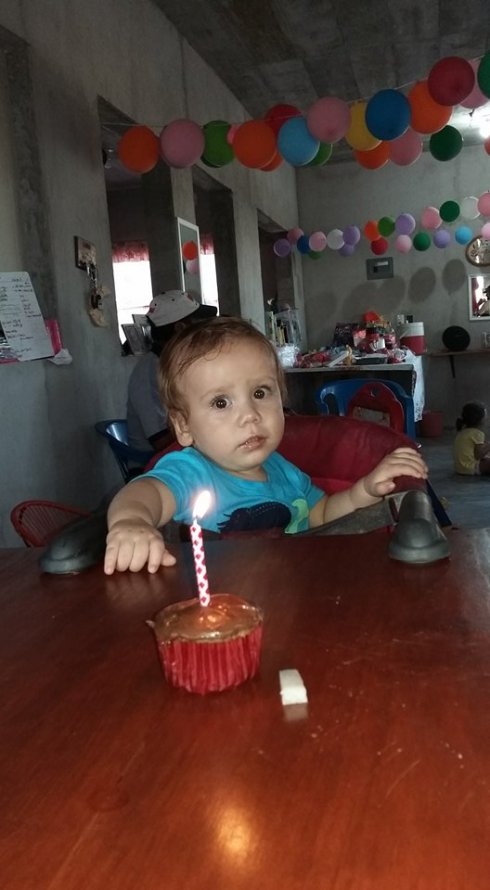
k bday

Khalil is like, “Are they going to give me that thing? Or are they just teasing me?” You can see our buffet table there in the background.

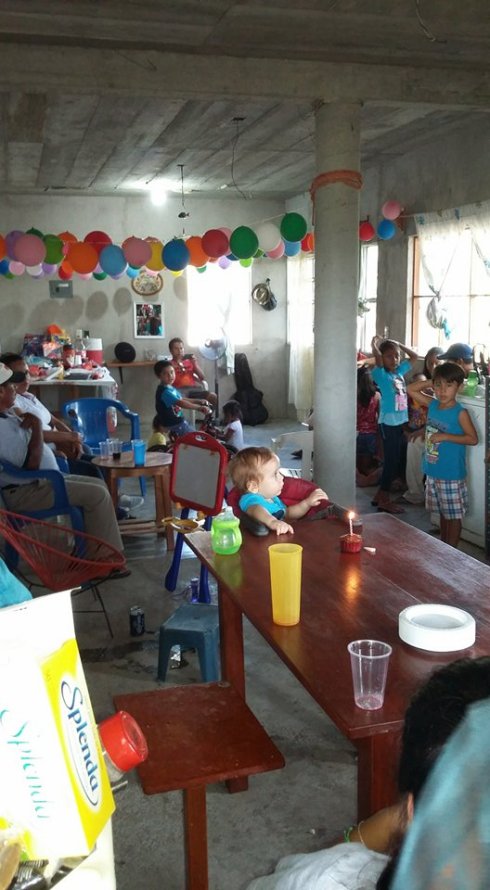
k bday2

More of the set-up: laid back! Relaxed! Chairs here and there for socializing! I had a great time, anyway.

k cupcake1

Finally! Cupcake deliciousness- banana cupcakes with nutella on top… I think it was a hit with the birthday boy.

k cupcake2

Here he makes sure to devour it all while being on the lookout for anyone coming to take it away from him.


So I got to thinking some more about the whole concept of serving and hospitality. Y’all that know me know that I pride myself on making sure that guests and visitors feel welcome and taken care of. I’m from Kentucky, after all. And I’m also a feminist (aka believer in equality).

Thus I think that serving food can be anybody’s job. Usually, if I cook something and I’m stoked about it, or we’re having people over for a sit-down dinner, I want to serve it, because it’s a matter of pride. But sometimes I just reheated some frozen soup and I’m in the middle of nursing the baby so just go help yourself, please and thank you. I refuse to believe that other adults should not eat when the person who cooked is obviously busy and they’re perfectly capable of adding their own finishing touches. Furthermore, I know that men can cook. Men can serve food. I have confidence in men. My dad was a great cook, for example, and when he cooked, he served the food. Ideally, I believe that everyone should be able to cook at least some things. Everyone should be capable of serving themselves, too. This is a basic and important skill, folks. I learned to pour from a pitcher of water in kindergarten, and you can do it, too.

I also think that being in charge of the food and the serving of food is both a tedious, never-ending chore and also a serious power. Anyone who’s ever been a server in a restaurant knows this. There are always some customers who lash out and treat you poorly, trying to make you feel little or unimportant. They confuse server with servant, but really the customer is at your mercy. They can’t eat their soup if you don’t bring their spoon. They can’t do anything useful for themselves; they rely on you for everything. It’s almost like them being a baby all over again, except most customers have better communication skills than babies (most, but sadly not all of them).

Here, it’s like all meals are restaurant meals, and some woman or the other (mom, grandma, oldest daughter, whoever) is the server. Men become these helpless creatures. There’s the food, right there on the stove- so near and yet so far, because there’s this invisible barrier preventing them from getting their plate and piling it on. Seriously! Okay, not all the time, not everybody, but more here than I’d ever seen on any of my travels or my time in Kentucky. Sometimes it makes me outraged, and sometimes it makes me sad for the helpless men. Because ye who wields the serving spoon wields part of the power of deciding who eats what!

But this avoidance of self-serving is not just a patriarchal thing. (Do I think that overly defined and restrictive gender roles are at the heart of it? Yes, mostly. But that’s not the only factor.) At its best, it’s a case of meal time being a special time for family and sharing. It’s the antithesis of microwave dinners in front of the TV. And I love that aspect of it. It’s nice to be served sometimes, just like it’s lovely to serve, when it’s a show of welcome and love. It’s a case of a non-individualistic culture, where it doesn’t always matter that you want less vegetables and more rice, you get what gets put on your plate because that’s what everyone’s eating. It’s about community, and feeling taken care of, too. There’s a lot of good things to be said for this style of eating together.

Self-service is just not a phenomenon here, and I can respect that in a culture. I can appreciate it lots more, though, if the roles of serving changed equally- if everyone took a turn and not always only women. If it weren’t the case that at giant neighborhood parties, for example,  it’s filled with women in aprons doing all the work, and men with their beer and mezcal enjoying the party. So while we work on that (in every culture), there’s an extra present for my son on his first birthday: I promise to teach him equally the basic life skills to take care of himself and others. Everyone can pour the pitcher of water! Cheers to that!

Toto, We’re Not in Kentucky Anymore

31 Jan

You know you’re not in Kentucky anymore when you wake up to find your coffeemaker colonized by some tiny species of ant. It had been ant-free the night before, and, as usual, I’d put in the water and coffee so I could press the button and go back to bed while my magical elixir brewed itself (oh happy day, this electricity thing!). Alas, dead ants were swimming in my coffee. Live ants were swarming the machine. Ants were struggling to survive in the water part in the back. It was just another day in Puerto Escondido. These things just didn’t happen to me in Louisville, Kentucky.

Lots of other havoc and mini-disasters did happen in Kentucky, though (like when I moved into an apartment with fleas. Bleck!) There’s no perfect place, just like there’s no perfect relationship, no perfect person. Here, I don’t worry about tornadoes every time it storms (and it rarely even storms), which is a great relief. There are no watches and warnings to keep updated on, no tornado sirens to fuel a panic attack. Instead, however, I keep abreast of the hurricane forecast from May to November (the rainy season). Earthquakes are also more frequent here than in my hometown, and don’t even talk to me about the possibility of tsunamis (terrifying!).

Mostly I love the two-season system (rainy and dry), although I miss the leaves changing in the fall. I miss the excitement of taking the plastic off of my windows in the spring (cheap insulation), but you don’t have to get excited about a warmish day when you haven’t been bummed out and trapped inside for 3 or 4 months.

What’s funny, though, is how some countries’ seasonal status quo becomes the dominant, normalized thing worldwide, even when it’s not the slightest bit relevant. Take snow on Christmas as an example. Pretty much every single image about Christmas shows snow or snowflakes or Santa in his winter outfit or whatever. Yet snow is only even possible in half of the world, since the other half is in the hemisphere where it’s summer in December. Then there are all the other places without those kinds of seasons- like here. Whenever things like spring come up in my classroom activities I have to not only translate it but also describe what it actually means, because the four seasons mean diddly squat to my students. Needless to say, it’s never going to snow here for Christmas. There are no chimneys, either, so I guess Santa just has to break in. Perhaps that’s why so few people get excited about Christmas around here.

It got me to thinking about all the things that are and will be so different for my kids growing up here, different from how things were for me in Kentucky. Not just seasonal things, but cultural and political things, like the lack of emergency vehicles. The only time we hear sirens is when some religious pilgrim group has taken charge of an ambulance and is using it to parade through the town.

I knew my kids were living a totally different reality when I rode a wild-ish ride at a fair with a 7 year old. Not only are there no official rules about how tall you have to be to ride rides, there is essentially no regard for safety (which, you know, tends to be more fun, until someone gets seriously injured). We were on this ride pictured below and the apparently teenaged boys controlling the ride are jumping up onto the ride and manually spinning us around so we go faster. It was fantastically fun, and it would never, ever, ever happen in Louisville, Kentucky. If it did there’d be a big public outcry and possibly lawsuits and everything would get shut down after the first time it happened.

hqdefault

I rode this ride with a 7 year old who was not at all impressed.

Or there’s the way people in Kentucky assume that we must live out in the country (we don’t!). Perhaps it’s because all the animals in our “farm animals” book roam around our neighborhood (except pigs). Really, different neighbors boast sheep, goats, tons of chickens, and now a couple cows, in addition to the mean old dogs. And yet we live right behind the biggest public university in town, inside what’s more or less a small city.

Of course, it doesn’t help convince people we live in a city when I tell them about the lack of sidewalks, and the dirt road we live on. And yes, I hate that Lucia can’t just go outside to the sidewalk to practice on her roller skates or her bike. I hate that using a stroller is an extreme sport. It’s not like that in all neighborhoods in Puerto; lots of areas have at least paved roads if not sidewalks, but it is part of our family’s reality.

Then there’s much more stuff that’s neither good nor bad, just different from how I grew up. Like not leaving the house without mosquito repellant, but shoes being optional. Yes, I know, there’s that image of us Kentucky folks with no shoes, and indeed, I spent summers running around barefoot sometimes. But you can’t go inside ANYWHERE without shoes in Louisville. Here, it’s no problem if your flip flop blows out or your heel comes unglued from the heat or you just didn’t feel like fighting with the kid to get their shoes on. You can go to restaurants, supermarkets, just about any damn where without shoes and nobody cares.

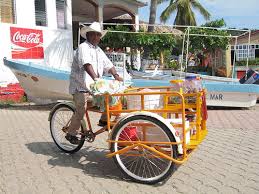
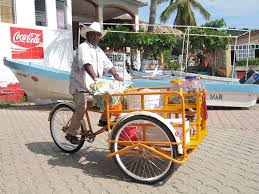
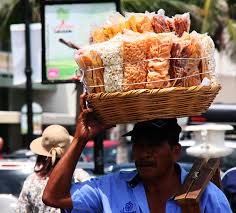
Here, we check our shoes for scorpions before we put them on. We take showers with cold water (so much better for your skin!). Fresh coconut is a routine part of our diet. There’s no fast food but there are lots of street vendors with bicycle carts to sell you all kinds of junk food. There are so many differences that seem so normal to me now, three and a half years since our move. I’m looking forward to comparing notes with my kids when they’re older- their childhood versus mine. Assuming, that is, that we don’t get blown away by any hurricanes or devoured by ants before then!

17121286a5fca63med

Ice cream carts like these even make it to the most remote neighborhoods, to the beach, wherever! All kinds of junk food vendors LOVE to post up outside of schools, of course.

image street vendor bici

These kinds of carts are the common (and cool, in my humble opinion). 

images street food vendors

Homemade street food can include healthy options like fruit, jicama, popcorn, or super fried (and yummy) crap like chicharrines or pork rinds

Toilet Talk

16 Nov

There’s one thing the US does oh-so-right as a nation, and yet nobody is talking about it. Unlike our health policies, this is something that all other countries should be copying, and yet it’s never on the news. My country has the best, most generous public restroom policy in the world.

Being from the U.S., the one thing I consistently dread and loathe about international travel / living abroad is the peeing while-out-and-about situation. I’ve been leaving my country of comfy commodes on and off for 13 years now, and I still refuse to accept the status quo abroad.

God bless the U.S. and the constant, easy, free access to a toilet! It might not always be the cleanest toilet. Maybe they’re out of toilet paper. But there’s sure to be a toilet everywhere you go, and even private businesses rarely deny you the use of their potty, whether you are a paying customer or not in that moment. If a business does deny you for some odd reason, there’s sure to be a gas station or fast food restaurant close by where no one could care less about you peeing in their restroom.

Tragically, this is not so in the rest of the world. At least thus far in my travels to Europe, South America, and Mexico, this is not the case. When I go out, I’m always in a dilemma between staying hydrated or wasting long periods of my day looking for an appropriate place to relieve myself. And that’s just finding a bathroom in general, before taking into account the ickiness or the how-do-you-use-that?! factor. That’s on top of worrying about toilet paper and soap, both of which are resolvable with my ever-ready backpack filled with kleenex and hand sanitizer.

article-2570828-1befbfa400000578-123_634x547

{Here’s a particularly clean-looking squat toilet.}

Here in Puerto, I don’t worry about those scary hole toilets. The toilets are mostly standard. At least I never see those holes in the floor you just squat over like I saw in Italy (so not my thing). In people’s homes and in many non-touristy businesses here, the toilet is likely lacking a seat, which conveniently eliminates the whole argument about leaving the seat down or up. It’s not quite as comfortable to sit on as a toilet with a seat, but it’s not bad once you get used to it. The only other tricky thing you’re likely to see here is the flush system. Some people don’t have the plumbing hooked up to their toilet, especially when they have a separate outdoor bathroom (very common here on the coast), so you have to pour water into the toilet bowl to flush it. It’s not quite as convenient as flushing, but it’s not too difficult, either.

But the access to toilets of any kind or quality when one is out and about is sad, sad, sad. If you’re in very public areas, like the market or the big park, you’re likely to find a restroom that charges a few pesos to enter. It annoys me to have to pay for it, but it’s better than the alternative of not using the restroom. The worst is when you’re just out and about, walking or running errands, or at some event even, and there’s NO pay restroom around. There may or may not be restaurants that will let you enter nearby, so it becomes a mission to stop what you’re doing and go hunting for a restroom- children in tow, in many cases. Arg!

It happened just yesterday. Nobody wanted to let me into their restroom in the supposedly magical town- aka a hippy dippy peace/love/potsmoke town- of Mazunte. We went to the beach, but my friend needed to change into his swim trunks, and I, as usual, needed to pee. There were no pay restrooms around, so we went to 5 different establishments in search of a bathroom. We even offered to pay, and none of them allowed us to use their restroom. “Do you prefer I go use the bathroom in the ocean where everyone is swimming!?” I asked belligerently at one place.

mazunte

{Where’s Mommy? Out hunting a restroom, as usual.}

How can you deny people access to a bathroom and sleep at night? I wonder. I understand that it costs money to maintain the bathroom with toilet paper and soap (hopefully soap), so I understand charging someone. But how can you deny them if they’re willing to pay? Is it somehow going to damage your bathroom to let me take a piss? Is that not what it’s made for? Is relieving yourself not a basic human right? What is wrong with people?!

I was furious (more than usual, perhaps, because of Mazunte’s reputation for being wonderful or whatever). Granted, I should have just gone in to one where the bathroom location was obvious and let them get mad about it later. But I was trying to be nice and polite. Don’t ask me why. I got denied bathrooms when I was pregnant a couple of times, so you’d think I’d have learned then, it’s a survival-of-the-fittest situation. And I’m pretty sure my bladder’s wear and tear is more important than their toilet’s. Polite Kentucky woman though I may be, I refuse to acquire any more urinary tract infections on behalf of people’s stingy toilet ownership.

Furthermore, I’d like to officially state that denial of this basic human right disproportionately affects women. Not only do we typically need to pee more than men, but we’re also usually in charge of taking the kiddos to the potty. And most importantly, it’s much harder for us to take a leak in the middle of the street without serious consequences. I remember taxi drivers in Chile just opening the door of their taxi to cover themselves and peeing right there on the side of a busy street. Men are always just whipping it out and expecting everyone to look away, while folks with vulvas are doomed to spend 20 minutes searching for facilities.

This is total injustice and I demand we change the system! Toilets are for using, not for hoarding! Let us into the restrooms! Be like USA, share the potty today! Women deserve to pee in public, too! (These are going to be my protest signs and chants.) Meanwhile, folks, do everyone a favor and act like a human being; share the commode!

Ten Reasons Why I Hate Numbered Lists (An English Teacher Can Count)

25 Sep

I admit, the title is not an accurate reflection of content, but it made you click on the article, right? Everybody loves these articles, except me. I am not a big fan of the excessive amount of articles in the world that are titled X number Things You Must Know! and the like. They make life sound so quantifiable. Ordered. Simple, if you will. Easy, even. And it’s not, dammit!

They’re so catchy, all these Cosmo-style relationship ones- 5 ways to tell he’s crazy about you;  the travel expert ones- 8 places you MUST visit in Mexico City ; the pseudo-health/science ones- The 3 worst things that age you faster ; the good little capitalist ones- These 4 essentials to buy cheaper online ; and my least favorite, those self-help “just do this and everything will be perfect” type ones-  6 tips to reduce stress  (And you know with a title like that they’re going to tell you some lame crap like “Eliminate stressors.” Well tell me when you’re coming to collect my children then, buster. Call me up when you’ve got my winning lottery ticket, thanks.) There was even that movie called 10 Things I Hate about You, which I refused to see on principle. The worst part is when I find myself clicking on these kinds of articles sometimes because, shit, they make life sound so simple and ordered!

My life here is anything but ordered. I do love my personal lists, however- so I can prioritize my classroom tasks, so I remember to buy actual food and not just several different chocolate products and imported beer at the grocery store, so I can remember what the hell I’m supposed to be doing when I get up at 5 in the morning (get dressed- pack child’s lunch- pump milk- drink 2nd cup of coffee- and no my lists are not in order, thank you). But I don’t try to force my lists upon others (okay, maybe Conan has to suffer through my lists on occasion). For me, lists are a personal, intimate thing, not a way to prescribe your ideas to the public.

This week, however, I was reflecting upon my year in the university (yes, it’s been over a year!), and I ended up with a jumble of seemingly-random things to share. Thus I decided, hey, if you can’t beat ‘em, join ‘em. So here you are, folks- my cheesy numbered lists.

Three Preposterous Things Students Say During Tests

 1.    Student: “Teacher, what does this word (insert target vocabulary word here) mean?”

         Me: “That’s a vocabulary word that you were supposed to study.”

        Student (possible response 1): “So, what does it mean?”

        Student (possible response 2): “Yes but I forgot.” Bats eyelashes innocently and/or smiles.

        Student (possible response 3): Blank look. “Vocabulary?”

2.    

       (variation 1)

        Student : “Teacher, I don’t understand this question. What do I write here?”

         Me: “You write the answer, based on this question (signaling where).”

        Student: “So it’s letter B, right?”

         Me: “I can’t tell you.”

         (variation 2)

         Student : “Teacher, I don’t understand this question.”

         Me: “Well, it’s asking you to answer like in this example above.”

         Student: Points to their answer. “Is this correct?”

         Me: “I can’t tell you.”

        (variation 3)

        Student : “Teacher, how am I doing?” Points to their answers.

         Me: Shoulder shrug. “I can’t tell you.”

        Student: “Why not?”

         Me: Facepalm self.

Me, at some point every quiz and exam

3.      Student 1: Waves and says something inaudible to Student 2.

         Student 2: Replies in a whisper which I can’t quite make out.

         Me: Clear throat and raise eyebrows while approaching chatty students. “There’s no talking during exams. See you                      guys tomorrow.” Take exams from Students 1 and 2.

        Student 1: Puts on shocked, sad face, despite the whole class having multiple warnings that this precise thing would                            happen since day 1 of class. “But teacher! I was just asking for an eraser!” (Which is possible, except I’ve                              explicitly told them before every single exam to ask ME if they need something so that I don’t suspect them                          of cheating, which definitely happens.) My all-time favorite response was: “But teacher! I was just saying hi!”

        Me: “Say hi before or after the exam next time. Bye.” (Yep, I’m the meanest teacher on Earth.)

Me, according to some students

The Three Most Inspiring Classes and Quirks from the Past Year

  1. The wooooo class

I often ask the student who’s talking (practicing or reading aloud or whatever) pick the next student to talk. In this especially hormonal class of 18 year old Animal Husbandry majors, any time a boy picked a girl, it elicited a “woooo” from the class. Every time a girl picked a boy, there was a woooo. Sometimes even when a girl picked another girl, or a boy picked another boy, they still got a giggly little woooo. I thought it was adorable and started harassing them to do it some more when they forgot about it for at one point in the semester. Now they are officially “the woooo class” (at least among us English profs).

Beyond their already fabulous woo, this class loved my enthusiasm- one girl always imitated my “I’ve seen the light” arm gesture with my “aaaaaaah” sound I make to signal that they should be excited about whatever I’m about to teach them. (Was she making fun of me? Of course, but very affectionately!) This class inspired me to create extra class interaction activities, thanks to making me laugh all the time. They always tried to distract me from the task at hand by asking personal questions (in Spanish, which I told them I would answer if they could ask in English, and then the whole class was capable of working together to string a real question together- amazing work, level 1!) They also complained constantly about having to come to English class and were always trying to make up reasons to not come, but they complained with a smile, and they had the best attendance of all my classes that semester. These guys secretly love English, and I loved them for it.

2.  The Physics professor who had class the slot before me at 12pm

He absolutely couldn’t manage to end class on time. Every day, I stood outside the classroom door, waiting for him to quit babbling, mentally adjusting my lesson plan based on how many minutes he was taking from my class. Then I’d go in and he’d have left his intricate drawings and accompanying mathematics all over the board for me to erase. “He’s trying to help build up my arm muscles,” I assured my students as I erased every day. “How is this great?” you might be wondering. Because karma is real, and the students despised his class! Which means they were thrilled to see me, and to have English class every day! Thank you, boring, long-winded professor, for inspiring my students to love English (even if I did have to mentally shake them awake)!

3.  Constant classroom entertainment- IN ENGLISH- provided by Miguel Angel, Abel and               Charlie

Think Ninja Turtle’s Michaelangelo- this Migue is a party dude, too, complete with badass motorcycle. Abel (pronounced like ah-bell) had a girlfriend in the class, but they never sat together. Instead, Abel sat with his bromance partner-in-crime Miguel. They were my class clowns, with constant banter about each other and everything else. They also provided commentary about what we were learning (“I think it was Mexican immigrants who built the Egyptian pyramids, too”), fun errors (“Did I approve my exam?”), making up Spanglish words (“I’m very tired; I need a siestation”). They contributed a steady, comical participation, and they did it mostly in English! If you’ve ever learned a language, you know how hard it can be to be funny in your foreign tongue. And these guys always had something to say. I like to think that these two inspired other students to learn more, thanks to using their wit and charm in English.

Okay, Miguel and Abel don’t look exactly like Matt and Mike above. Abel would totally be the guy on the left, though, if you added glasses. You get the idea.

Theirs was my favorite class that semester because the whole (level 3) class, compared to many others, was so responsive and participatory. Their class also included Charlie (not Carlos, thank you, but Charlie), my super adorable, fast-talking, pretty boy, English genius with the worst attendance ever (“I’m sorry, I fell asleep during lunch!… Listen, teacher, I have this opportunity to do modeling, but it’s justamente during class hour.” Convincing excuses when you can say it in English, let me tell you.) Charlie was one of the only students who ever used my actual name instead of “Teacher” sometimes, and he went on to tell me I was adorable (in a puppy-dog, head-patting kind of way) on more than one occasion. If I hadn’t been so amused by it I might have had to smack him. But instead I looked forward to Charlie and his thinly veiled false modesty. The lesson here is that you can get away with just about anything in my class when you do so in English.

See, English Teachers Can Count!

There you have it, folks. I used numbered lists to organize my thoughts and shared it with the public. Was it effective? It wasn’t so bad for me after all. Maybe I’ll convert and start communicating everything in numbered list. Titles to be used include: 5 Reasons Why Dora the Explorer is Taking Up Too Much Space in my Brain, 18 Things The Supermarket Had Last Week that No Longer Exist, and finally, 2 Small Children and the Infinite Ways in Which they Refuse to Sleep. Because some things just can’t be quantified.

LTR Piropos

6 Sep

My relationship with the construction worker down the street is advancing to whole new levels these days. I see him every day on my way to and from work, ever since they started construction there. It’s been at least a month, so we’re already into long-term relationship mode.

We were taking things slowly. First he just whistled at me. Then one day an older man was walking down the street at the same time as me, in the opposite direction, and I told the man, “Creo que le está chiflando a Ud.”- I think he’s whistling at you. I thought he’d laugh, but instead he nodded seriously. Maybe he didn’t get it. I don’t know if he went to complain to the construction worker or what, but soon after that the construction worker started yelling, so I’d know his whistle was intended for me and not other old men, or, say, the dog walking by at the same time.

“Guera!” he calls out after the whistle, “guera” meaning something like “light-skinned person, feminine” (guero being the masculine version, and both words being slang only in Mexico, I’m pretty sure). Still I ignored him, because, well, I didn’t have anything to say to him. Without getting into all the personal-political ramifications, I’m pretty convinced that catcalling of this type is much more about posturing for other men than it is about expecting any response from the woman.

But Friday morning he stepped it up a notch. He whistled a couple times, and then shouted, “Guera! Te amo!” Wow! He loves me! He said he loves me! Considering the fact that I’d never even turned to look at him, it’s a pretty drastic statement. If he’s already capable of loving me and we’ve never even locked eyes, imagine what could happen over dinner and a movie!

Even though I don’t respond to his unsolicited attention, I have to admit that his declaration of love brought a smile to my face. First of all, it’s beautifully absurd. He didn’t even say “te quiero” which could imply wanting me as much as loving me. No, straight to the verb amar, pure love. Did I mention we’ve never been closer than 10 feet to each other? So it’s pretty funny.

Secondly, it kind of reminded me of the piropos – the catcalls- in Paraguay. There was never any crudeness to it. Paraguayan men would whisper things like “Qué hermosa sos”- how pretty you are, or “Bonitos ojos”- nice eyes, or the really outlandish, “Hola, linda”- hello, pretty. They’d say stuff like this as they passed me, not being hostile or intimidating. Or they’d invite me to drink tereré, the national green tea beverage that people share from the same cup and straw. I even did stop and drink tereré with strangers a couple of times. That’s how comfortable I felt in the situation. (Granted, I don’t know if all men in Paraguay always catcall in this polite, respectable manner or if I just got lucky in the couple of months I spent there.) Of course, there’s still underlying sexism and rape culture in the fact that men feel entitled to comment on women’s bodies/attractiveness constantly, which is anger-inducing and wearisome when it builds up on you. But if it’s going to happen anyway, let it be Paraguay-style, please! Or let it be someone professing their love to me like the construction worker down the street!

It’s much better than some of the straight-out-of-a-porn comments I’ve gotten in the U.S. It’s much better than hostility. It’s much better than the aggressiveness, like the young guy on the scooter the other day, who asked me where I lived and tried to insist on accompanying me home.

So on my way home on Friday, when my construction worker yelled “Guera!” at me, I actually turned in his direction. I laughed a bit, because I was still thinking about his great love for me. He waved from the roof and said “Adios! Guera, adios!” There’s a piropo I can live with long term.

The Science of Magic (A Visit to the Partera)

23 Nov

I didn’t really want to go to this particular midwife (partera), because of our friend Chica’s telling us about the woman’s uncanny ability to accurately predict a baby’s sex. Conan and I are into surprises. We didn’t find out Lucia’s sex and we planned the same exciting ignorance with this current creature in my belly. But said creature was killing me with his/her positioning and movement and I was desperate for a cure. I was on my second day of come-and-go pain that in moments was so bad I had trouble walking and talking normally.

I’d already been to the doctor to rule out an exploding appendix or other non-baby-caused problems. As soon as I lay down in the office, late that evening of day one of pain, I’d felt some very hard appendage (foot? elbow? I don’t know) move up even further to the top of my giant belly and push out so far it protruded, like a cruel little taunt. The doctor pressed on it and I almost screamed. I went ahead and diagnosed myself with Mean Acrobatic Baby Syndrome. The doctor told me to come back the next day for an ultrasound to confirm that the pain was being caused by baby’s crappy positioning (he called it “compound presentation,” but whatever). “So, the point of the ultrasound is just to tell me that yes, this creature is in a bad position. It won’t actually help anything. Correct?” I asked. He had to admit that was the case. “And how about if I just go see a midwife, then, and get her to correct the positioning?” I suggested, although I’d really already decided by then that that was my plan, regardless. The doctor agreed that this was a reasonable thing to do, because here in Mexico even doctors respect midwives’ knowledge and abilities for the most part. 

Part of what midwives do down here is give massage- therapeutic massage, not a nice little relaxing massage. If you’ve had a miscarriage, you’re likely to go to a midwife to get a massage that’s supposed to help make sure the miscarriage is complete. If you want to get pregnant and haven’t been able to, they give massage to help with that. Some give massages related to other problems besides pregnancy. They are often skilled herbalists as well. And of course, being midwives, they assist in giving birth.

Chica led us (in the car) down a rocky dirt path to the midwife’s house. Chica is related to her, somehow or other, addressing her as “Tia” (Aunt), which here can also be a second or third cousin or any manner of other connection via blood and marriage. The midwife is 95 years old and retired now. At her request, Conan got some plastic chairs out of her second room, and we sat out on her porch to chat. She told us a bit about her life as a midwife, which she had been her entire adult life. Then she told us “something you won’t believe.” She said she had lost all of her teeth and couldn’t even eat tortillas, and then they started to grow back. They didn’t look like new teeth, and they certainly weren’t false teeth, either- there were only a few on the bottom of her mouth, and they were crooked and yellowed and some were just little nubs of teeth. But Chica and her husband swear that she had no teeth not too long ago. It sounds to me like something straight out of a Gabriel Garcia Marquez novel. I decided to maintain a skeptical belief;  I can’t prove that it’s true nor that it’s not, so I’ll just go with the “anything’s possible” attitude. It is, after all, a strange and mysterious world that we live in.

Finally we got down to business. She set me up in her bed with a shawl underneath me. She started feeling around on my belly, much softer and gentler than what I was expecting to move this stubborn confused baby around.

getting adjusted by the partera

amazing hands moving around the baby

the partera working on me


“Es niña” she says matter-of-factly, it’s a girl, without asking if we want to know, without asking if we already know or not. “How can you tell?” asks Conan. “You can tell by feeling it. They let you know right away.”  Conan tries to insist on further explanation. “But how do they let you know?” She says she can’t explain it; you just have to feel it. I decide she’s probably right, but I will stubbornly remain in “ignorance,” waiting till this child presents him or herself to know “what it is.”

She finished moving the baby around and then grabbed each end of the shawl underneath me and sort of shook me around, as much as a frail 95 year old might. We thanked her profusely and gave her 100 pesos for her time. She told us to come back when I go into labor and she can give me a tea to speed up the birth “so they don’t try to operate on you.”

The adjustment was not a magical fix. I was pain-free for a couple hours, but by my 4pm class I was in terrible pain again. After that, however, I rubbed around where the baby was and talked to it when it started giving me problems, and the pain lessoned. In the morning I had cinnamon tea, recommended because she said my belly was very cold (whatever that means). I had some more pain that morning but then it was over. Days later I haven’t had any more pains. Is this attributable to the midwife? To some tea? Did the baby just get their act together? Does it matter why?

Do I believe that her teeth grew back, or that she knows my baby’s a girl? I’m sticking to my skeptical belief. Maybe it’s so, maybe it’s not. It’s living that line between needing to question everything but also knowing that there are some things that are not really explainable. It’s trusting centuries of women’s wisdom in midwifery while also appreciating seeing a baby via ultrasound. It’s trusting how I feel and what I know about my body, sometimes more than what a doctor says. It’s believing in the science of magic, which is definitely what it means to me to produce a new human being anyway.